
By Kelly Wolfe, MSN, APRN, FNP-BC, CFMP · Updated July 15, 2026
“Ozempic face” is the hollow, gaunt, prematurely aged look that can appear in the cheeks, temples, and under-eyes after rapid weight loss on a GLP-1 medication like Ozempic®, Wegovy®, semaglutide, or tirzepatide. It comes from losing facial fat and volume too quickly for your skin to keep up — not from the medication itself — and it is very treatable. At South Florida Face and Body in Miami Beach, nurse practitioner Kelly Wolfe (MSN, APRN, FNP-BC, CFMP) restores that lost volume with dermal fillers and collagen-stimulating biostimulators like Sculptra® and Radiesse®, rebuilding a natural, rested look rather than an overfilled one.
If you’ve reached your weight-loss goal but your face suddenly looks older or more tired than you feel, you’re not imagining it — and you don’t have to choose between a slimmer body and a fuller face. Below, Kelly explains what Ozempic face is, why it happens, how to reduce your odds of it, and exactly which treatments bring volume back.
What is Ozempic face?
Ozempic face is the sunken, deflated appearance of the mid-face after significant weight loss — most noticeable as flattened cheeks, hollow temples, shadowed under-eyes, looser jowls, and finer lines that weren’t there before.
The term became popular because GLP-1 medications made dramatic weight loss common and visible. But the effect isn’t unique to any one drug: any rapid weight loss — from surgery, dieting, or illness — can do the same thing. The face simply shows it first, because we read faces closely and because facial fat is doing quiet cosmetic work every day, cushioning the cheeks and keeping the skin smooth and supported.
What causes Ozempic face?
It’s caused by the loss of facial fat pads. When you drop weight quickly, fat leaves the face just like it leaves the rest of the body — and the overlying skin, already thinning with age, can’t shrink to match.
Your mid-face is supported by discrete pads of fat that give the cheeks their curve and the under-eye area its smooth transition. Lose volume from those pads, and the support collapses inward, so light falls differently: cheeks flatten, temples hollow, the jawline softens, and folds around the mouth deepen.

Age compounds it, as collagen and elastin, the proteins that keep skin firm and springy, are already declining in your 30s, 40s, and 50s, so there’s less structure left to hold the new, emptier shape. The result reads as “older” when the number on the scale is exactly where you wanted it.
Can you prevent or avoid Ozempic face?
You can lower your risk by losing weight at a steady pace under medical supervision, protecting muscle with adequate protein and strength training, and supporting collagen early — but some volume loss is normal, and it’s fully correctable if it happens.
A few things genuinely help:
- Lose weight at a controlled pace. Slower, supervised weight loss gives skin more time to adapt than crash loss does. This is one reason a monitored medical weight-loss program beats an unsupervised prescription.
- Protect muscle and skin quality. Ample protein, strength training, and hydration help preserve the tissue and tone under your skin.
- Support collagen early. Starting collagen-building treatments before or during weight loss can soften the transition rather than playing catch-up afterward.
Even with all of that, faces lose some volume — so prevention and restoration work together, not as either/or.
Does Ozempic face go away on its own?
No. Volume lost from the facial fat pads doesn’t return unless you regain the weight — which defeats the purpose of the treatment. The reliable fix is to restore the lost volume directly.
Waiting it out doesn’t rebuild fat pads or reverse age-related collagen loss. The good news is that restoring volume is one of the most predictable, satisfying things we do. Because the goal is to replace what was lost rather than exaggerate it, results tend to look natural, not “done.”
How to fix Ozempic face: fillers and biostimulators
The two workhorses are dermal fillers, which replace volume instantly, and biostimulators like Sculptra and Radiesse, which rebuild your own collagen for gradual, natural, longer-lasting restoration. Most Ozempic-face plans use them together.
Because the volume loss is diffused across the cheeks, temples, and under-eyes rather than in one spot, Ozempic face responds especially well to a layered approach:
Dermal fillers for immediate volume
Hyaluronic-acid dermal fillers replace lost volume right away and are ideal for targeted areas: cheeks to rebuild the mid-face, temples to soften hollowing, and the jawline to restore a defined lower face. Lips, which also thin with weight loss, can be refreshed with lip filler. Results are visible immediately and, in the right hands, subtle and natural-looking.
Biostimulators to rebuild your own collagen
For the broad, all-over deflation that defines Ozempic face, biostimulators are often the better foundation. Sculptra® (poly-L-lactic acid) and Radiesse® (calcium hydroxylapatite) don’t just fill — they prompt your body to grow new collagen over a series of weeks, gradually re-thickening and re-supporting the whole face.
The change comes in slowly enough that it reads as simply looking well-rested, and it lasts longer than filler alone. If you want the science, our guide on how biostimulators work breaks it down, and Kelly has written about why the “just add filler” era of volume correction is ending in favor of this more natural, regenerative approach.
Smoothing skin and treating other areas

Rapid weight loss can also leave skin looser and crepey. Microneedling — on its own or with exosomes — builds collagen to firm and refine skin texture, and the neck and décolletage can be treated the same way.
The hands lose volume too, showing tendons and veins more; hand rejuvenation restores them so they match a refreshed face.
A note on bruising and blood thinners: injectable treatments can bruise, and patients often ask how to minimize it (our post on preventing bruising from injections covers the basics). If you take an anticoagulant such as warfarin, Eliquis, or Xarelto, never stop or adjust it on your own to avoid bruising — always consult your prescribing physician first, and tell Kelly about it at your consultation so your treatment is planned safely.
The smart approach: lose the weight, keep the face
The best outcomes come from treating weight loss and facial volume as one plan — losing weight in a supervised way that protects your tissue, then restoring any volume the face gives up.
If you’re still in the weight-loss phase, doing it under medical supervision matters. A monitored program using semaglutide or tirzepatide can be dosed and paced to protect muscle, bone, and skin instead of stripping them away. For patients who want clinical oversight as an ongoing relationship, GLP-1 care is one track within the Optimal plan, Kelly’s functional-medicine membership.
If you’re deciding between the two medications rather than the programs, our comparison of semaglutide and tirzepatide walks through how they differ on results, side effects, and cost.
The aesthetic side — the volume restoration itself — is handled in person at the Miami Beach office, sequenced so you finish looking like a healthier, rested version of yourself.
What treating Ozempic face costs

Cost depends entirely on your plan: how much volume was lost, whether you’re using hyaluronic-acid filler, a biostimulator series like Sculptra or Radiesse, or a combination, and how many areas you’re treating. Fillers are generally priced per syringe and biostimulators per vial or session, so a face with broad, all-over deflation is a different plan than one that needs only the cheeks refreshed.
Rather than quote a number that may not apply to you, Kelly will map out exactly what your face needs — and what it will cost during your consultation, with no pressure to do it all at once.
Ready to look as good as you feel?
Book an aesthetic consultation with Kelly Wolfe to build a natural, proportion-first plan for restoring facial volume after weight loss. Book a consultation.
Where to Find Us in Miami Beach
Our office sits on 5th Street at the northern edge of South of Fifth (SoFi), the southern tip of Miami Beach — about three blocks from Ocean Drive. Patients come to us from across Miami Beach, Brickell, Mid-Beach, and Bal Harbour to restore facial volume after weight loss.
1000 5th Street, Suite 414
Miami Beach, FL 33139
Frequently Asked Questions
What is Ozempic face?
Ozempic face is the hollow, gaunt, prematurely aged look that can appear after rapid weight loss on a GLP-1 medication. It’s most often identified as flattened cheeks, hollow temples, shadowed under-eyes, looser jowls, and new fine lines. It’s caused by losing facial fat and volume. This result is not caused by the medication itself, and it can happen with any fast weight loss.
What causes Ozempic face?
It’s caused by the loss of the fat pads that support your mid-face. When you lose weight quickly, fat leaves the face along with the rest of the body, and aging skin with declining collagen can’t shrink to match. This results in the cheeks flattening, temples hollowing, and the face looking older.
How do you fix Ozempic face?
Ozempic face is fixed by restoring the lost volume, usually with a combination of dermal fillers for immediate results and biostimulators like Sculptra or Radiesse that rebuild your own collagen for gradual, natural, longer-lasting restoration. A provider tailors the mix to how much volume was lost and where.
Can dermal fillers treat Ozempic face?
Yes. Hyaluronic-acid dermal fillers replace lost volume immediately and work well for targeted areas like the cheeks, temples, under-eyes, and jawline. For the broad, all-over deflation typical of Ozempic face, fillers are often combined with a collagen-stimulating biostimulator for a more natural, lasting result.
Is Sculptra good for Ozempic face?
Sculptra is one of the best options for Ozempic face because the volume loss is diffuse rather than isolated. As a biostimulator, Sculptra prompts your body to grow new collagen over several weeks, gradually re-supporting the whole face so the change looks natural and lasts longer than filler alone.
How can I avoid Ozempic face?
You can lower your risk by losing weight at a steady, medically supervised pace, protecting muscle with adequate protein and strength training, staying hydrated, and supporting collagen early. Some facial volume loss is still normal — but it’s fully correctable with treatment if it happens.
Does Ozempic face go away on its own?
No. Volume lost from the facial fat pads doesn’t come back unless you regain the weight, which defeats the purpose. The dependable fix is to restore the lost volume directly with fillers and biostimulators rather than waiting for it to resolve.
How much does it cost to treat Ozempic face?
It depends on how much volume was lost and whether the plan uses hyaluronic-acid filler, a biostimulator series like Sculptra or Radiesse, or a combination across multiple areas. Fillers are typically priced per syringe and biostimulators per vial or session, so pricing is mapped out for your specific plan at your consultation.
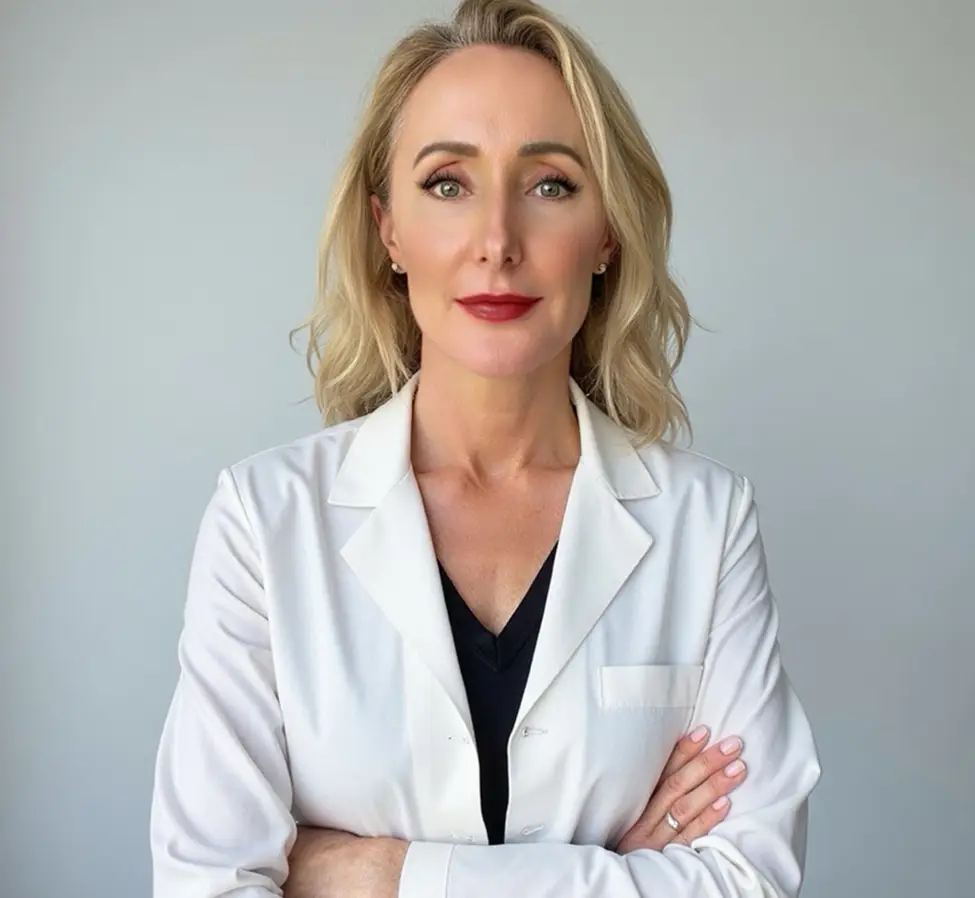
Kelly Wolfe
Kelly Wolfe, MSN, APRN, FNP-BC, CFMP, is a board-certified Family Nurse Practitioner and Certified Functional Medicine Practitioner who founded South Florida Face and Body to practice aesthetics and wellness the way she believes they should be done — personal, evidence-based, and natural-looking. She is known for a restrained, proportion-first approach to facial volume: replacing what was lost so patients look like themselves, only rested.
Her guiding principle for weight-loss patients is simple: restore, don’t overfill.
Every plan is her own, built around your face rather than a template.
Meet Kelly →