
Semaglutide weight loss in Florida involves personalized GLP-1 protocols from a University of Miami-trained nurse practitioner who reviews every lab and writes every prescription herself.
Kelly Wolfe, MSN, APRN, FNP-BC built her semaglutide program around the patients other Florida clinics rush — the ones who want their thyroid, insulin, leptin, and cortisol checked before a single milligram is prescribed. In-person care at her Miami Beach office. Statewide Florida telehealth for everyone else.
4.9 60 Google Reviews
OWNER · UNIVERSITY OF MIAMI-TRAINED · FL APRN #11005134
Our semaglutide weight loss clinic in Florida pairs FDA-approved GLP-1 medication with comprehensive labs so the dose addresses what’s actually driving your weight resistance. Semaglutide is a GLP-1 receptor agonist for chronic weight management, and clinical trial patients averaged 14.9% body weight loss over 68 weeks. Semaglutide weight loss in Florida is offered in-person at our Miami Beach office and via telehealth statewide — and it’s one path within our broader medical weight loss program.
Mimics the GLP-1 hormone, suppresses appetite, slows gastric emptying, and reduces food noise. Once-weekly subcutaneous injection.
14.9% of body weight at 68 weeks (STEP-1 trial). Roughly 1–2 lbs per week at maintenance dose.
Appetite drops in 1–2 weeks. Measurable scale change at weeks 3–4. Significant loss between weeks 8–16.
Required baseline labs, then a customized 3-month starter plan, then $400/month for refills with weekly check-ins. Confirmed in writing at consultation.
Kelly Wolfe, MSN, APRN, FNP-BC — Florida APRN #11005134. Every prescription, every dose adjustment.
Miami Beach office (1000 5th Street, Suite 414) for in-person. Telehealth statewide — medication shipped to your door.
Semaglutide is an FDA-approved GLP-1 receptor agonist medication that produces an average of 14.9% body weight loss over 68 weeks when administered as a once-weekly 2.4 mg subcutaneous injection. It is sold under the brand names Wegovy® (for chronic weight management) and Ozempic® (for type 2 diabetes). It works by mimicking the body’s own GLP-1 incretin hormone — slowing gastric emptying, increasing satiety, and reducing appetite signaling in the hypothalamus.
Semaglutide was developed by Novo Nordisk and approved by the FDA for chronic weight management in adults in June 2021 under the brand Wegovy®. The FDA expanded that approval to adolescents 12 and older in December 2022. The same molecule, dosed lower, has been used since 2017 as Ozempic® for type 2 diabetes and since 2019 as Rybelsus®, the oral tablet form.
What separates semaglutide from previous weight-loss drugs is that it doesn’t work by stimulating the nervous system or blocking fat absorption. It works on the satiety and appetite-regulation pathways your body already has. Patients describe it as a quieting of “food noise” — the constant low-grade thinking about meals, snacks, and what’s in the kitchen.
In our Florida program, semaglutide is one of two GLP-1 medications we prescribe (the other is tirzepatide). Both belong to the broader class of therapeutic peptides we use in this practice. The choice between them depends on your labs, your medical history, your weight loss goal, and how your body responds to escalation. That decision is made at the consultation — not before. For a full overview of our weight loss approach beyond GLP-1s, see our medical weight loss program page.

Semaglutide mimics the GLP-1 hormone your gut naturally releases after meals. It acts on three systems simultaneously: it slows the rate at which the stomach empties (you feel full longer), it signals satiety centers in the hypothalamus (you feel full sooner), and it improves insulin sensitivity (your body uses glucose more efficiently rather than storing it as fat). The cumulative effect is a 20–30% reduction in daily caloric intake without conscious effort.
1. Slowed gastric emptying. A meal that would normally clear your stomach in 90 minutes takes 3–4 hours on semaglutide. Food sits longer, you feel full longer, and the spike in blood sugar that usually triggers a crash and rebound hunger is blunted.
2. Central appetite suppression. GLP-1 receptors exist in the hypothalamus and brainstem — the regions that regulate hunger and reward. Semaglutide activates them, reducing both physical hunger and the reward signal that drives food cravings. This is why most patients report that not just hunger but the pull toward food drops.
3. Improved insulin response. Semaglutide increases glucose-dependent insulin secretion and reduces glucagon. The practical effect is that the carbohydrates you do eat are more efficiently used for energy and less efficiently stored as fat. For patients with insulin resistance — which a baseline fasting insulin lab can identify — this mechanism is often the biggest driver of results.
Most clinics in Florida prescribe semaglutide based on BMI and a brief intake form. We don’t. Before your first dose, we run a comprehensive lab panel: TSH, free T3, free T4, fasting insulin, glucose, HbA1c, lipid panel, comprehensive metabolic panel, leptin, and cortisol. The purpose is to identify what is actually driving your weight — because semaglutide works dramatically better for some metabolic patterns than others, and there are conditions (untreated thyroid disease, undiagnosed Cushing’s, severe insulin resistance) where the dosing strategy needs to be different from the start. This functional medicine approach is the spine of how we practice — and if labs reveal a thyroid or sex-hormone imbalance, we address it through hormone therapy in parallel, not in sequence.

The FDA-approved semaglutide titration schedule is: 0.25 mg weekly for 4 weeks, 0.5 mg for 4 weeks, 1.0 mg for 4 weeks, 1.7 mg for 4 weeks, then 2.4 mg weekly as the maintenance dose. The escalation is deliberately slow to allow gastrointestinal tolerance to build. The starting dose of 0.25 mg is a tolerance dose, not a weight-loss dose — meaningful loss begins around the 1.0 mg dose for most patients.
| Weeks | Dose | Purpose | Typical experience |
|---|---|---|---|
| 1–4 | 0.25 mg weekly | Tolerance dose | Mild appetite suppression. Mild nausea common. |
| 5–8 | 0.5 mg weekly | Escalation | Stronger appetite drop. Scale starts moving. |
| 9–12 | 1.0 mg weekly | Sub-therapeutic | Weight loss accelerates. Most patients lose 4–10 lbs. |
| 13–16 | 1.7 mg weekly | Therapeutic | Sustained loss. Some patients hold here long-term. |
| 17+ | 2.4 mg weekly | Maintenance dose | Maximum approved dose for chronic weight management. |
This is the textbook schedule. In real practice, roughly 30% of patients need a slower titration because of gastrointestinal side effects — staying at a dose for 6 or 8 weeks instead of 4 before escalating. About 15% find that 1.7 mg is their effective maintenance dose and never need 2.4 mg. A small percentage tolerate 2.4 mg but find their body responds better dropping back to 1.7 mg after several months at the top dose.
The FDA-approved maximum dose for weight management is 2.4 mg once weekly. Doses above this do not produce additional weight loss in clinical trial data — they produce additional side effects. If you are at 2.4 mg and have plateaued for 3+ months, the right move is not a higher semaglutide dose. It is either a switch to tirzepatide or a return to lab work to identify what shifted metabolically.
Appetite suppression begins within 1–2 weeks. Measurable weight loss typically begins at weeks 3–4. Significant fat loss accelerates between weeks 8–16 as the dose titrates upward. Most patients lose 5–10% of body weight by month 4 and 12–18% by month 12. Plateaus around weeks 6 and 16 are normal and almost always temporary.
0.25 mg starter dose. Within 48–72 hours, most patients notice they're getting full faster. Scale rarely moves yet. Mild nausea is common.
Portions shrink without conscious effort. Snacking drops. Food "noise" quiets. Many patients lose 2–5 lbs in this window — primarily water and reduced gut volume.
Average loss of 1–2 lbs per week. Energy stabilizes once the body adapts. This is when before-and-after photos start to differ.
The fastest-loss window for most patients. Many lose 8–15% of their starting body weight by week 16. Lab markers (insulin, A1c, lipids) typically improve substantially.
2.4 mg maintenance. Loss continues at a slower, more sustainable rate. This is when InBody composition scans reveal whether the loss is fat (good) or lean mass (a signal to add protein and resistance training).
Weight loss naturally slows. Average cumulative loss at 1 year is 12–18% of starting body weight. The clinical question shifts from 'how fast' to 'how do we hold this without rebound.' Want the shorter, plain-language version of this timeline? See how long Ozempic and semaglutide actually take to start working.
This is the most common question we field in week 4, and the answer is almost always: that’s expected. The 0.25 mg starter dose is below the threshold needed for meaningful fat loss in most patients. It exists to build gastrointestinal tolerance, not to produce results. The dose doubles to 0.5 mg at week 5, and that is when most patients begin to see consistent scale movement.
If you reach week 12 (the end of the 1.0 mg dose) without measurable weight loss, that is the actual flag — and it triggers a repeat lab panel. The most common findings: undiagnosed hypothyroidism, occult insulin resistance with high fasting insulin despite normal glucose, elevated cortisol from chronic stress, or low leptin sensitivity. Each is a treatable cause and each changes what we do next — often by adding hormone therapy or recalibrating the underlying functional medicine plan. If it’s specifically hunger rather than the scale that hasn’t budged yet, see our guide to managing appetite while waiting for semaglutide to kick in.

Tirzepatide produces greater average weight loss than semaglutide — approximately 20.2% vs 13.7% body weight over 72 weeks in the head-to-head SURMOUNT-5 trial. Tirzepatide acts on both GLP-1 and GIP receptors; semaglutide acts on GLP-1 only. Semaglutide has a longer real-world track record, is often less expensive, and is the preferred starting point for patients with mild to moderate weight loss goals or sensitivity to gastrointestinal side effects.
| Factor | Semaglutide | Tirzepatide |
|---|---|---|
| Mechanism | GLP-1 receptor agonist (single mechanism) | GLP-1 + GIP dual receptor agonist |
| Brand names | Wegovy® (weight loss), Ozempic® (diabetes) | Zepbound® (weight loss), Mounjaro® (diabetes) |
| Avg. weight loss | 13.7–14.9% (68–72 weeks) | 20.2–22.5% (68–72 weeks) |
| FDA approval (weight) | June 2021 | November 2023 |
| Starting dose | 0.25 mg weekly | 2.5 mg weekly |
| Maintenance dose | 2.4 mg weekly | 5, 10, or 15 mg weekly |
| GI side effects | Common during titration | Slightly more common; similar profile |
| Monthly cost (FL program) | $400/month (refills, post-starter) | $400/month (refills, post-starter) |
| Best for | Goal of 10–15% loss; first-time GLP-1; cost-conscious | Goal of 15%+ loss; semaglutide plateau; type 2 diabetes |
The right answer to “which is better” is patient-specific. In our Florida program roughly half of new GLP-1 patients start on semaglutide, the other half on tirzepatide. The factors we weigh: starting BMI and goal weight, baseline labs (especially fasting insulin and A1c), prior GLP-1 experience, sensitivity to nausea, and budget. A patient with 25–30 lbs to lose and no diabetes signal often does beautifully on semaglutide. A patient with 60+ lbs to lose and prediabetic markers often benefits from tirzepatide’s stronger second mechanism.
Injectable semaglutide produces significantly more weight loss than oral semaglutide. The injectable formulation (Wegovy®, compounded) reaches a 2.4 mg weight-loss dose; oral semaglutide (Rybelsus®) is FDA-approved only for type 2 diabetes at maximum 14 mg daily and produces substantially less weight loss in clinical trials. Patients in our Florida program almost always use the injectable form.
Oral semaglutide is the same molecule as the injection — but bioavailability is the limiting factor. Less than 1% of an oral dose reaches the bloodstream. The pill must be taken on an empty stomach with no food or other medication for 30 minutes after. Most patients find the once-weekly injection easier to integrate into life than a daily fasted ritual, and the weight-loss outcomes favor injection by a wide margin.
There is one specific patient profile where oral semaglutide makes sense: a patient with type 2 diabetes who has a strong aversion to needles and a primary goal of glucose control rather than significant weight loss. Outside that profile, injection wins.
The most common semaglutide side effects are nausea, constipation, diarrhea, fatigue, and reflux — almost always during dose escalation in the first 8–12 weeks. These typically resolve as the body adapts. Serious but rare risks include gallbladder issues, pancreatitis, and a boxed warning for thyroid C-cell tumors based on rodent studies. Semaglutide is contraindicated in patients with personal or family history of medullary thyroid carcinoma or MEN 2.
Semaglutide should not be used by patients with a personal or family history of medullary thyroid carcinoma, multiple endocrine neoplasia syndrome type 2 (MEN 2), severe gastroparesis, or known hypersensitivity to semaglutide or any of its formulation components. Pregnancy is a contraindication; the medication must be discontinued at least 2 months before a planned pregnancy.
Semaglutide does not require stopping anticoagulants. The subcutaneous injection is low-risk for bleeding. If you are on warfarin, apixaban (Eliquis®), rivaroxaban (Xarelto®), clopidogrel (Plavix®), or any other anticoagulant or antiplatelet, do not discontinue it on your own. Always consult the prescribing physician who started you on the blood thinner before making any change to that regimen. If a planned procedure ever requires holding an anticoagulant, that decision is made between you and the prescribing cardiologist, hematologist, or primary care physician — not the weight-loss clinic.
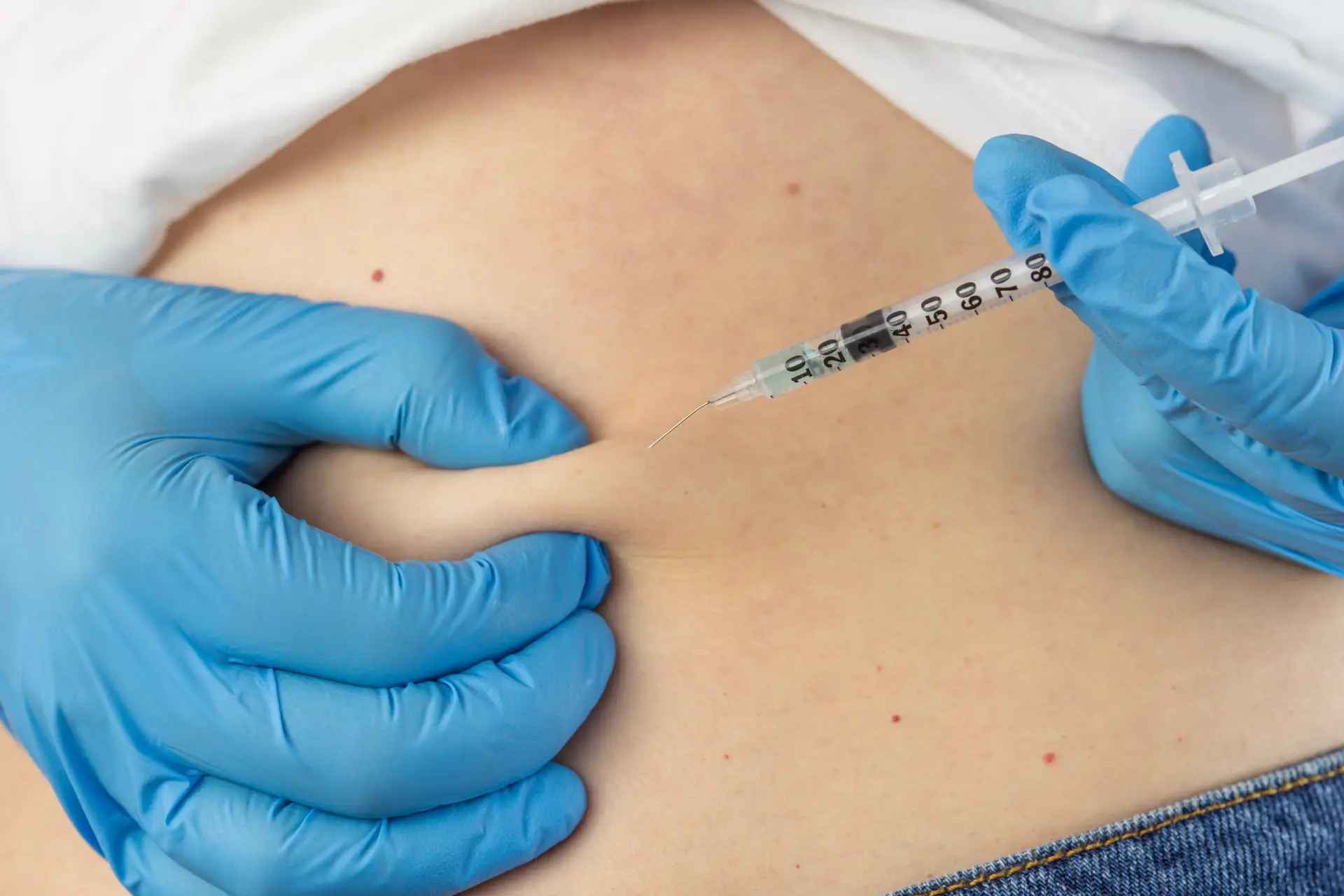
Semaglutide is injected subcutaneously (under the skin) once weekly into the abdomen, front of thigh, or back of upper arm. Rotate injection sites week to week to prevent lipohypertrophy. The injection itself takes under 30 seconds — pinch the skin, insert at 90 degrees, hold 6 seconds after the dose is delivered, then withdraw and dispose of the needle in a sharps container.
The best time of day to inject semaglutide is the time of day you will remember every week. Most patients pick Sunday evening (so the first 24 hours of mild nausea, if any, fall on a weekend) or Monday morning (so nausea overlaps with the natural morning low appetite). The injection itself is once weekly with steady-state pharmacokinetics — there is no clinically superior time.
Our Florida semaglutide program begins with required baseline labs and a customized 3-month starter plan tailored to your labs, starting BMI, and clinical picture. After the starter program, monthly refills are $400/month and include weekly check-ins, monthly dose adjustments as needed, and ongoing nutrition and program guidance. Branded Wegovy® without insurance runs approximately $1,349 per month nationally. Branded Ozempic® runs approximately $1,000 per month. Insurance coverage for weight loss specifically is rare; coverage for type 2 diabetes is far more common.
How the program is structured:
What we don’t charge separately for in our Florida program after the starter plan: weekly check-ins, dose adjustments, lab review, message-based follow-up, in-office check-ins at the Miami Beach office, telehealth visits, or program/nutrition adjustments. Exact starter-program cost is confirmed in writing at consultation and depends on dose tier and clinical picture.
The shorter the meal, the lower the dose, the easier the side effect profile. We coach patients to anchor every meal around protein first (aim for 30g per meal), followed by fiber-dense vegetables, with carbohydrate as a smaller portion than they would have eaten before. The slowed gastric emptying makes large, fatty meals genuinely uncomfortable — most patients self-regulate within the first two weeks.
Protein matters more on semaglutide than off it because rapid weight loss carries a real risk of lean mass loss. Without adequate protein and resistance training, 25–35% of total weight lost on a GLP-1 can be muscle. With both, that drops below 15%. This is why our patients receive a structured protein target and why we recommend the InBody composition scan at month 3 — not the bathroom scale — as the actual measure of progress. Some patients also benefit from B12 or MICC vitamin injections during rapid loss for energy and fat metabolism support.
Alcohol is not strictly contraindicated on semaglutide, but most patients tolerate substantially less of it. Delayed gastric emptying intensifies and prolongs alcohol’s effects — a single glass of wine on semaglutide often hits like two. Many patients also report alcohol’s reward value drops significantly on GLP-1s; the desire to drink decreases alongside the desire to eat. We recommend limiting alcohol entirely during dose escalation and being cautious about driving even after one drink.
Resistance training is non-negotiable on a GLP-1. Two to three sessions per week of progressive strength work — even bodyweight at home — preserves the lean mass that determines what your body looks like once the fat is gone. Cardio is fine but is not a substitute. We can refer to local trainers in Miami Beach for in-person patients and provide a structured home protocol for telehealth patients across Florida.
In-person semaglutide care is provided at our Miami Beach office in the South of Fifth neighborhood — 1000 5th Street, Suite 414. For everyone else in Florida, our statewide telehealth program is licensed across the state. After the initial video visit and lab review, prescription semaglutide ships directly to your home address. Follow-ups are by video, with unlimited message-based support between visits.
For region-specific telehealth information, see the dedicated pages for Tampa, Boca Raton, Fort Lauderdale, Orlando, and Southwest Florida (Naples, Fort Myers, Bonita Springs).
Parking note for in-office Miami Beach patients: the attached building garage is $4/hour. Free street parking is available around the building during business hours (with one pay-to-park section nearby). We’ll send you the specific best-parking guide before your first visit.
FDA approval for semaglutide weight management covers adults with a BMI of 30 or greater, or a BMI of 27 or greater with at least one weight-related comorbidity (high blood pressure, type 2 diabetes, dyslipidemia, sleep apnea, or cardiovascular disease). In December 2022, the FDA extended approval to adolescents aged 12 and older with obesity. We add a metabolic and contraindication screen before prescribing.
The disqualifying conditions, regardless of BMI, are: personal or family history of medullary thyroid carcinoma, multiple endocrine neoplasia syndrome type 2, severe gastroparesis, active pancreatitis, pregnancy or planned pregnancy within 2 months, severe untreated thyroid disease, and known hypersensitivity to semaglutide. Active eating disorders are evaluated case-by-case and are not automatically disqualifying but require a treatment plan that includes mental health support.
Same-week consultations available. South of Fifth, Miami Beach.
Kelly is the owner of South Florida Face and Body. A board-certified Family Nurse Practitioner trained at the University of Miami, she holds advanced degrees in nursing, biochemistry, and biology, with graduate research focused on metabolism and the role of leptin and appetite-suppressing hormones. She practices at the intersection of functional medicine and aesthetic injection — meaning the conversations in her treatment room often go beyond the syringe to consider sleep, hormones, metabolism, and inflammation as part of how your skin and face actually present.
Licensed as an Advanced Practice Registered Nurse in the State of Florida (APRN #11005134), Kelly brings more than three decades of experience in health, fitness, and clinical practice. She has performed aesthetic injections in South Florida for over a decade and has trained alongside the dermatology and plastic surgery community that built Miami’s aesthetic reputation.
She is the one who answers your text message. She is the one who calls the day after your injection.
From your first consultation through every follow-up, you’ll work directly with Kelly — one injector, one set of hands, one consistent plan.
Advanced practice registered nursing with a focus on family health and primary care.
Research focused on metabolism and the role of leptin and appetite-suppressing hormones.
Research with a strong foundation in human physiology, cellular biology, and biochemistry.
National certification in family practice and primary care.
Authorized to diagnose, treat, and prescribe medications in the State of Florida.
Advanced training in root-cause diagnostics, hormone optimization, metabolic health, and integrative wellness.
Over 30 years helping clients achieve sustainable health and wellness transformations.
Common questions about semaglutide weight loss in Florida.
Clinical trial data (STEP-1) showed adults with obesity taking semaglutide 2.4 mg weekly lost an average of 14.9% of their body weight over 68 weeks, compared to 2.4% on placebo. In our Florida program, average loss is 1–2 pounds per week once at maintenance dose, with cumulative loss typically 12–18% of starting body weight when paired with our lab-driven protocol and protein-anchored nutrition guidance.
Appetite suppression typically begins within 1–2 weeks of the first 0.25 mg dose. Measurable weight loss usually appears at weeks 3–4. Significant fat loss accelerates between weeks 8 and 16 as the dose is titrated upward toward the 1.7–2.4 mg maintenance range.
The standard FDA-approved titration is: 0.25 mg weekly for weeks 1–4, then 0.5 mg for weeks 5–8, then 1.0 mg for weeks 9–12, then 1.7 mg for weeks 13–16, then 2.4 mg weekly as the maintenance dose. Our Florida program follows this schedule by default and adjusts when tolerance, side effects, or individual response require a slower titration.
Head-to-head data (SURMOUNT-5, 2025) showed tirzepatide produced greater average weight loss than semaglutide — approximately 20.2% vs 13.7% over 72 weeks. Tirzepatide acts on both GLP-1 and GIP receptors; semaglutide acts on GLP-1 only. Semaglutide is often the right starting choice for patients who tolerate single-mechanism GLP-1s well, prefer the longer real-world track record, or have a 10–15% weight loss goal. Many patients in our program start on semaglutide and switch to tirzepatide if response plateaus.
The most common side effects are nausea, constipation or diarrhea, fatigue, and reflux — primarily during dose escalation. These usually resolve as the body adapts. Less common: gallbladder irritation, pancreatitis (rare), and “sulfur burps.” Semaglutide carries a boxed warning for thyroid C-cell tumors based on rodent studies and is contraindicated in patients with personal or family history of medullary thyroid carcinoma or MEN 2 syndrome.
Our Florida semaglutide program begins with required baseline labs (billed separately) and a customized 3-month starter plan tailored to your labs and clinical picture. After the starter program, monthly refills are $400/month and include weekly check-ins, monthly dose adjustments as needed, and ongoing nutrition and program guidance. Labs are required before any GLP-1 prescription can be written. Exact starter-program cost is confirmed in writing at consultation.
There is no clinically superior time of day for semaglutide because it is a once-weekly injection with steady-state pharmacokinetics. Consistency matters more than timing. Choose a fixed day and a fixed time that fits your routine — most patients pick Sunday evening or Monday morning so any mild weekday nausea is minimized.
Alcohol is not strictly contraindicated, but most patients tolerate substantially less of it on semaglutide because delayed gastric emptying intensifies and prolongs alcohol’s effects. Many patients also report alcohol’s reward value drops significantly on GLP-1s. We advise limiting alcohol especially during dose escalation and avoiding it entirely if you experience nausea.
The first 4 weeks are the 0.25 mg starter dose — designed for tolerance, not maximum efficacy. Most patients see minimal scale change in weeks 1–4 and meaningful loss starting in weeks 5–8 as the dose increases to 0.5 mg. If you reach week 12 at the 1.0 mg dose with no measurable loss, we run repeat labs (thyroid, insulin, cortisol) to identify what’s blocking response.
Semaglutide does not require stopping anticoagulants. Subcutaneous injection is low-risk for bleeding. If you are on warfarin, apixaban, rivaroxaban, clopidogrel, or any other anticoagulant or antiplatelet medication, do not discontinue it on your own — always consult the prescribing physician who started you on it before making any change to that regimen.
In-person care is provided at our Miami Beach office at 1000 5th Street, Suite 414. Florida telehealth is available statewide — including Miami, Fort Lauderdale, Boca Raton, West Palm Beach, Tampa, Orlando, Jacksonville, Naples, Sarasota, Gainesville, Tallahassee, and Pensacola. Medication is shipped directly to your home after the initial visit.
Yes. Semaglutide 2.4 mg was FDA-approved for chronic weight management in June 2021 under the brand name Wegovy® for adults with a BMI of 30+, or BMI of 27+ with at least one weight-related comorbidity. In December 2022, the FDA expanded approval to include adolescents aged 12 and older. Lower-dose semaglutide is FDA-approved as Ozempic® and Rybelsus® for type 2 diabetes.
Trademark notice. Wegovy®, Ozempic®, and Rybelsus® are registered trademarks of Novo Nordisk A/S. Zepbound®, Mounjaro®, and LillyDirect® are registered trademarks of Eli Lilly and Company. InBody® is a registered trademark of InBody Co., Ltd. Eliquis® is a registered trademark of Bristol-Myers Squibb Pharma Company. Xarelto® is a registered trademark of Bayer Aktiengesellschaft. Plavix® is a registered trademark of Sanofi-Aventis. Pradaxa® is a registered trademark of Boehringer Ingelheim. All other trademarks referenced are the property of their respective owners.
No affiliation. South Florida Face and Body is not affiliated with, endorsed by, sponsored by, or otherwise associated with Novo Nordisk A/S, Eli Lilly and Company, InBody Co., Ltd., or any other manufacturer of the medications or products referenced on this page. Use of these trademarks is solely for accurate identification of FDA-approved medications and for the educational benefit of our patients. References to brand-name medications do not imply that we dispense, distribute, or recommend any specific manufacturer’s product over compounded alternatives. Treatment decisions, including the choice between branded and compounded semaglutide or tirzepatide, are made between the patient and Kelly Wolfe, MSN, APRN, FNP-BC, based on individual clinical factors.
Medical disclaimer. The content on this page is for informational and educational purposes only and does not constitute medical advice, diagnosis, or treatment. Clinical statistics cited (including STEP-1, SURMOUNT-1, SURMOUNT-4, and SURMOUNT-5 trial data) reflect published clinical trial averages and do not guarantee individual results. GLP-1 receptor agonists are prescription medications that require medical evaluation, ongoing supervision, and are not appropriate for every patient. Always consult a qualified healthcare provider before starting, stopping, or changing any medication — including semaglutide, tirzepatide, and any anticoagulant or other prescription drug you may currently take. If you experience a medical emergency, call 911.
Compounded medications notice. Compounded semaglutide and tirzepatide are prepared by state-licensed 503A or FDA-registered 503B pharmacies and are not the same product as FDA-approved Wegovy®, Ozempic®, Zepbound®, or Mounjaro®. Compounded medications are not reviewed by the FDA for safety, efficacy, or quality prior to dispensing. The FDA has not approved compounded semaglutide or compounded tirzepatide. Patients in our Florida program receive a clear explanation of the differences between branded and compounded formulations at consultation and choose accordingly.
Covers your scan, lab orders, a follow-up visit with nurse practitioner Kelly Wolfe, and a personalized plan — credited to Optimal. Labs are billed separately (insurance, or ~$150–$300 self-pay at cost).