
Botox, Dysport, Xeomin — all FDA-approved, all stocked under one roof. Here's how to choose the right one for your face.
Kelly Wolfe, MSN, FNP-BC stocks the three major neuromodulators and matches the molecule to your tissue, your goals, and your Miami Beach calendar — not the other way around. This is the comparison guide we wished existed when patients first asked us "which one?"
4.9 60 Google Reviews
OWNER · UNIVERSITY OF MIAMI-TRAINED · FL APRN #11005134
FDA-approved injectable forms of botulinum toxin type A. We carry the three with the longest U.S. track record: Botox, Dysport, Xeomin.
Carrier protein, onset time, and dose-unit ratio. Same active mechanism — different molecule architecture.
Fastest: Dysport (1–3 days). Slowest: Xeomin (4–6 days). Botox sits in the middle (3–5 days). Full effect by day 14 for all three.
Botox, Dysport, and Xeomin all average 3–4 months. Shorter for high-intensity Miami Beach athletes.
Kelly Wolfe, MSN, APRN, FNP-BC — every product, every injection, every appointment. Owner-operated practice.
1000 5th Street, Suite 414 — South of Fifth, Miami Beach 33139. Same-week consultations. Phone (786) 529-1860.
Most Miami Beach practices push whichever product their distributor incentivizes. Kelly stocks all three of the long-track-record FDA-approved neuromodulators — Botox, Dysport, and Xeomin — and selects the molecule based on your face, not the inventory.
The original. The benchmark. The molecule every other neuromodulator is measured against.
Botox in Miami Beach
Wider spread, faster onset. The thinking person's choice for broad foreheads and time-sensitive results.
Dysport in Miami Beach
The "naked" neuromodulator. No carrier protein — just the active molecule. Lowest theoretical immunogenicity of the three.
Xeomin in Miami Beach
Miami Beach has more aesthetic providers per square mile than almost any zip code in the country. The molecule you pick — and the injector who places it — should account for the specific way faces age in this climate, not a generic dosing chart.
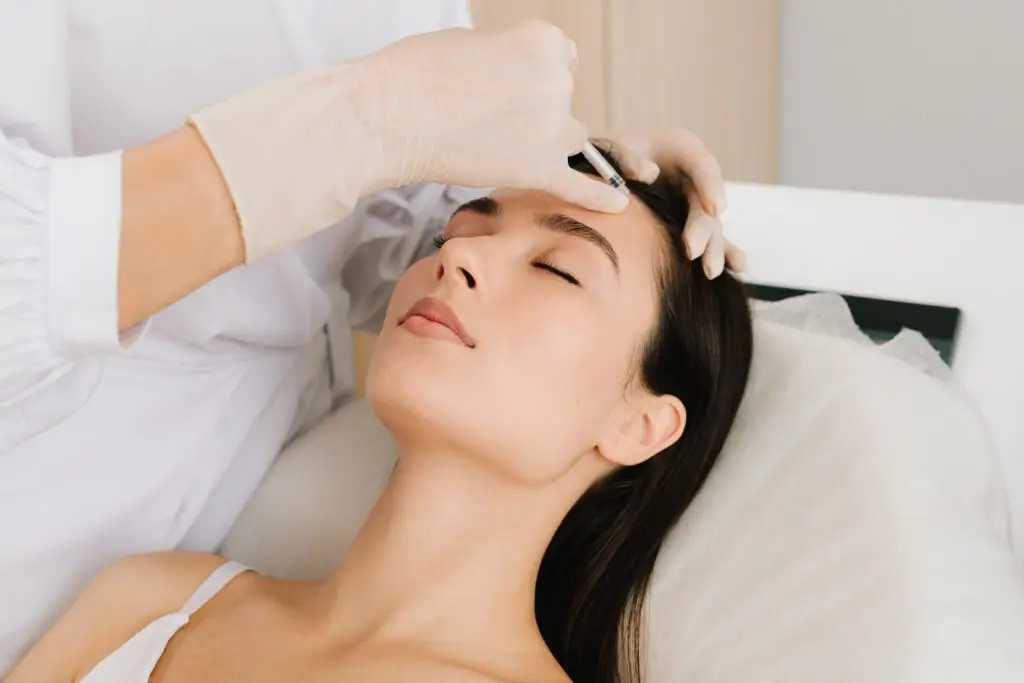
The reflexive answer in 33139 is “Botox” because the brand has become a generic verb. But Botox is one of several FDA-approved botulinum toxin type A products on the U.S. market — and the right one for a Mid-Beach patient who trains six times a week is rarely the right one for a Bal Harbour grandmother who wants her forehead expression preserved. Three lifestyle factors specific to Miami Beach shape the decision:
None of this means there’s a single “best” neuromodulator. It means the answer is personal, and the decision is part of what an honest consultation should provide.
Every neuromodulator on the U.S. market uses the same active molecule: botulinum toxin type A, a purified protein produced by the bacterium Clostridium botulinum. When injected into a specific muscle, it temporarily blocks the chemical signal (acetylcholine) the nerve uses to tell that muscle to contract. The muscle relaxes; the wrinkle on the surface softens.
The differences between Botox, Dysport, and Xeomin come from what surrounds the active toxin — the carrier or complexing proteins — and how the formulation is stabilized for injection. Think of the active toxin as the engine of a car. The carrier protein is the chassis. All three cars have the same engine; the chassis is what changes.
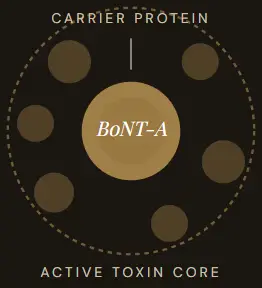
Botox and Dysport both wrap the active toxin in complexing proteins (called the “NAP” or “PTC” complex). This stabilizes the molecule and improves shelf life — but in long-term cosmetic users, the immune system can occasionally form neutralizing antibodies against these carriers, which has been associated with reduced response in a small subset of patients.
Xeomin uses a proprietary purification process to remove the carrier proteins entirely, leaving only the active 150 kDa neurotoxin. This is the lowest-immunogenicity formulation on the market — relevant if you’ve used neuromodulators consistently for 10+ years or have noticed diminishing response.
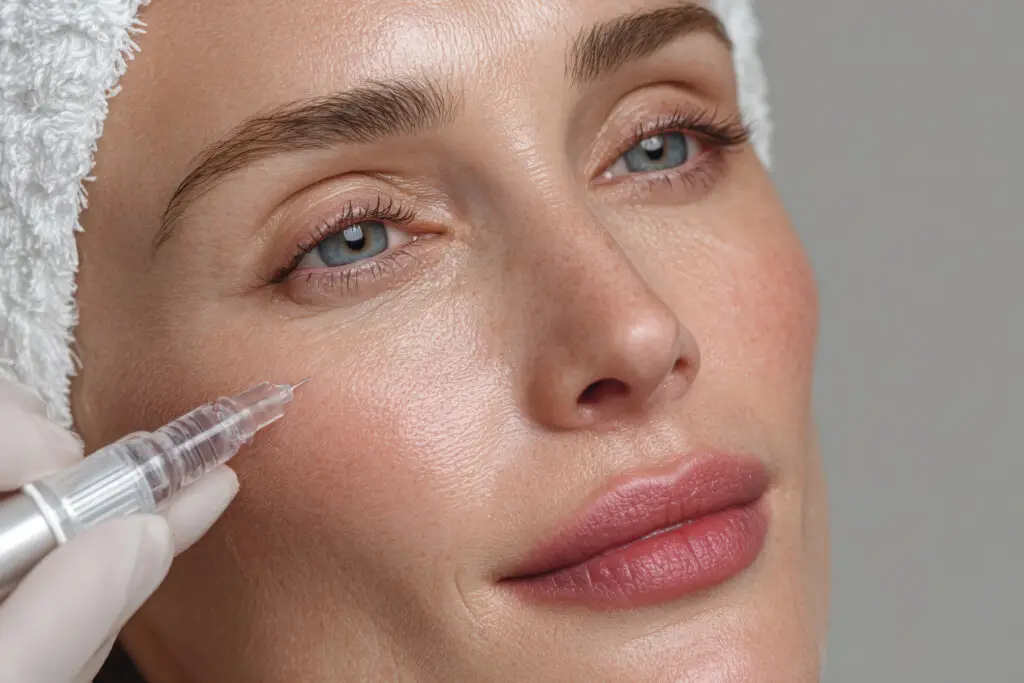
Here is every meaningful clinical difference between the three FDA-approved neuromodulators we carry in Miami Beach, in one table. Pricing reflects typical Miami Beach ranges as of 2026; the most transparent practices in 33139 price per unit so you only pay for what you receive.
| Botox | Dysport | Xeomin | |
|---|---|---|---|
| Generic name | OnabotulinumtoxinA | AbobotulinumtoxinA | IncobotulinumtoxinA |
| Manufacturer | AbbVie / Allergan | Galderma | Merz Aesthetics |
| FDA approval (cosmetic) | 2002 | 2009 | 2011 |
| Carrier protein | Yes (HA / NAP complex, ~900 kDa) | Yes (smaller complex, ~500 kDa) | None — pure 150 kDa active molecule Cleanest formulation |
| Onset | 3–5 days | 1–3 days Fastest | 4–6 days |
| Full effect | Day 14 | Day 10–14 | Day 14 |
| Duration (average) | 3–4 months | 3–4 months | 3–4 months |
| Unit ratio vs. Botox | 1.0 (reference) | ~2.5–3.0× | ~1.0× (1:1) |
| Spread / diffusion | Precise, contained | Wider diffusion (good for large areas) | Precise, contained |
| Best clinical use | Workhorse for all common areas; gold standard for masseter | Broad forehead, large surface fields, time-sensitive results | Long-term users, suspected resistance, sensitivity to additives |
| Miami Beach price (typical) | $13–$18 per unit | $4.50–$6 per unit (≈$12–$15 per Botox-equivalent unit) | $12–$16 per unit |
| Typical glabella (“11s”) cost | $260–$450 | $225–$300 | $240–$320 |
The molecule should match your face, your goals, and your calendar — not the marketing budget of the manufacturer. Here is how Kelly thinks about the decision for a Miami Beach patient.
Starting points — not final answers. A 15-minute consultation refines this against your actual anatomy and history.
If this is your first time…
The most predictable response, the most well-documented dosing, and the largest body of injector experience. We can switch later if anything is suboptimal.
If you have an event in 5–7 days…
Fastest published onset (1–3 days). Many patients see softening by day 2 — meaningful when your timeline is tight for an Art Basel dinner or a Faena gala.
If you've used Botox for 8+ years…
No carrier protein means lowest theoretical immunogenicity over time. Reasonable to rotate Xeomin in if response feels weaker — antibody-mediated resistance is rare but real in long-term users.
If you train 5+ times per week…
High-intensity exercise shortens neuromodulator duration across every product. Kelly will often dose slightly above the textbook range and schedule your follow-up cadence to your actual metabolic response — not the brochure's 12–16 weeks.
If you have a broad, flat forehead…
Dysport's wider diffusion is well-suited to large surface areas with fewer injection points. The result is more uniform across a broad frontalis.
If you've had Botox elsewhere and felt over-frozen…
The "frozen" look is almost always a dosing and placement issue, not a product issue. Kelly's approach is to intentionally preserve expression — you should still raise your brows and smile fully. Many patients with bad first-time experiences elsewhere stay on Botox once the plan is right.
If your face responded perfectly already…
Don't fix what isn't broken. If your current product gives you the look you want at the duration you want, the conversation is about maintaining that — not switching for the sake of switching.
In Miami Beach, neuromodulators are priced per unit. A standard upper-face treatment (glabella, forehead, crow's feet) runs $400–$1,100 depending on the molecule and your dosing requirements. The per-unit rates: Botox $13–$18, Xeomin $12–$16, Dysport $4.50–$6 per Dysport unit.
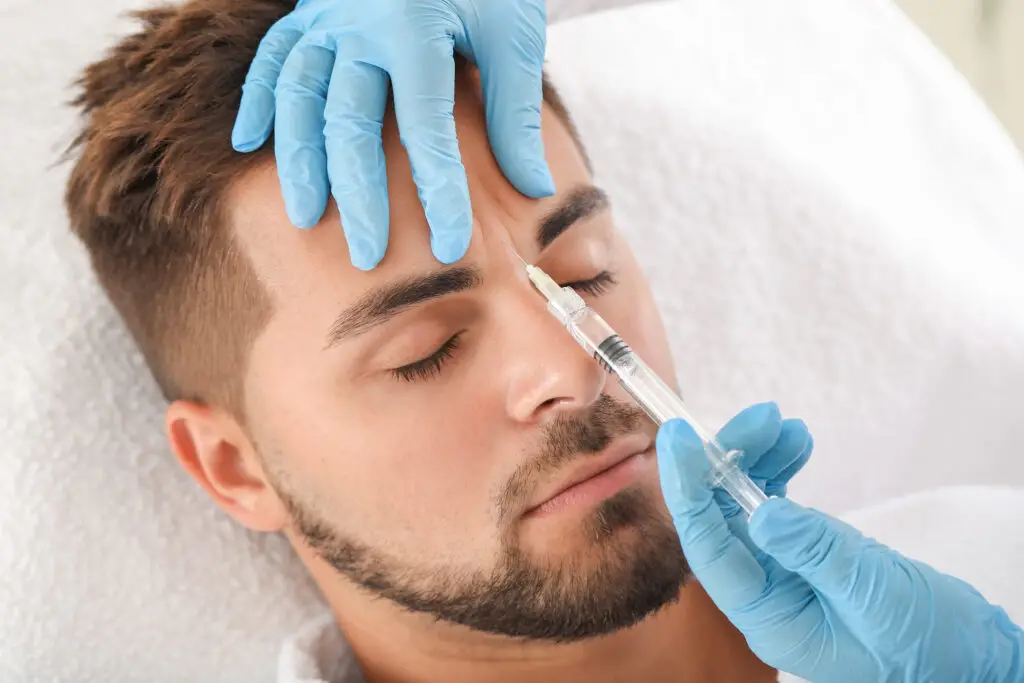
South Florida Face and Body sits in Suite 414 at 1000 5th Street, in the South of Fifth (SoFi) district at the southern tip of Miami Beach. From there, Kelly serves patients across the barrier islands and into Miami proper.
The South of Fifth office is reachable in under 10 minutes from Brickell via the MacArthur Causeway, and a quick run up Collins from Mid-Beach, Surfside, and Bal Harbour. Attached garage parking ($4/hr) plus free street parking nearby; same-week consultations.
1000 5th Street, Suite 414 · Miami Beach, FL 33139
Geography matters because neuromodulator planning isn’t only about your face — it’s about your week. A Mid-Beach patient who walks the boardwalk in the morning sun has different forehead-dose considerations than a Brickell patient working in cool air-conditioned offices. We plan for the life you actually live in this city.
Your first appointment is 30 minutes total. The actual injection takes five. The rest is what differentiates a thoughtful aesthetic consultation from a transactional one.
The most common feedback after a first appointment with Kelly is some version of: “No one has ever explained any of this to me before.” That isn’t a coincidence. In a market where many practices treat neuromodulators as a high-volume commodity service — rotating junior injectors, single-product menus, copy-pasted dosing — a 30-minute consultation that actually compares molecules, considers your history, and accounts for your calendar is uncommon.
Kelly Wolfe is a Florida-licensed Advanced Practice Registered Nurse (APRN #11005134) and board-certified Family Nurse Practitioner (FNP-BC), credentialed by the American Nurses Credentialing Center. She holds a Master of Science in Nursing from the University of Miami, plus a Master’s in Biochemistry from Missouri State University, where her graduate research focused on metabolism and the role of leptin and appetite-suppressing hormones. The biochemistry training matters here: neuromodulators are proteins, your body metabolizes them, and how those proteins are reconstituted, diluted, and placed draws on a molecular understanding most injector trainings don’t cover. She is also a Certified Functional Medicine Practitioner — meaning the consultation often surfaces sleep, thyroid, sex hormone, and inflammation factors alongside the aesthetic plan.
And she owns the practice. The person you book with is the person who treats you. Every visit, every product, every follow-up — one set of hands, one consistent plan.
That's exactly what the consultation is for. Same-week availability, South of Fifth.
Kelly is the owner of South Florida Face and Body. A board-certified Family Nurse Practitioner trained at the University of Miami, she holds advanced degrees in nursing, biochemistry, and biology, with graduate research focused on metabolism and the role of leptin and appetite-suppressing hormones. She practices at the intersection of functional medicine and aesthetic injection — meaning the conversations in her treatment room often go beyond the syringe to consider sleep, hormones, metabolism, and inflammation as part of how your skin and face actually present.
Licensed as an Advanced Practice Registered Nurse in the State of Florida (APRN #11005134), Kelly brings more than three decades of experience in health, fitness, and clinical practice. She has performed aesthetic injections in South Florida for over a decade and has trained alongside the dermatology and plastic surgery community that built Miami’s aesthetic reputation.
She is the one who answers your text message. She is the one who calls the day after your injection.
From your first consultation through every follow-up, you’ll work directly with Kelly — one injector, one set of hands, one consistent plan.
Advanced practice registered nursing with a focus on family health and primary care.
Research focused on metabolism and the role of leptin and appetite-suppressing hormones.
Research with a strong foundation in human physiology, cellular biology, and biochemistry.
National certification in family practice and primary care.
Authorized to diagnose, treat, and prescribe medications in the State of Florida.
Advanced training in root-cause diagnostics, hormone optimization, metabolic health, and integrative wellness.
Over 30 years helping clients achieve sustainable health and wellness transformations.
Real questions Miami Beach patients ask before their first neuromodulator. If yours isn't covered here, Kelly is happy to answer it directly — text or call.
A neuromodulator is an FDA-approved injectable formulation of botulinum toxin type A that temporarily blocks the nerve signal to a targeted muscle, softening the dynamic wrinkles that movement creates. Botox, Dysport, and Xeomin are the three we carry at South Florida Face and Body. The term “neuromodulator” is the clinical name; “wrinkle relaxer” and “tox” are common patient terms for the same thing.
There is no universally “best” neuromodulator — there is a best one for your face, your history, and your calendar. Botox is the most well-documented and the default for first-timers. Dysport has the fastest onset and is ideal for broad foreheads or time-sensitive events. Xeomin is the cleanest formulation (no carrier proteins) and the choice for long-term users with possible resistance. Kelly carries all three and matches the molecule to the patient.
All three average 3–4 months per treatment for upper-face areas (forehead, glabella, crow’s feet). Duration is lifestyle-dependent: high-intensity exercise four-plus times a week, significant sun exposure, and a faster baseline metabolism all shorten results across every product. For Miami Beach athletes, duration on the shorter end of that range is common, and Kelly will adjust dosing and follow-up cadence to your actual metabolic response rather than the brochure number.
Dysport has the fastest published onset — many patients see softening within 24–72 hours. Botox takes 3–5 days, and Xeomin the longest at 4–6 days. Full effect for all three products is reached by day 14. If you have an event in less than a week, Dysport is generally the right tool.
Per-unit pricing in Miami Beach as of 2026: Botox $13–$18, Xeomin $12–$16, Dysport $4.50–$6 per Dysport unit (equivalent to about $13/Botox-unit since 1 Botox unit ≈ 2.5–3 Dysport units). A typical upper-face treatment runs $400–$1,100 depending on product, dosing, and how many areas are addressed. At South Florida Face and Body, the dosing plan is shared before injection and you only pay for units used.
Yes, and many patients do. There’s no medical reason to remain loyal to a single molecule. If your current product feels weaker than it used to, if you want a longer interval between treatments, or if you have a specific event in 5 days and need a faster onset — switching is appropriate. Conversion ratios matter: Dysport requires roughly 2.5–3× the unit count of Botox to achieve a comparable effect, so an inexperienced injector who simply substitutes “the same number of units” will under-dose you. With an experienced injector, switching is routine.
True antibody-mediated resistance is uncommon — under 1% of patients in published data. More often, the perception of weaker results comes from under-dosing, faster metabolic clearance (often from a recent ramp-up in exercise), or muscle compensation patterns from chronic use. The first step is a careful reassessment of your dosing and which muscles are actually treated. If true resistance is suspected, switching to Xeomin — which has no carrier proteins — is the most common next move. Many patients in this situation respond well to Xeomin even when Botox feels like it has stopped working.
Yes. Botulinum toxin type A has been used clinically for over 30 years (originally for strabismus and dystonia, cosmetically since 2002 for Botox). Billions of injections have been performed worldwide. Common side effects are mild and temporary: pinpoint bruising, headache in 1–2% of patients, occasional brow or lid heaviness if a dose drifts. Serious systemic reactions at cosmetic doses are exceptionally rare. Long-term cosmetic use is well-tolerated; many patients have been on neuromodulators for 20+ years without incident.
Not with thoughtful dosing. The over-treated look almost always comes from over-dosing the forehead without accounting for individual brow movement and the balance with depressor muscles. Kelly’s approach is to intentionally preserve expression — you should still be able to raise your brows, look surprised, and smile fully. If you’ve had results elsewhere you weren’t happy with, bring photos to your consultation. We build a plan that gradually refines your appearance over one to two cycles rather than chasing a “no movement” outcome.
Most healthy adults aged 18 to 75 with dynamic wrinkles are candidates for at least one of the three products. You are not a candidate if you are pregnant or breastfeeding, have a neuromuscular disorder (myasthenia gravis, Lambert-Eaton, ALS), have an active skin infection at the planned injection site, or have a known allergy to botulinum toxin or any product excipient. Kelly will confirm fit during your consultation and recommend the best molecule for your specific situation.
If the concern is a wrinkle that appears when you move your face — frown lines when you concentrate, crow’s feet when you smile — that’s a neuromodulator. If the concern is a hollow or wrinkle that’s there at rest — under-eye hollows, flat cheeks, thinning lips, marionette lines — that’s filler. Many patients use both. The consultation is free; we’ll tell you honestly which one (or neither) is right for you, and which neuromodulator if a neuromodulator is the answer.
1000 5th Street, Suite 414, Miami Beach, FL 33139 — in the South of Fifth (SoFi) district, just south of Ocean Drive. We’re 8 minutes from Brickell, 9 from Mid-Beach, 18 from Bal Harbour. The attached parking garage is $4/hr, and street parking around the building is free during business hours (one nearby area is pay-to-park). Phone: (786) 529-1860. Hours: Monday–Friday 10am–6pm, Saturday 10am–2pm.