
A mid-face anatomy-first approach across four filler categories — Juvéderm Voluma, Restylane Lyft, Radiesse, and Sculptra — chosen for your face by a University of Miami-trained nurse practitioner who personally performs every injection.
Kelly Wolfe, MSN, FNP-BC built her cheek filler practice around a discipline that has gone missing in much of Miami's aesthetic landscape: the right product, at the right depth, in the right sub-zone of the cheek, in the right quantity for this face. Not the most syringes you'll pay for. Not the trend everyone is requesting. The amount your anatomy actually needs to look like a rested version of yourself.
4.9 60 Google Reviews
OWNER · UNIVERSITY OF MIAMI-TRAINED · FL APRN #11005134
Mid-face volume loss, flat or hollow cheeks, deflated lateral cheekbone, indirect nasolabial fold and jowl softening, lower-lid transition hollowness.
45–60 minute appointment. Most patients return to errands the same hour, full activity the next day. Makeup-ready by day 3.
HA filler (Voluma, Restylane Lyft): immediate result, fully settled by 2 weeks. Radiesse: immediate + collagen build over 3 months. Sculptra: gradual rebuild over 3–6 months across a series.
$750 per syringe for HA filler (Voluma, Lyft); $800 per syringe for Radiesse. Most patients use 1–2 syringes per side. Per-syringe pricing, in writing, before any injection.
Kelly Wolfe, MSN, APRN, FNP-BC — Florida APRN #11005134, University of Miami-trained. Every injection, every appointment.
1000 5th Street, Suite 414 — South of Fifth, Miami Beach 33139. $4/hr attached garage; free street parking nearby during business hours. 8 minutes from Brickell.
The cheek is the mid-face's structural anchor — when it deflates, the entire lower face follows. Restoring volume here lifts the nasolabial folds and softens jowls indirectly, which is why cheek work often does more for an aging face than direct jowl or nasolabial treatment. It's also the area where overcorrection becomes most visible, which is why placement matters more than volume.
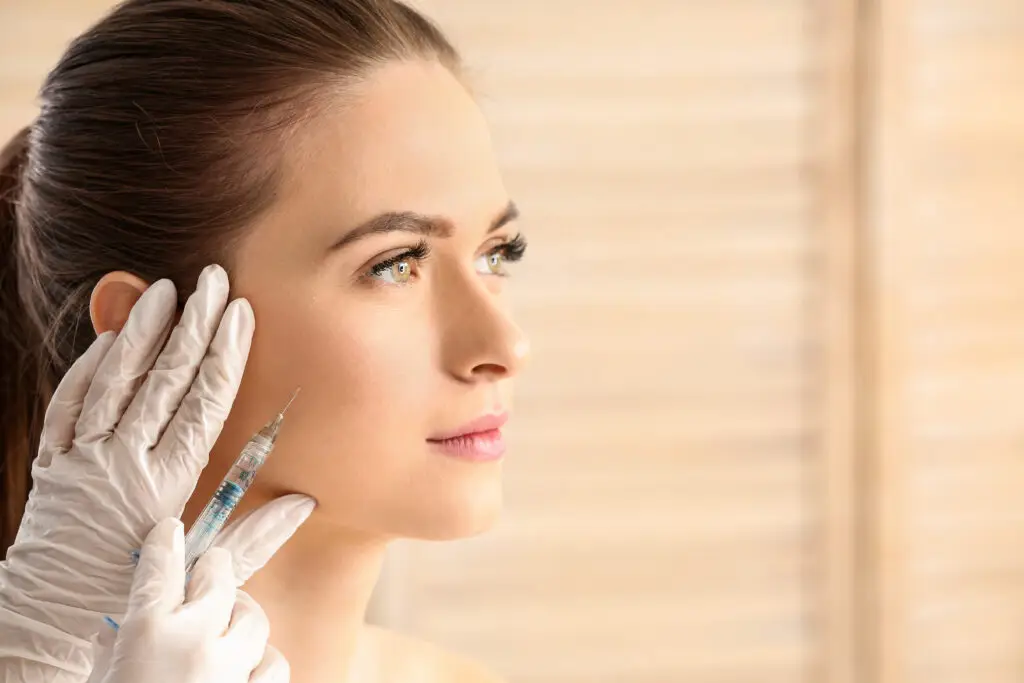
The cheek is not a single area. It is at least four distinct sub-zones, each with its own anatomy, its own aging pattern, and its own product preference. The anteromedial cheek sits on top of the maxillary bone and supports the nasolabial fold from above. The zygomatic arch — the bony ridge most patients think of as “cheekbone” — defines the contour line that catches light in photographs. The lateral cheek extends back toward the ear and supports the jawline above. The sub-malar region sits below the cheekbone, and when it deflates it creates the gaunt, tired look that many patients mistake for a weight-loss issue.
Volume loss does not happen uniformly across these sub-zones. Most patients lose volume first in the lateral and sub-malar regions, while the anteromedial cheek can stay relatively full or even appear to puff outward as surrounding support collapses. Injecting filler into the wrong sub-zone — or into all of them equally — is one of the most common errors that produces the “overfilled” look. Filler in the cheek belongs where volume was lost, in the same shape and proportion the face originally carried it.
This is why Kelly’s consultation for cheek filler is longer than most. The product choice matters, but the placement matters more — and placement requires reading your specific anatomy in motion, at rest, and across the angles of your face.
A cheek filler treatment plan begins with mapping which of the four mid-face sub-zones have lost volume and in what proportion. The same patient might need substantial volume in the lateral cheek and sub-malar region but almost nothing in the anteromedial cheek — or the opposite. This is the anatomical reading that determines whether a result looks restored or overfilled.
DISTINCT CHEEK SUB-ZONES
FILLER CATEGORIES WE CHOOSE BETWEEN
SYRINGES PER SIDE FOR MOST PATIENT
The cheek is four zones, not one — anteromedial, zygomatic arch, lateral, and sub-malar. Each ages differently. Each wants a different product and depth. Kelly maps which of yours have lost volume and treats the ones that have, in the proportion they need.
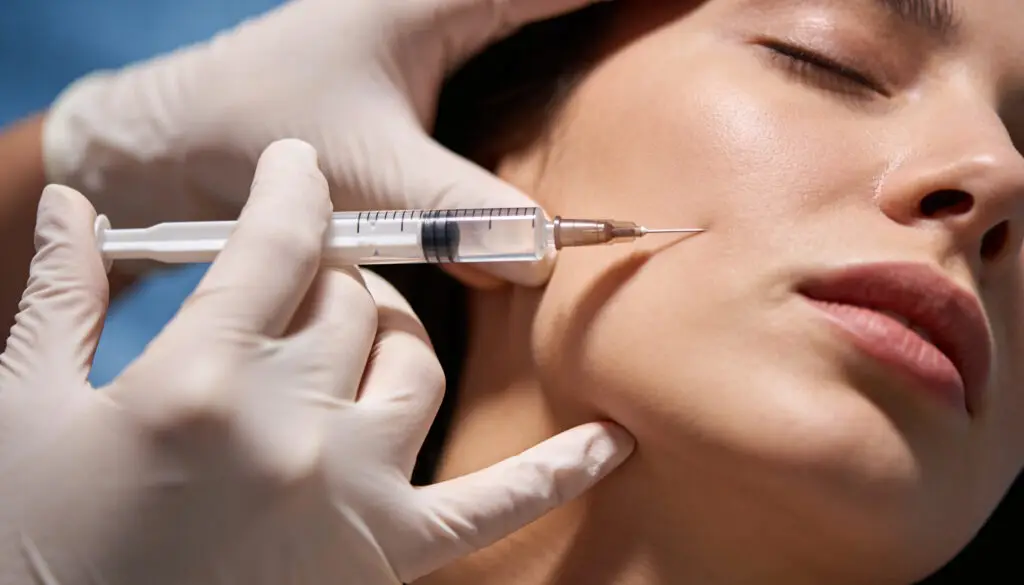
The inner cheek region just lateral to the nasolabial fold, sitting over the maxillary bone. When this zone loses volume, the nasolabial fold deepens and the mid-face appears flat. Restoring volume here softens nasolabial folds from above rather than packing them from below — a more natural correction.
The bony ridge that defines the high cheekbone contour. Filler here creates definition that catches light in photographs and shapes the upper mid-face. Conservative placement matters — overcorrection produces the unmistakable "Instagram cheek" look. Best result is a subtle lift, not a sculpted shelf.
The outer cheek region extending back toward the ear. Volume loss here is the single biggest driver of apparent jowls and lower-face heaviness — when the lateral cheek deflates, everything below it appears to drop. Restoring this zone is often what makes a face look "lifted" without surgery. Radiesse is frequently the right product here for its structural longevity.
The hollow that sits below the cheekbone and above the jawline. Deflation here creates the tired, gaunt appearance that many fitness-focused Miami Beach patients develop in their 40s and 50s. Filling this zone restores a youthful curvature to the lower mid-face. Sculptra often outperforms HA here for the diffuse, gradual rebuild this area benefits from.
There are four filler categories appropriate for the cheek, and the right choice depends on what you're treating — defined cheekbone lift wants Voluma; soft mid-face restoration wants Lyft; long-term structural support wants Radiesse; diffuse rebuild across the whole envelope wants Sculptra. Walking in asking for one specific product is fine; Kelly will tell you if it's actually right for your face. If the HA-versus-biostimulator distinction is new to you, start with what dermal fillers are and what they can do.
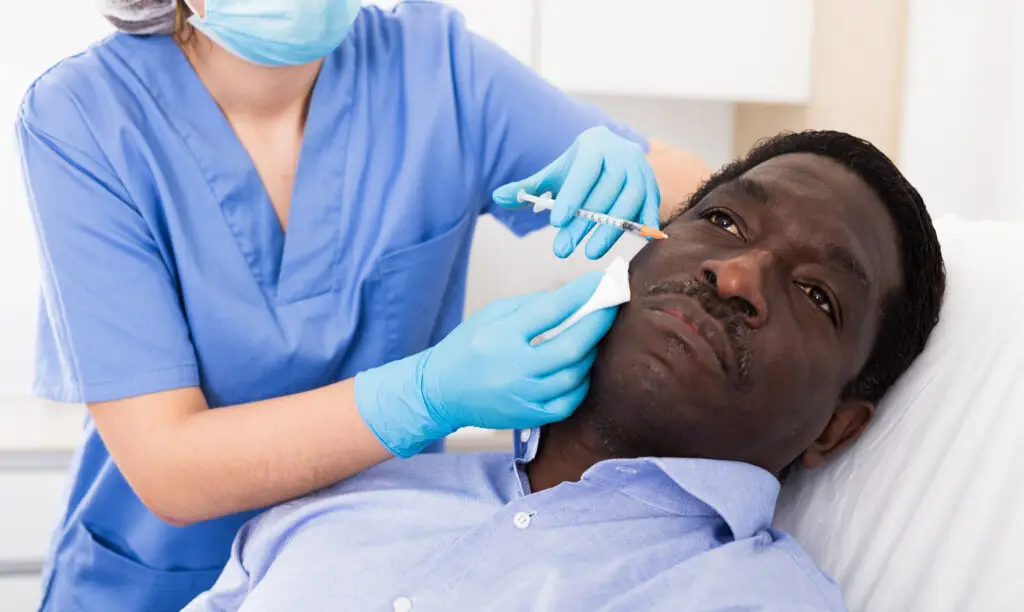
Cross-linked HA designed specifically for the mid-face. Provides immediate lift, excellent structural support over the cheekbone, and the longest-lasting HA cheek result on the market (up to 24 months). Best when you want defined cheekbone contour with HA's reversibility — if a result needs adjustment, hyaluronidase dissolves it.
Patients who want immediate, defined cheekbone lift with the safety of a reversible product. Most common first-time cheek filler.
A reliable, well-priced HA with strong structural support, suitable for cheek volume and cheekbone lift. Lyft has a slightly different particle structure than Voluma — softer integration, often preferred by patients who feel Voluma reads too firm. Results last 12–18 months. Often the right HA choice for sub-malar work and patients seeking softer, more natural mid-face refinement.
Patients seeking softer, naturally-integrated HA volumization. Also the value-conscious HA option without compromising on safety profile.
Best applied to the lateral cheek and zygomatic arch when you want immediate structural lift AND long-term collagen-built support that persists after the carrier gel resorbs. Not reversible — a consideration. Often the right choice for patients seeking a more durable cheek result than HA can deliver. Read more about Radiesse →
Patients who want long-term structural cheek lift and are confident in their result direction.
No immediate volume. Across a 2–3 session series, Sculptra triggers your own fibroblasts to build new collagen across the full mid-face. Best when volume loss is diffuse rather than focal — when you can't point to a single hollow but the whole cheek feels deflated. Results last up to 24 months. Read more about Sculptra →
Patients with diffuse mid-face volume loss who want the most natural, gradual restoration available.
Many patients benefit from two products in the same plan: Radiesse for lateral cheek structure plus Voluma for anteromedial cheek refinement, or Sculptra series for diffuse rebuild plus a small amount of HA for immediate cheekbone definition before an event. Kelly designs these combinations to work in sequence rather than at once.
Patients whose cheeks have multi-zone, multi-character volume loss not solvable with a single product.
Jowls are usually a symptom of cheek volume loss, not a separate jaw problem — which means cheek filler often does more for apparent jowls than direct jowl treatment. When the mid-face deflates, soft tissue slides down and forward, creating what reads as a jowl. Restoring the cheek lifts the tissue back up where it belongs.
Most cheek patients need 1 to 2 syringes per side — 2 to 4 total. One syringe per side is a subtle refresh. Two per side is meaningful, visible volumization. More than 2 per side in a single visit is almost always overdosing. Stage it across two sessions instead.
That’s the headline. The reasoning: there is no universal right number. The right amount depends on your starting anatomy, how diffuse the volume loss is, and whether you’re aiming for a subtle refresh or distinct cheekbone definition.
The disciplined approach is to dose conservatively in session one, see how the face settles at two weeks, and add at session two only if needed. That’s how a result stays believable.
Nearly every “pillow face,” migrated filler, or overfilled outcome we have seen — and corrected — traces back to one of four injector errors. None of them are mysteries. None of them require rare bad luck. They happen because the discipline that prevents them got skipped:
How we approach this differently. Cheek filler in this practice is mapped to your actual sub-zone anatomy, placed in the correct deep plane (often with a blunt-tip microcannula for safety), dosed conservatively per session, and staged across multiple visits when volume needs are significant. If you have prior filler that has migrated or accumulated, the conversation often starts with dissolving — not adding. Kelly’s biochemistry background informs how she thinks about each step, but the most important discipline is simpler than that: restraint.
Cheek filler swelling is normal post-injection inflammation, not a complication. Knowing the timeline in advance prevents the panic at day 2 when patients see themselves looking puffier than they expected.
Day 0–1
Peak swelling. Cheeks may look fuller than your final result. Cold compresses and head elevation help.
Day 2–3
Swelling drops noticeably. Bruising, if any, begins to fade. Most patients comfortable in public.
Day 4–7
Most visible swelling resolved. Bruising fully or mostly faded. Result emerges through the residual swelling.
Week 2
Final HA filler result settled and visible. This is the appointment we book for the photo follow-up.
Month 3+
Radiesse and Sculptra continue to develop as collagen builds. HA result holds steady through this window.
Why the day-1 face matters less than you think. The most common cause of post-injection regret is judging the result before the swelling resolves. The face you see on day 1 is your final result plus 30–50% inflammation. Wait the two weeks. Then evaluate.
Most Miami Beach practices won’t publish a cheek filler price. We do, because patients deserve to know what they’re walking into before they sit down. The per-syringe pricing below reflects what Kelly actually charges as of 2026. Your written quote at consultation reflects your specific plan.
Juvéderm Voluma and Restylane Lyft. Most patients use 1–2 syringes per side.
Per 1.5 mL syringe. Often 1 syringe per side for lateral cheek structure.
4–6 vials across 2–3 sessions for full-cheek diffuse rebuild.
What you pay for. Per-syringe (or per-vial) pricing means your invoice reflects exactly what was opened and placed. No per-area surcharge, no opaque “treatment package,” no upcharge for cannula versus needle. If one syringe accomplishes what we planned with two, you pay for one.
How Miami Beach compares to the national average. Miami Beach cheek filler pricing runs roughly 10–20% above the national average, reflecting overhead realities. Quotes meaningfully above the per-syringe pricing published here usually reflect Brickell or Bal Harbour rent — not better outcomes.
South Florida Face and Body sits in Suite 414 at 1000 5th Street, at the southern tip of Miami Beach. From SoFi, Kelly draws cheek filler patients across the barrier islands, across the causeway to mainland Miami, and from as far south as Key Biscayne.
SoFi is one of the most accessible aesthetic locations in the city — close to the MacArthur Causeway for Brickell, Downtown, and Key Biscayne patients, and a clear straight shot up Collins or Indian Creek for Mid-Beach, Surfside, and Bal Harbour. Cheek filler patients especially appreciate the convenience: most plans involve a follow-up at the two-week mark, and the same office is a short drive from anywhere in the city.
1000 5th Street, Suite 414 · Miami Beach, FL 33139
Geography matters in cheek filler planning more than patients realize. A Sunset Harbour patient whose daily routine is on foot and on the water has a different mid-face fat baseline than a Brickell finance executive whose face has held its volume from a desk-bound decade. A Key Biscayne patient with twenty years of weekend sun exposure has a different skin-quality starting point than a Mid-Beach patient whose skin is sun-managed under hats and SPF. Kelly factors that biology into product choice and dosing — not just your face at rest.
A cheek filler appointment runs 45–60 minutes. The actual injection is 15–25 minutes. The rest is reading your face, mapping sub-zones, photographs, and the careful conversation about what's reasonable and what isn't.
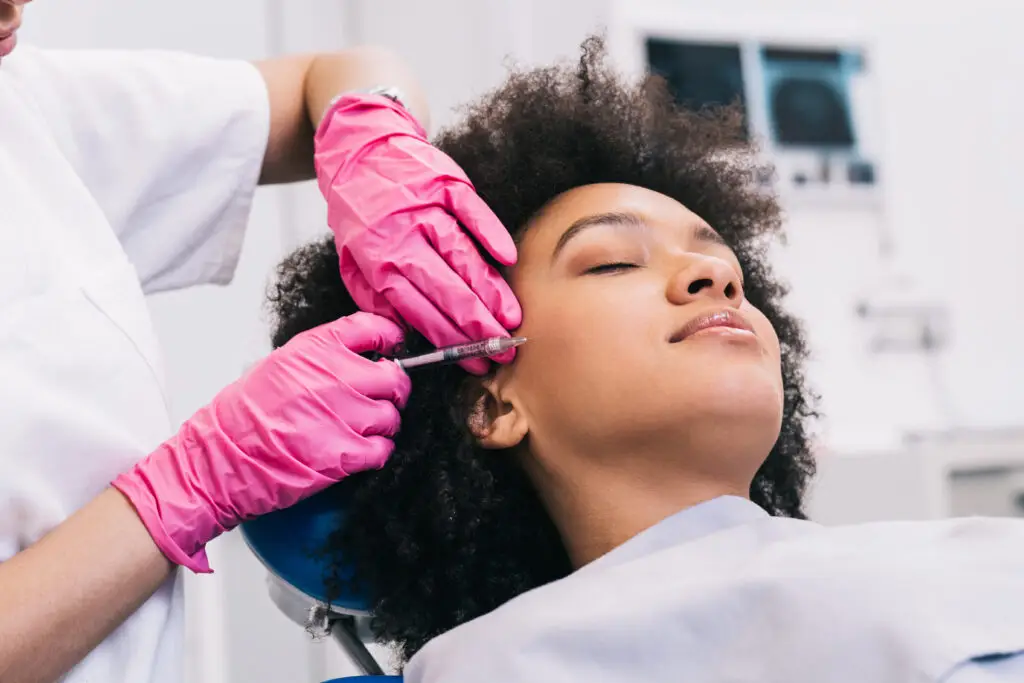
Cheek filler at South Florida Face and Body starts with reading your mid-face structure across multiple angles before any product is opened. Most Miami practices treat the cheek as a single zone and dose to a syringe count tied to a promotional package. Kelly maps four anatomical sub-zones, identifies asymmetry between sides (almost everyone has some), and writes a plan that addresses the deflation patterns actually present in your face — not a template applied to every consultation that walks in.
Kelly Wolfe is a Florida-licensed Advanced Practice Registered Nurse (APRN #11005134) and board-certified Family Nurse Practitioner (FNP-BC), credentialed by the American Nurses Credentialing Center. She holds a Master of Science in Nursing from the University of Miami, plus a Master’s in Biochemistry from Missouri State University. The biochemistry background changes how cheek filler conversations actually go. The chemistry of HA cross-linking is why Voluma holds projection differently than Lyft and why Sculptra produces a result built from your own collagen rather than deposited gel. These are real clinical decisions for the cheek — not pamphlet-level summaries. She is also a Certified Functional Medicine Practitioner.
The continuity matters for cheek work specifically because subtle asymmetry between sides develops over time, and the practitioner who placed product at session one is the only one who can track how each side is settling and adjust at the next visit. Kelly is the person who maps your zones at consultation, the person who answers your text message at week two, and the person who places the next syringe a year later when you return. One injector, one set of hands, one consistent baseline.
Same-week consultations available. South of Fifth, Miami Beach.
Kelly is the owner of South Florida Face and Body. A board-certified Family Nurse Practitioner trained at the University of Miami, she holds advanced degrees in nursing, biochemistry, and biology, with graduate research focused on metabolism and the role of leptin and appetite-suppressing hormones. She practices at the intersection of functional medicine and aesthetic injection — meaning the conversations in her treatment room often go beyond the syringe to consider sleep, hormones, metabolism, and inflammation as part of how your skin and face actually present.
Licensed as an Advanced Practice Registered Nurse in the State of Florida (APRN #11005134), Kelly brings more than three decades of experience in health, fitness, and clinical practice. She has performed aesthetic injections in South Florida for over a decade and has trained alongside the dermatology and plastic surgery community that built Miami’s aesthetic reputation.
She is the one who answers your text message. She is the one who calls the day after your injection.
From your first consultation through every follow-up, you’ll work directly with Kelly — one injector, one set of hands, one consistent plan.
Advanced practice registered nursing with a focus on family health and primary care.
Research focused on metabolism and the role of leptin and appetite-suppressing hormones.
Research with a strong foundation in human physiology, cellular biology, and biochemistry.
National certification in family practice and primary care.
Authorized to diagnose, treat, and prescribe medications in the State of Florida.
Advanced training in root-cause diagnostics, hormone optimization, metabolic health, and integrative wellness.
Over 30 years helping clients achieve sustainable health and wellness transformations.
Common questions from Miami Beach patients considering cheek filler. If yours isn't covered here, Kelly is happy to answer directly — text or call.
Cheek filler at South Florida Face and Body is priced flat per syringe: $750 per syringe for HA filler (Juvéderm Voluma and Restylane Lyft) and $800 per syringe for Radiesse (per 1.5 mL syringe). Most patients use 1–2 syringes per side, putting a typical HA session at $1,500–$3,000 and a Radiesse session at $1,600–$3,200.
A Sculptra series for diffuse rebuild runs $3,600–$7,200 across 2–3 sessions. At South Florida Face and Body, every quote is in writing per syringe before any injection.
Hyaluronic acid cheek fillers formulated for the mid-face (Juvéderm Voluma) last 18 to 24 months. Restylane Lyft lasts 12–18 months. Radiesse in the cheek lasts 12–18 months with continued collagen benefit beyond the gel’s resorption. Sculptra results last up to 24 months as your own collagen carries the result.
Active Miami Beach lifestyles — outdoor training, sun exposure, heavier metabolisms — can shorten duration slightly. Most patients plan a maintenance touch-up annually.
Most patients need 1 to 2 syringes per side (2–4 syringes total) for a meaningful full-cheek result. A subtle refresh for a younger patient or first-time filler patient often needs only 1 syringe per side. Significant volume restoration for an older patient may require 2 syringes per side staged across two sessions to avoid overcorrection.
Kelly writes the exact syringe plan at consultation — there is no template, and you only pay for syringes actually used.
There is no single “best” — the right cheek filler depends on what you’re trying to fix:
For lifted, defined cheekbone contour: Juvéderm Voluma (a firm HA filler designed for structural support).
For natural, soft mid-face restoration: Restylane Lyft.
For long-term structural lateral cheek lift: Radiesse.
For diffuse, gradual full-cheek rebuild: Sculptra series.
Kelly chooses based on your anatomy and goal at consultation. See the product breakdown above for the full reasoning.
1 mL per side delivers a subtle, conservative cheek refresh — appropriate for minor volume loss, younger patients, or first-time filler patients.
2 mL per side (4 mL total) delivers a meaningful, visible volumization — appropriate for moderate-to-significant volume loss, patients seeking distinct cheekbone definition, or patients restoring a previously fuller mid-face. Kelly typically stages 2 mL per side across two sessions rather than placing it all at once.
More is not always better; the right answer depends on your starting anatomy. Read the full breakdown above.
Cheek filler swelling typically follows a predictable pattern:
Day 0–2: Peak swelling. Your cheeks may look fuller than your final result.
Day 3–5: Swelling drops noticeably; bruising, if any, begins to fade.
Day 7: Most visible swelling resolved.
Day 14: Final HA filler result settled and visible.
The “stages” represent normal post-injection inflammation, not a complication. Cold compresses, head elevation, and avoiding salt and alcohol for the first 48 hours reduce peak swelling. Full timeline above.
Not with a conservative, anatomically-trained approach. The “pillow face” look results from overcorrection — too much product placed too superficially, in the wrong sub-zone, or layered repeatedly across multiple sessions without allowing tissue to settle.
At South Florida Face and Body, Kelly places filler at the correct deep tissue plane (often supra-periosteal at the cheekbone), conservatively per session, in the sub-zones that actually lost volume. Most patients leave with a more rested, balanced face — not a different face. Read more about how we avoid this above.
Cheek filler can migrate in two situations: when too much product is placed too superficially (the filler has nowhere to go but laterally or downward), or when product is placed in the wrong tissue plane initially.
Properly placed cheek filler in the deep supra-periosteal plane is structurally supported by the cheekbone and does not migrate meaningfully. If you have prior filler that has migrated, hyaluronidase can dissolve HA filler and reset the area before new placement — and we often recommend exactly that as the first step for patients arriving with accumulated prior filler.
Most cheek fillers are formulated with lidocaine, and Kelly applies topical anesthetic before the procedure. The injection itself is most often described as pressure rather than sharp pain. For larger volume treatments, Kelly often uses a blunt-tip microcannula instead of a sharp needle, which dramatically reduces bruising risk and discomfort. Most patients tolerate cheek filler very comfortably.
Most patients return to normal activity the same day. Mild swelling is expected for 24–72 hours; bruising, if any, resolves within 5–7 days. Avoid strenuous exercise, saunas, and direct sun for 24–48 hours, and avoid pressure on the treated area the first night.
Most patients are comfortable in public by day 3 and fully recovered by day 7.
Most healthy adults with mid-face volume loss, flat or hollow cheeks, or interest in non-surgical cheekbone definition are good candidates. Cheek filler is FDA-approved for adults seeking facial rejuvenation, though specific products carry their own age ranges.
You are not a candidate if you are pregnant or breastfeeding, have an active skin infection at the planned injection site, have a known hypersensitivity to filler components or lidocaine, or have a history of severe allergic reactions. Disclose your full medical history at consultation.
Yes — and often should be. Cheek filler pairs naturally with neuromodulator for the upper face, with jawline or chin filler for full lower-face balance, with under-eye filler for the tear trough transition, and with skin-quality treatments like medical microneedling or RF. Sequencing matters — Kelly will plan the order at consultation based on what you want to settle when.
1000 5th Street, Suite 414, Miami Beach, FL 33139 — in the South of Fifth (SoFi) district at the southern tip of Miami Beach. We’re 8 minutes from Brickell, 10 from Mid-Beach, 19 from Bal Harbour. $4/hr in the attached garage; free street parking is available around the building during business hours (one nearby zone is metered). Phone: (786) 529-1860. Hours: Monday–Friday 10am–6pm, Saturday 10am–2pm.