
A labs-first, regenerative approach to hair loss — exosomes, PDRN, scalp microneedling, peptides, and prescription topicals — directed by a University of Miami-trained nurse practitioner and functional medicine clinician.
Most Miami hair clinics treat thinning hair as a follicular density problem and answer with one tool: a single injectable, or transplant surgery. Kelly Wolfe, MSN, FNP-BC built her hair restoration practice differently — starting with the lab work that explains why your hair is shedding, then layering the right regenerative modalities in the right order. She owns the practice and personally manages every plan from intake through maintenance.
4.9 60 Google Reviews
OWNER · UNIVERSITY OF MIAMI-TRAINED · FL APRN #11005134
Androgenetic alopecia (male and female pattern), postpartum hair loss, telogen effluvium, thinning hairline, crown/vertex thinning, traction alopecia (non-scarring), eyebrow thinning.
Exosomes, PDRN (salmon DNA), scalp microneedling with topical growth factors, peptide therapy, compounded medication specifically tailored to the type of hair loss, lab-directed supplementation.
60–90 minute appointment. Most patients return to work the same day. No shampoo or sweat for 24 hours.
Less shedding at 6–10 weeks. Visible new density at 4–6 months. Fullest result settles 9–12 months after the initial series of 3–4 sessions.
$400–$1,800 per session depending on modality. Most complete first-year protocols run $2,000–$6,500. Lab work $300–$650. All quoted in writing before treatment.
Kelly Wolfe, MSN, APRN, FNP-BC — Florida APRN #11005134, University of Miami-trained, Certified Functional Medicine Practitioner. Every consult, every injection.
Most patients arrive at a hair restoration consultation expecting an injection schedule. The first thing they should be asked for is a blood draw. Hair loss is rarely just a scalp problem — it is usually a downstream symptom of something upstream that conventional medicine and most aesthetic clinics never test for.

Walk into any of the major Miami hair clinics and the conversation flows in one direction: how many injectable sessions, how many grafts, what does your hairline want to look like. The conversation that does not happen is the one where someone asks what your ferritin is, what your thyroid is doing, whether you’ve had a postpartum drop, what your DHEA-S looks like, whether you sleep, whether you’ve lost twenty pounds in the last six months, whether your iron stores ever fully recovered after pregnancy or heavy menstruation. Those questions matter — because injecting growth factors into a follicle that’s starving for ferritin or being suppressed by a sluggish thyroid is treating the symptom while the cause keeps producing more of the same problem.
Kelly’s approach inverts that order. Lab work first. Pattern analysis first. Cause identification first. Then the right regenerative tool — exosomes, PDRN, scalp microneedling, peptides, prescription topicals — in the right sequence for your specific cause. This is not a slower path. It is the path that actually works.
A meaningful portion of patients presenting with “hair loss” have one or more reversible drivers visible on standard functional lab work. Low ferritin, suboptimal vitamin D, undiagnosed subclinical hypothyroidism, elevated DHEA-S in women, or low testosterone in men can each suppress follicular activity independent of androgenetic genetics. Treating the scalp while ignoring these is expensive and slow.
At consultation, Kelly orders the panels appropriate to your presentation. Results are reviewed in person, and the regenerative plan is built around what the labs reveal — not the other way around.
Hair loss is a final common pathway for a dozen distinct upstream causes. Treating it without identifying which causes are active in your case is guesswork. Below is what we test for and why each matters.
The lab review is not a formality. Each finding directly changes the protocol. A patient with ferritin of 28 ng/mL gets iron repletion before — not instead of, but before — the regenerative work begins, because injecting growth factors into a ferritin-starved follicle produces a fraction of the result. A patient with subclinical hypothyroidism gets a referral to address that first. A perimenopausal woman with elevated DHEA-S gets a different topical and oral plan than a postpartum patient with low ferritin and normal hormones. Same visible thinning, different correct treatment.
Once reversible drivers are addressed, the regenerative work begins. Most Miami clinics offer one of these tools. We offer all four and choose based on your hair-loss pattern, your timeline, your budget, and what your labs reveal.
Purified exosomes — nano-sized signaling vesicles derived from mesenchymal stem cells in a regulated lab — deliver a standardized, higher concentration of regenerative growth factors and microRNA than what most autologous blood-derived treatments can provide. No blood draw required. Exosomes typically achieve comparable or stronger follicular stimulation in fewer sessions. Often the right choice for patients who want fewer total appointments, who have a low platelet baseline, or who simply want the most concentrated regenerative signaling available.
PDRN — purified DNA fragments most commonly derived from salmon sperm DNA — activates adenosine A2A receptors in scalp tissue. This increases local blood flow, suppresses inflammation, and stimulates fibroblast and follicular activity. Widely used in South Korea and expanding rapidly in U.S. aesthetic practice.An excellent regenerative anchor in its own right, particularly for inflammatory scalp presentations, and a strong partner to exosomes in combination protocols.
Controlled micro-channels are created in the scalp using a medical microneedling device, which both stimulates follicular activity directly (via mechanical micro-injury and Wnt signaling) and dramatically improves penetration of applied topicals — growth factor serums, peptides, exosomes, PDRN, or compounded minoxidil. Microneedling pricing is $400 per session, with the option to add exosomes ($200), PDRN ($200), or both together ($400) for layered regenerative delivery.Excellent as a standalone for early thinning, as a between-session adjunct to exosome or PDRN therapy, or as a delivery method for prescription topicals between regenerative sessions. New to the treatment? Start with how medical microneedling works.
The between-visit half of hair restoration. Compounded medication specifically tailored to the type of hair loss (often combining minoxidil with finasteride, tretinoin, or other actives in a single topical solution), oral medications where appropriate, and prescription peptides including GHK-Cu, Thymosin Beta-4, and PTD-DBM in topical or oral formulations.Daily prescription support is what carries results between in-office sessions. It is also the part of the protocol that can be delivered entirely via Florida-licensed telehealth statewide.
Most strong outcomes come from combinations: exosomes layered over a microneedling pass in the same visit, PDRN alternating with exosomes across the year, scalp microneedling at home between in-office sessions, and prescription topicals running continuously underneath. The right stack depends on your labs, your pattern, your budget, and how aggressive you want to be.Kelly designs the stack at consultation and writes it down — what you're doing each month, what it costs, what you should be tracking. Plans evolve as photographs at month 3 and month 6 show what's working.
Patients often arrive with a specific modality in mind because of social media or a friend's recommendation — most often PRP, which is still the loudest brand in the room despite being eclipsed by newer regenerative biologics. Each of the tools below has a distinct mechanism, cost, and ideal patient. This is the comparison most clinics don't publish, including the honest framing of where exosomes and PDRN have moved past first-generation PRP protocols.
| Exosomes | PDRN (Salmon DNA) | Scalp Microneedling + Topicals | |
|---|---|---|---|
| Source | Lab-purified mesenchymal stem cell vesicles Most concentrated regenerative signal | Purified salmon sperm DNA fragments | Mechanical micro-channels + applied serum |
| Mechanism | Standardized growth factors + microRNA signaling at follicle level | A2A receptor activation, anti-inflammatory, increases scalp blood flow | Wnt signaling from micro-injury + topical drug delivery |
| Blood draw required | No | No | No |
| Sessions to result | 2–3 monthly + maintenance Fewest visits | 3–4 monthly + maintenance | Monthly indefinitely |
| Typical Miami Beach cost | $1,200–$1,800 / session | $500–$800 / session Most affordable regenerative | $400 / session · +$200–$400 add-on |
| First visible effect | Reduced shedding at 6–8 weeks Fastest response | Reduced inflammation 2–4 weeks; shedding reduces 8–10 weeks | Mild scalp tightening immediate; density change at 12+ weeks |
| Discomfort | Mild with topical numbing | Mild with topical numbing | Moderate; scalp tenderness 24 hrs |
| Best for | Most patients seeking the strongest regenerative signal in the fewest visits; female pattern hair loss, advanced thinning, postpartum recovery | Inflammatory scalp, combination protocols, budget-conscious regenerative | All stages as adjunct; standalone for very early thinning |
Pricing reflects typical Miami Beach 2026 ranges and varies by injector experience and overhead. Quotes meaningfully above this range are not buying meaningfully better outcomes — most reflect Brickell or Bal Harbour rent.
In-office regenerative work (exosomes, PDRN, microneedling) happens at the Miami Beach office. But the prescription half of a hair-loss protocol — labs, compounded medication specifically tailored to the type of hair loss, peptides, supplementation, ongoing medication management — can be delivered entirely via Florida-licensed telehealth. Labs are drawn at a Quest or LabCorp near you. Results are reviewed by video. Prescriptions ship to your door.
"Hair loss" is a single search query. It is not a single condition. The female and male versions of androgenetic alopecia look different on the scalp, respond differently to the same treatments, and require different prescription support. Treating them with the same protocol underwhelms both.
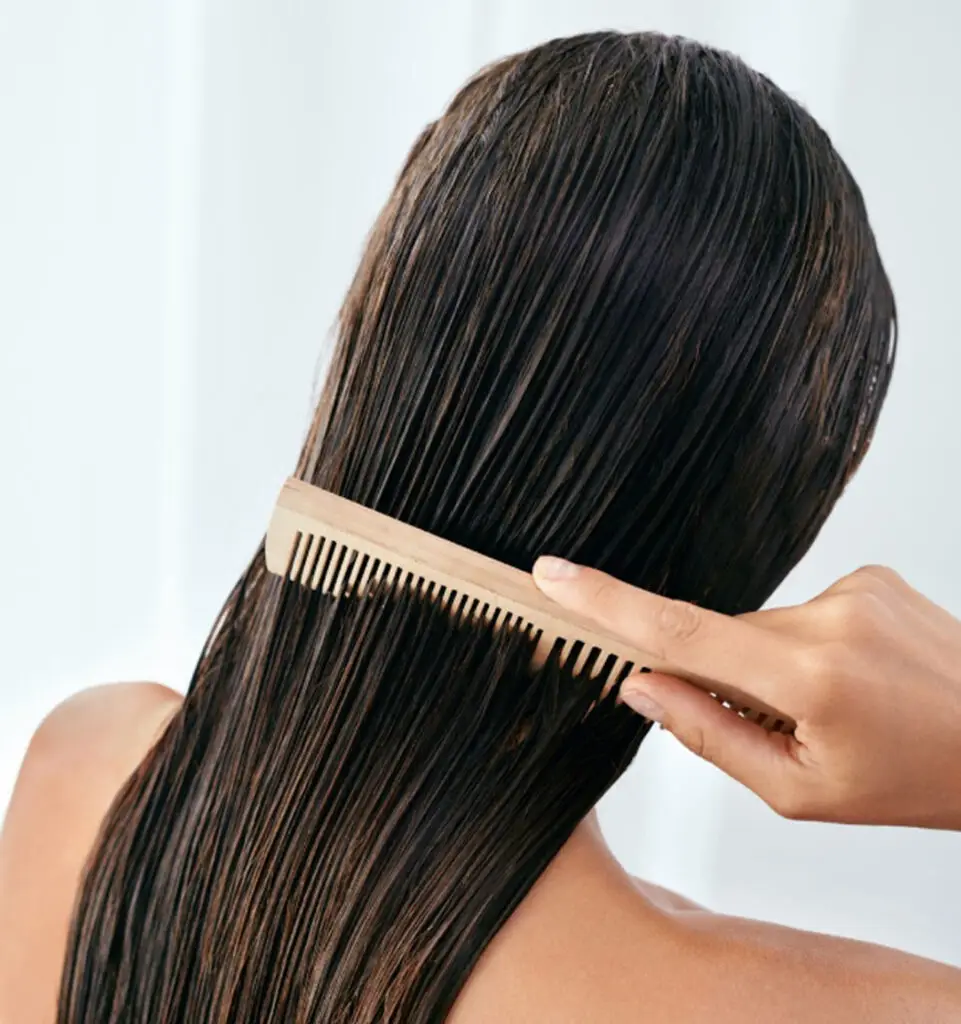
Female pattern hair loss typically presents as diffuse thinning across the crown and mid-scalp with a preserved frontal hairline — the classic “Christmas tree” widening of the central part. The hair becomes finer and shorter (miniaturization) before the density visibly drops. The pattern is graded Ludwig 1 through 3.
Female protocols emphasize: aggressive lab workup (ferritin, TSH/T3/T4, full sex hormone panel, vitamin D), oral spironolactone for androgen-driven cases, compounded topical minoxidil (often combined with finasteride and tretinoin in a single solution), exosomes or PDRN as the regenerative anchor, scalp microneedling between sessions, and lab-directed iron, vitamin D, and B-vitamin support. Postpartum and perimenopausal patients almost always have a reversible component on labs that materially changes the response to injectables.
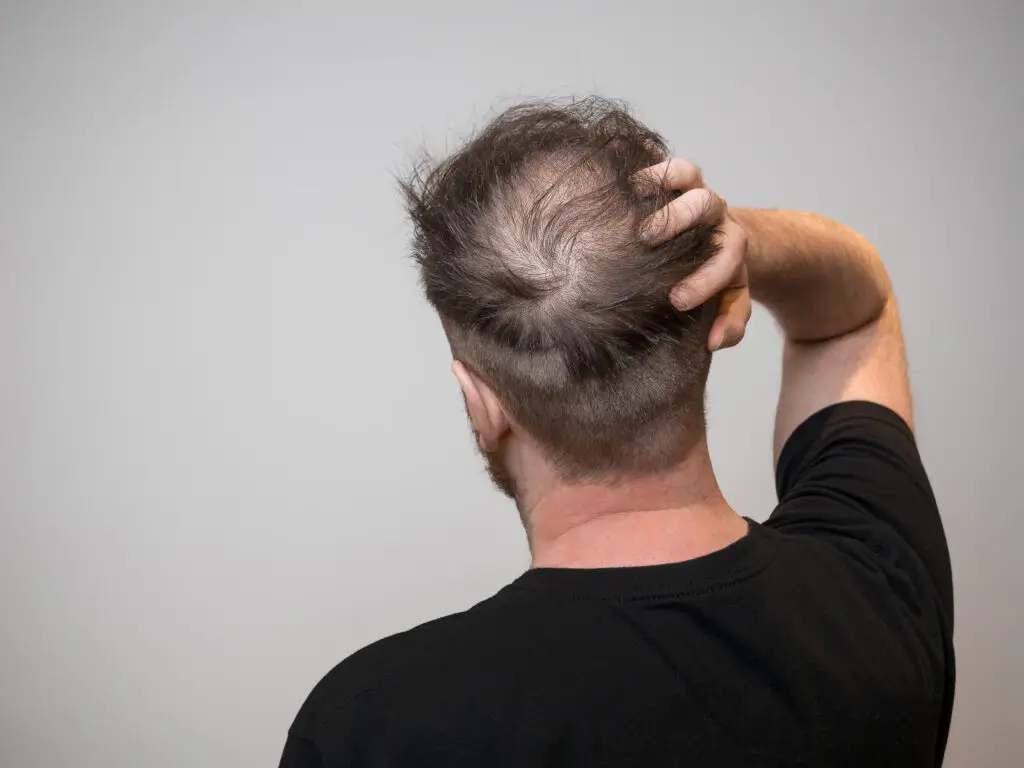
Male pattern hair loss progresses through the Norwood scale 1 through 7, typically affecting the frontal hairline (recession at the temples and forelock) and the vertex (crown) before progressing to the mid-scalp. The mechanism is dihydrotestosterone (DHT) sensitivity in genetically predisposed follicles.
Male protocols emphasize: testosterone, DHT, and SHBG labs (especially for men on TRT, which can accelerate hair loss); oral finasteride or dutasteride to suppress DHT systemically; compounded topical solutions; exosomes or PDRN as the regenerative anchor; and an honest assessment of whether a Norwood 5 or 6 patient is genuinely a candidate for non-surgical work or whether transplant is the correct conversation. We will say so either way.
This is the section most Miami hair clinics will not write, because they make their money on injectable series. We are not surgical, but we are honest about who needs surgery.
A surgical hair transplant (FUE or FUT) is the right answer when:
A surgical transplant is the wrong first answer when:
If your evaluation indicates transplant is genuinely your best option, Kelly will say so and refer you to a vetted surgeon. We are not running an injectable series on a patient who needs a different procedure.
Hair restoration is one of the slowest aesthetic procedures because hair grows on a biological timeline that no injection can shortcut. Set expectations against this calendar, not against social media before-and-afters.
Week 0
Consultation, lab review, first session. Labs return in 5–10 business days.
Weeks 6–10
First sign: reduced daily shedding. You stop seeing as many strands in the drain. Often subtle.
Months 3–4
Initial regrowth visible on close inspection. Baby hairs along the hairline and part line.
Months 6–9
Visible density change. The patient typically notices first; family notices around month 6–7.
Month 12
Fullest result settles. Maintenance schedule established — typically one session every 4–6 months.
Most Miami hair clinics quote by package — three sessions for X, six for Y — without exposing what's actually in the price. Below is what each modality costs, in writing, per session, before any markup logic.
These are typical Miami Beach 2026 ranges. Quotes meaningfully above this range usually reflect Brickell or Bal Harbour overhead rather than better outcomes. You will receive your specific plan in writing — modality, session count, and total cost — before any treatment is performed.
2–3 sessions typically achieves a full regenerative result. Premium tier; the most concentrated regenerative signal available.
Most affordable regenerative tier. Pairs naturally with exosomes for layered synergistic protocols.
Add exosomes for +$200, PDRN for +$200, or both layered together for +$400. Monthly during active growth phase.
Compounded medication specifically tailored to the type of hair loss, peptide topicals, and adjunct prescriptions. Telehealth-eligible statewide.
Ferritin, TSH/T3/T4, vitamin D, sex hormones, CBC, CRP, B12, zinc. Drawn at a local lab near you.
Typical complete first-year cost for a moderate androgenetic alopecia patient: $2,000–$3,200 for a microneedling-anchored protocol with PDRN add-ons, compounded topicals, and labs. $3,800–$6,500 for an exosome-anchored or stacked protocol with multiple modalities. You always pay per actual treatment delivered. There are no opaque packages or pre-paid commitments to walk away from.
South Florida Face and Body sits in Suite 414 at 1000 5th Street, at the southern tip of Miami Beach. From SoFi, Kelly draws hair restoration patients across the barrier islands, across the causeway to mainland Miami, and statewide via telehealth for the prescription side of the protocol.
SoFi is one of the most accessible aesthetic locations in the city — close to the MacArthur Causeway for Brickell, Downtown, and Key Biscayne patients, and a clear straight shot up Collins or Indian Creek for Mid-Beach, Surfside, and Bal Harbour. Hair restoration patients especially appreciate the access, since most protocols involve monthly visits over 3–4 months and consistent travel matters.
1000 5th Street, Suite 414 · Miami Beach, FL 33139
Parking: attached garage at the building, $4/hour. Free street parking is available around the building during business hours (one small section nearby is pay-to-park).
For patients outside Miami-Dade — Orlando, Tampa, Jacksonville, the Panhandle — the prescription side of hair restoration (compounded medication specifically tailored to the type of hair loss, peptide therapy, supplementation, lab management) is delivered entirely via Florida-licensed telehealth. The in-office regenerative sessions are scheduled when you’re in Miami; the daily work happens at home.
A hair restoration consultation runs 60–90 minutes. The actual injection — once treatment begins — takes 20–30 minutes. The rest is the conversation, the photographs, and the written plan that explains what you're committing to.
Patients arrive at South Florida Face and Body from across Miami-Dade — and across Florida via telehealth — for a particular kind of hair-loss conversation. One where the labs come before the injections. Where the protocol is built around what’s actually causing your shedding. Where you are not handed a six-session injectable package by a tech who has never reviewed a thyroid panel.
Kelly Wolfe is a Florida-licensed Advanced Practice Registered Nurse (APRN #11005134) and board-certified Family Nurse Practitioner (FNP-BC), credentialed by the American Nurses Credentialing Center. She holds a Master of Science in Nursing from the University of Miami, plus a Master’s in Biochemistry from Missouri State University with graduate research on metabolism and appetite-regulating hormones. That biochemistry background matters for hair restoration in a way patients don’t always realize — the endocrine cascades that drive female pattern hair loss, the iron and B-vitamin biology that determines whether any regenerative scalp therapy can even work, the inflammatory and metabolic context that makes a scalp responsive or unresponsive. These are the conversations she actually has at consultation, not pamphlet-level summaries. She is also a Certified Functional Medicine Practitioner.
She owns the practice. The person you book with is the person who reviews your labs, plans your protocol, performs every injection, and adjusts your plan as your scalp responds. Every visit, start to finish.
Same-week consultations available. South of Fifth, Miami Beach.
Kelly is the owner of South Florida Face and Body. A board-certified Family Nurse Practitioner trained at the University of Miami, she holds advanced degrees in nursing, biochemistry, and biology, with graduate research focused on metabolism and the role of leptin and appetite-suppressing hormones. She practices at the intersection of functional medicine and aesthetic injection — meaning the conversations in her treatment room often go beyond the syringe to consider sleep, hormones, metabolism, and inflammation as part of how your skin and face actually present.
Licensed as an Advanced Practice Registered Nurse in the State of Florida (APRN #11005134), Kelly brings more than three decades of experience in health, fitness, and clinical practice. She has performed aesthetic injections in South Florida for over a decade and has trained alongside the dermatology and plastic surgery community that built Miami’s aesthetic reputation.
She is the one who answers your text message. She is the one who calls the day after your injection.
From your first consultation through every follow-up, you’ll work directly with Kelly — one injector, one set of hands, one consistent plan.
Advanced practice registered nursing with a focus on family health and primary care.
Research focused on metabolism and the role of leptin and appetite-suppressing hormones.
Research with a strong foundation in human physiology, cellular biology, and biochemistry.
National certification in family practice and primary care.
Authorized to diagnose, treat, and prescribe medications in the State of Florida.
Advanced training in root-cause diagnostics, hormone optimization, metabolic health, and integrative wellness.
Over 30 years helping clients achieve sustainable health and wellness transformations.
Common questions from Miami Beach and Florida patients considering hair restoration. If yours isn't covered here, Kelly is happy to answer directly — text or call.
Non-surgical hair restoration in Miami Beach runs $400 to $1,800 per session depending on modality. Exosome therapy is $1,200–$1,800. PDRN (“salmon DNA”) is $500–$800. Scalp microneedling is $400 per session, with optional regenerative add-ons: $200 for exosomes, $200 for PDRN, or $400 for both layered together. Most protocols involve 3–4 monthly sessions plus maintenance every 4–6 months.
A typical complete first-year plan runs $2,000–$3,200 for a microneedling-anchored protocol with PDRN and compounded topicals (including labs), and $3,800–$6,500 for an exosome-anchored or stacked protocol. Functional lab work is an additional $300–$650. Every quote is in writing before treatment begins.
The full non-surgical regenerative menu: exosome therapy (purified stem-cell-derived signaling vesicles), PDRN (polydeoxyribonucleotide, also called salmon DNA), scalp microneedling with topical growth factors and peptides (with optional exosome or PDRN add-ons), and prescription adjuncts — compounded medication specifically tailored to the type of hair loss, oral finasteride or dutasteride for men, oral spironolactone for women, peptides like GHK-Cu and Thymosin Beta-4, and functional supplementation directed by lab results.
We do not perform surgical hair transplants. When transplant is genuinely the right answer, we refer to a vetted surgeon rather than over-treating with injectables.
Exosomes are lab-purified signaling vesicles derived from mesenchymal stem cells — they deliver a standardized, highly concentrated payload of growth factors and microRNA. PDRN uses purified DNA fragments (typically from salmon sperm DNA) that activate adenosine A2A receptors to increase scalp blood flow, suppress inflammation, and stimulate fibroblast and follicular activity.
Exosomes are the most concentrated regenerative signal available, typically achieving visible response in 2–3 sessions. PDRN is the most affordable regenerative biologic and an excellent fit for inflammatory scalp presentations or as a partner in stacked protocols. Many patients benefit most from a combination — see the side-by-side above.
At minimum: CBC, ferritin, vitamin D, TSH with free T3 and free T4, vitamin B12, and zinc. For women: DHEA-S, total and free testosterone, SHBG, estradiol, and progesterone. For men: total and free testosterone, SHBG, DHEA-S, and DHT where clinically indicated. Inflammatory and metabolic markers (CRP, fasting insulin, HbA1c) are added when the clinical picture suggests them.
Reversible drivers — low ferritin under 70 ng/mL, suboptimal vitamin D, undiagnosed subclinical hypothyroidism, elevated DHEA-S — are present in a significant percentage of patients pursuing hair loss treatment. They must be addressed before injectables are worth the cost.
Expect a 12-week minimum before judging results. Hair follicles cycle slowly: regenerative treatments reactivate dormant follicles, but those follicles still grow new hair on the body’s biological timeline. Reduced shedding is the first sign, typically at 6–10 weeks. Visible new density appears at 4–6 months. The fullest result settles 9–12 months after the initial series.
Standardized photographs at baseline, month 3, and month 6 are how we objectively track change. The patient typically notices first; family members usually notice around month 6–7.
Strong candidates: early-to-moderate androgenetic alopecia (Norwood 1–4 for men, Ludwig 1–2 for women); visible thinning but with hair still present in the affected area on close inspection; postpartum patients or recent telogen effluvium; women with diffuse thinning and addressable hormonal or nutritional drivers.
Poor candidates for injectables alone: Norwood 5–6 with completely smooth, follicle-free scalp areas — injectables cannot create hair where no follicle exists. In those cases a surgical transplant referral is the honest recommendation. Read more about when transplant is the right answer.
Most patients describe scalp injections as mild discomfort, not sharp pain. Topical anesthetic is applied for 20–30 minutes before injection, and the scalp is also numb to deeper sensations because the injection is shallow. Sensitive patients can request a vibration tool or scalp cooling during injection. Most patients tolerate the appointment very comfortably and return to normal activity the same day.
PDRN — polydeoxyribonucleotide — is a regenerative biologic composed of purified DNA fragments. Most commercial products derive these from salmon sperm DNA, which is why the treatment is sometimes called “salmon DNA therapy.” The DNA fragments activate adenosine A2A receptors in scalp tissue, increasing local blood flow, reducing inflammation, and stimulating fibroblast and follicular activity.
PDRN is widely used in South Korea for hair restoration and is expanding rapidly in U.S. aesthetic practice. We use it as a combination partner with exosomes and microneedling for synergistic protocols, or as the primary regenerative biologic for patients seeking the most affordable evidence-based option.
Yes — postpartum hair loss is one of the most common reasons patients book with us. Postpartum shedding (telogen effluvium) typically peaks 3–4 months after delivery and resolves over 6–12 months, but many women never return fully to their baseline density.
Functional lab work — particularly ferritin, thyroid (including reverse T3), and vitamin D — frequently reveals reversible drivers in postpartum women that conventional medicine misses. Our treatment combines lab-driven supplementation, scalp microneedling with topical growth factors, and exosomes or PDRN where indicated. We are conservative about systemic medications in breastfeeding patients and will discuss what is and is not appropriate.
Partially. In-person injectable treatments (exosomes, PDRN, scalp microneedling) require an in-office visit at our Miami Beach location. However, the prescription side of a hair-loss protocol — labs, compounded medication specifically tailored to the type of hair loss, oral finasteride or dutasteride, spironolactone, peptide therapy, prescription supplements, and ongoing medication management — can be delivered entirely via Florida-licensed telehealth.
We serve patients across Miami, Fort Lauderdale, Boca Raton, West Palm Beach, Orlando, Tampa, Jacksonville, Sarasota, and Naples on the telehealth side. Labs are drawn at a Quest or LabCorp near you, results are reviewed by video, and prescriptions ship to your door.
Do not stop any anticoagulant or antiplatelet medication on your own. Aspirin, clopidogrel (Plavix), warfarin, apixaban (Eliquis), rivaroxaban (Xarelto), and similar medications are prescribed for important reasons, and stopping them can carry serious cardiovascular risk.
If you take a blood thinner, please consult your prescribing physician before any pre-treatment adjustments — do not discontinue any anticoagulant without their guidance. In many cases, scalp injections (exosomes, PDRN) and microneedling can be performed safely with patients remaining on their full anticoagulant regimen — there may be modest extra bruising, but the procedure is generally not contraindicated. Kelly will review your specific medications at consultation and coordinate with your prescribing physician if any change is being considered.
Most Miami hair clinics are surgical practices anchored on FUE/FUT transplant procedures starting at $8,000–$15,000+. We are a non-surgical, labs-first practice that treats hair loss as a medical problem with upstream causes before it treats it as a follicular density problem.
We test for ferritin, thyroid, vitamin D, sex hormones, and inflammation before recommending repeated injectable sessions. We offer the full regenerative stack — exosomes, PDRN, microneedling, peptides — rather than a single tool. And when a transplant is genuinely the right answer (Norwood 5–6, scarring traction loss), we refer rather than over-treat with injectables.
Yes. Hair restoration pairs naturally with medical microneedling for the face, neuromodulator treatment for upper-face lines, medical-grade prescription skincare, peptide therapy, and functional medicine work for hormone optimization and metabolic health.
Many patients combine their hair restoration visits with other planned aesthetic treatments to consolidate trips to the office, particularly patients traveling from Brickell, Mid-Beach, or the broader Miami-Dade area.
1000 5th Street, Suite 414, Miami Beach, FL 33139 — in the South of Fifth (SoFi) district at the southern tip of Miami Beach. We’re 8 minutes from Brickell, 10 from Mid-Beach, 19 from Bal Harbour. Phone: (786) 529-1860. Hours: Monday–Friday 10am–6pm, Saturday 10am–2pm.
Parking: the parking garage attached to the building is $4/hour. Free street parking is available around the building during business hours (with one small pay-to-park section nearby).