
By Kelly Wolfe, MSN, APRN, FNP-BC, CFMP · Updated July 23, 2026
Are peptides legal? Mostly yes — but “peptides” isn’t one thing, and the honest answer depends on the specific peptide and how you get it. Some peptides are FDA-approved prescription medications, some are legally compounded by licensed pharmacies with a prescription, and many of the ones sold online as “research chemicals” are not legal for human use at all. In Florida, the safe and legal path is straightforward: a licensed provider evaluates you, prescribes an appropriate peptide, and a licensed pharmacy fills it. At South Florida Face and Body in Miami Beach, nurse practitioner Kelly Wolfe (MSN, APRN, FNP-BC, CFMP; Florida APRN #11005134) does exactly that — and the rules are moving fast. An FDA advisory committee has now recommended six of the seven peptides it reviewed — including BPC-157, TB-500, and KPV — for return to the list of substances licensed pharmacies may compound, and those recommendations now await a formal FDA ruling. Here is where things actually stand.
Are peptides legal? The honest answer
Peptide legality comes down to three separate buckets: FDA-approved peptide drugs, which are fully legal by prescription; peptides compounded by a licensed pharmacy for an individual patient, which are legal with a valid prescription; and “research use only” peptides sold online, which are not legal for human use. Almost all of the confusion online comes from mixing these three up.
Here is what each bucket actually means:
- FDA-approved peptide medications. A handful of peptides have completed the full FDA approval process for a specific use. The GLP-1 medications semaglutide and tirzepatide are peptides, and so is tesamorelin. These are prescribed like any other approved drug — unambiguously legal.
- Compounded by a licensed pharmacy (with a prescription). Many therapeutic peptides aren’t FDA-approved as finished drugs but have been prepared by licensed compounding pharmacies for an individual patient who has a valid prescription. This is a legitimate, regulated pathway — and it’s the part of the picture that changed most in 2026 (more below).
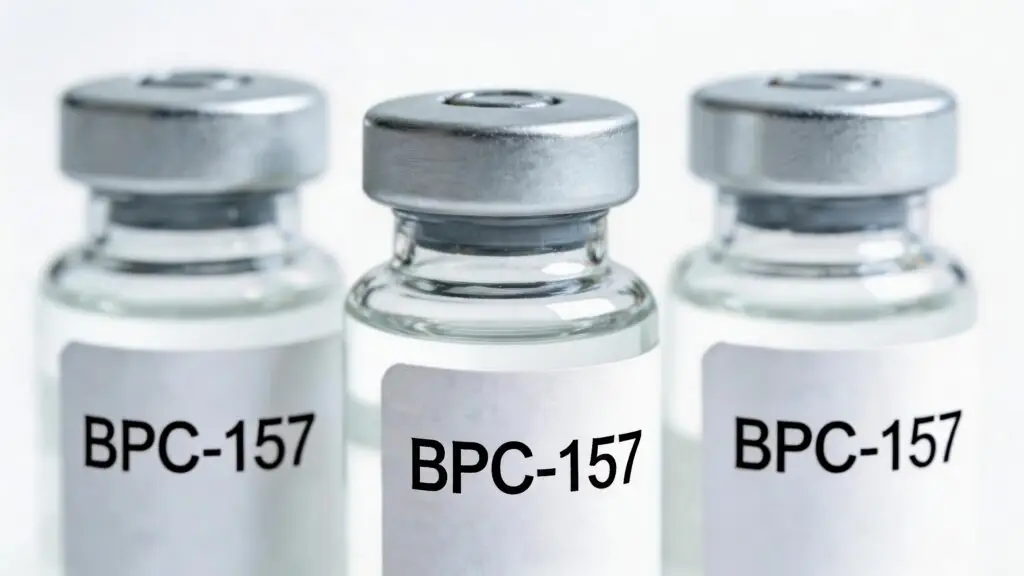
- “Research use only” peptides sold online. These are the vials marketed as “not for human consumption.” That label isn’t a loophole — it’s a warning. Selling those products for people to inject is selling an unapproved drug, and using them is neither legal nor safe.
The takeaway: it’s not that peptides are “legal” or “illegal.” It’s that the pathway determines legality. A peptide prescribed by a licensed provider and filled by a licensed pharmacy is legitimate medical care. The same molecule bought off a website “for research” is not.
What changed in 2023–2026 (and why everyone’s confused)
The peptide landscape shifted sharply between 2023 and 2026: the FDA restricted roughly 19 peptides in 2023, then in 2026 began reversing course — but “removed from the restricted list” is not the same as “FDA-approved.”
The timeline is worth knowing, because most of what you’ll read online is out of date:
- 2023 — the restriction. The FDA placed about 19 popular peptides — including BPC-157, TB-500, CJC-1295, ipamorelin, and thymosin alpha-1 — into Category 2 of the 503A bulk-substances list. In plain terms, that flagged them for safety-data concerns and effectively stopped licensed compounding pharmacies from preparing them.
- February 2026 — a signaled reversal. Federal health officials publicly signaled that most of those restricted peptides were expected to move back toward Category 1, which would restore the legal compounding pathway.
- April 2026 — the reclassification. The FDA removed roughly a dozen peptides (including BPC-157 and TB-500) from the restricted list. This is the step that gets misreported everywhere: being removed from the restricted list is not FDA approval, and it does not automatically make a peptide compoundable. It simply moved them from “explicitly restricted” back to “under review.”
- Most recently — the advisory recommendation. The FDA’s Pharmacy Compounding Advisory Committee reviewed seven peptides and recommended six of them for the 503A compounding list — BPC-157, KPV, TB-500, MOTS-c, epitalon, and semax — while rejecting only emideltide (also called DSIP). BPC-157 passed 8 to 6. The votes went against the recommendation of the FDA’s own scientists, and they are recommendations only: the FDA still has to decide whether to act on them through formal rulemaking.
Meanwhile, with the semaglutide and tirzepatide shortages resolved, large-scale compounded copies of those GLP-1 medications are winding down, and the FDA-approved branded products are the compliant path.
What the FDA advisory recommendation actually means
An FDA advisory committee has recommended six of the seven peptides it reviewed — including BPC-157, TB-500, and KPV — for the list of substances licensed pharmacies can compound, overruling the FDA’s own scientists. It’s a real step toward a legal prescription pathway, but a recommendation only — not a rule, and not FDA approval — and it now awaits a formal FDA ruling.
This is the most significant movement on peptides in three years, and it’s worth understanding precisely — including the parts that don’t make a good headline:
- What the panel did. The committee reviewed seven peptides and recommended six of them for the 503A compounding list: BPC-157 (8 yes, 6 no, 1 abstention), KPV, TB-500, MOTS-c, epitalon, and semax. It rejected only emideltide (DSIP). Six of seven now sit on a recommended path back toward pharmacy compounding, pending the FDA’s ruling.
- What it does not do. The votes are advisory and non-binding. Before anything changes in practice, the FDA has to complete a formal public rulemaking process — which typically runs through public comment and can take months to years. Nothing about how you can legally obtain these peptides has changed yet.
- It still is not FDA approval. Being eligible for pharmacy compounding is a different and lower bar than the clinical-trial approval process behind a drug like semaglutide. A peptide can become compoundable and still have very little human trial data behind it.
- The FDA’s own scientists recommended against them. In its briefing materials, FDA staff concluded the evidence weighed against adding these peptides, citing limited proof of effectiveness, gaps in how the substances are chemically characterized, and unresolved questions about impurities and immune reactions. One member who voted no noted that randomized data on BPC-157 suggested it may perform no better than placebo. The committee recommended them anyway.
- The panel’s makeup drew criticism. Several voting members work for or advise companies that stand to benefit commercially from peptide sales — a conflict flagged by researchers and consumer-safety advocates.
We’re telling you the unflattering half on purpose. The direction of travel is genuinely toward a regulated, prescription-based path, and that’s good news — the realistic alternative for most people right now is an unregulated website. But “closer to legal” is not “legal,” and it is definitely not “proven.”
Are peptides legal in Florida specifically?
There is no separate Florida law banning peptides — the rules that matter are federal. In Florida, the legal route is simply a licensed provider prescribing an appropriate peptide that’s filled by a licensed pharmacy.
Florida doesn’t add its own peptide ban on top of the federal framework. What Florida does provide is the licensure that makes legitimate treatment possible: an Advanced Practice Registered Nurse (APRN) is authorized to diagnose, treat, and prescribe. Kelly Wolfe is a Florida-licensed APRN (#11005134) and board-certified Family Nurse Practitioner, which means peptide therapy at South Florida Face and Body runs through a real prescriber and a real pharmacy — not a website. If you’d like the full clinical picture of how that works, our peptide therapy in Florida page walks through it in detail.
Legal vs. illegal peptide sources: the part that actually matters
The most important legal question isn’t “are peptides legal” — it’s where yours come from. A peptide prescribed by a licensed provider and filled by a licensed pharmacy is legitimate care; the same peptide bought online “for research” is an unapproved drug, and injecting it is neither legal nor safe.
This is where a lot of people get into trouble. A few honest points:
- “Research use only” is not a shield. The label literally means the product is not intended for human use. Buying it and injecting it doesn’t become legal because a sticker called it “research.”
- Enforcement usually targets sellers, not individual buyers — which is exactly why this gray market exists in the open. But “rarely prosecuted” is not the same as “legal,” and it gives you zero protection on what’s actually in the vial.
- You have no guarantee of purity, dose, or sterility. Gray-market peptides aren’t held to pharmacy standards. Contamination, wrong concentrations, and mislabeled compounds are real risks when there’s no oversight.
Two details from the FDA’s own review make this concrete:
- You may not get the molecule you think you ordered. FDA reviewers noted that “BPC-157” is a common name rather than a standardized drug name, and that multiple different chemical forms are sold commercially under it — so a label may not tell you what is actually in the vial.
- There are real adverse-event reports. Among the small number of BPC-157 reports the FDA has received, one involved a product labeled “research purposes only”: the patient developed skin and gum discoloration that resolved when she stopped and returned when she restarted it.
If a price looks far below what a clinic quotes, that’s usually the tell: it’s a “for research” product with no pharmacy behind it. That’s not a bargain — it’s the risky bucket.
What about specific peptides — BPC-157, TB-500, semaglutide?
Some peptides are firmly FDA-approved and legal by prescription; others, like BPC-157 and TB-500, are in a regulatory gray zone that’s actively under review in 2026. Which are available compliantly changes as the rules evolve.
A simplified snapshot as of mid-2026:
- FDA-approved (legal by prescription): semaglutide and tirzepatide (GLP-1 medications for weight and metabolic health) and tesamorelin.
- Prescribable through legitimate channels, status evolving: several growth-hormone-supporting peptides have historically been available through licensed compounding; availability depends on current FDA guidance.
- Gray zone, actively moving: BPC-157, TB-500, CJC-1295, and others came off the restricted list in April 2026. An FDA advisory committee has since recommended six peptides — including BPC-157, TB-500, KPV, and MOTS-c — for the compounding list. But none of these are FDA-approved, and the rulemaking that would actually restore compounding has not been completed.
Because this list moves, the right move isn’t to memorize it — it’s to work with a provider who tracks the FDA’s guidance and will tell you which peptides are currently prescribable and compliant. That’s a normal part of a consultation. If you want the background science first, our guide to peptide therapy and our piece on peptides for injury recovery are good starting points.
Are peptides legal in sports, the NCAA, and the military?
Often no. Even when a peptide is legal to be prescribed, most growth-hormone-releasing peptides are banned in competitive sport. The World Anti-Doping Agency prohibits them, and the NCAA and the U.S. military prohibit them too.
BPC-157, for example, sits on WADA’s prohibited list under non-approved substances (S0). “Legal to prescribe” and “allowed in your sport or service” are two different questions. WADA’s prohibited list covers growth-hormone secretagogues and many peptides, which means NCAA athletes and drug-tested competitors can face sanctions even for a peptide their doctor could legally prescribe to a non-athlete. Active-duty military members are subject to their own prohibitions. If you’re subject to testing, confirm a compound’s status with your governing body before starting anything.
Are peptides safe?
For healthy adults, peptide therapy is generally well tolerated when it’s prescribed and monitored by a qualified provider who reviews your history, labs, and medications first. Most of the real safety risk comes from unregulated, gray-market products — not from properly prescribed ones.
With legitimate, pharmacy-filled peptides and clinical oversight, the most common side effects are mild and local: redness, itching, or a small bump at the injection site. Depending on the peptide, some people notice temporary water retention, headache, flushing, fatigue, or appetite changes. Serious reactions are uncommon but possible, which is exactly why supervision matters. Peptide therapy generally isn’t appropriate during pregnancy or breastfeeding, with active or recent cancer, or with certain medical conditions — a proper evaluation sorts that out.
If you take a blood thinner (an anticoagulant or antiplatelet medication such as aspirin, warfarin, Plavix, Eliquis, or Xarelto), tell your provider before starting, because injections can bruise or bleed more easily. Never stop or change an anticoagulant on your own — always consult your prescribing physician first.
The safe, legal way to use peptides in Florida
The compliant path is simple: a consultation and labs with a licensed provider, a prescription matched to your goals, fulfillment by a licensed pharmacy, and ongoing monitoring. No “research chemicals,” no guesswork.
At South Florida Face and Body, peptide therapy is prescribed and monitored by Kelly Wolfe personally — one provider who reviews your labs, explains which peptides realistically fit (and which don’t), prices the plan transparently, and adjusts it as your goals or the regulations change. Many patients fold peptide therapy into Optimal, her functional-medicine membership, so it’s managed alongside hormones, metabolism, and longevity rather than in isolation. Care is available statewide by telehealth and in person in Miami Beach.
The bottom line: peptides aren’t “illegal,” but they aren’t a free-for-all either. Get them prescribed by a licensed provider and filled by a licensed pharmacy, and you’re on solid, safe ground. Book a consultation to find out which peptides are right — and currently compliant — for you.
Ready to do peptides the right way?
Book a consultation with Kelly Wolfe to find out which peptides fit your goals and are currently compliant — prescribed, dosed, and monitored properly. Book a consultation.
Where to Find Us in Miami Beach
Our office sits on 5th Street at the northern edge of South of Fifth (SoFi), the southern tip of Miami Beach — about three blocks from Ocean Drive. Most peptide therapy patients are seen statewide by telehealth, while others visit us in person from across Miami Beach, Brickell, Mid-Beach, and Bal Harbour.
1000 5th Street, Suite 414
Miami Beach, FL 33139
Frequently Asked Questions
Are peptides legal?
It depends on the peptide and how you get it. Some peptides are FDA-approved prescription medications, and some are legally compounded by a licensed pharmacy for a patient with a valid prescription — both are legal. Peptides sold online as “research use only” chemicals are not legal for human use. The pathway, not the molecule, is what determines legality.
Are peptides legal in Florida?
Yes, when handled correctly. Florida doesn’t have a separate law banning peptides — the rules that matter are federal. In Florida, the legal route is a licensed provider prescribing an appropriate peptide that is filled by a licensed pharmacy. At South Florida Face and Body, they’re prescribed by a Florida-licensed nurse practitioner (APRN #11005134).
Is it legal to buy peptides online?
Buying peptides online marketed “for research use only” and using them on yourself is not legal, because they’re unapproved drugs not intended for human use. Enforcement generally targets sellers rather than individual buyers, but that isn’t the same as it being legal or safe. The legal way to obtain peptides is a prescription filled by a licensed pharmacy.
What peptides are FDA-approved?
A handful of peptides carry full FDA approval for specific uses, including the GLP-1 medications semaglutide and tirzepatide for weight and metabolic health, and tesamorelin. Many other “wellness” peptides are not FDA-approved drugs and have been accessed through licensed compounding pharmacies, a landscape that changed significantly in 2026.
Are peptides legal in sports, the NCAA, or the military?
Usually not. Even when a peptide is legal to prescribe, most growth-hormone-releasing peptides are banned by the World Anti-Doping Agency, the NCAA, and the U.S. military. “Legal to prescribe” and “allowed in your sport or service” are different questions, so drug-tested athletes and service members should confirm status with their governing body first.
What is the 2026 FDA status of BPC-157 and TB-500?
In 2023 the FDA restricted BPC-157, TB-500, and other peptides by placing them in Category 2 of the 503A bulk-substances list. In April 2026 about a dozen of them, including BPC-157 and TB-500, were moved off that restricted list. An FDA advisory committee has since reviewed seven peptides and recommended six of them — BPC-157 (8 to 6), KPV, TB-500, MOTS-c, epitalon, and semax — for the list pharmacies may compound from, rejecting only emideltide. Those recommendations are not rules; the FDA still has to issue an official ruling through formal public rulemaking, and none of it is the same as FDA approval.
Does the FDA advisory recommendation mean peptides are legal now?
No. An FDA advisory committee has recommended six of the seven peptides it reviewed — including BPC-157, TB-500, and KPV — be added back to the list of substances licensed pharmacies may compound, voting against the advice of the FDA’s own scientific staff and rejecting only emideltide. It is a meaningful step toward a legal prescription pathway, but the recommendation is non-binding, an official FDA ruling still has to happen through formal rulemaking, and it does not amount to FDA approval. Buying peptides online as “research chemicals” remains outside the legal path regardless.
Are peptides safe?
For healthy adults, peptide therapy is generally well tolerated when prescribed and monitored by a qualified provider who reviews your history, labs, and medications first. Common side effects are mild and local, such as injection-site redness or irritation, and vary by peptide. Most of the real risk comes from unregulated gray-market products rather than properly prescribed ones.
How do I get peptides legally in Florida?
Start with a consultation and labs with a licensed provider, get a prescription matched to your goals, have it filled by a licensed pharmacy, and stay monitored over time. At South Florida Face and Body, that entire process is handled by Kelly Wolfe, statewide by telehealth or in person in Miami Beach — no “research chemicals” involved.

Kelly Wolfe
Kelly Wolfe, MSN, APRN, FNP-BC, CFMP, is a Florida-licensed nurse practitioner (APRN #11005134) and Certified Functional Medicine Practitioner who founded South Florida Face and Body. She prescribes and monitors peptide therapy personally, working only with licensed pharmacies and staying current with the FDA’s evolving guidance so every protocol is compliant and safe.
Her rule on peptides is simple: the right protocol, from a real pharmacy — never a “research chemical” off a website.
Meet Kelly →