
By Kelly Wolfe, MSN, APRN, FNP-BC, CFMP
Hormone therapy for perimenopause and menopause replaces the estrogen, progesterone, and sometimes testosterone your body stops making around midlife — easing hot flashes, night sweats, disrupted sleep, brain fog, mood swings, and low libido. At South Florida Face and Body in Miami Beach, nurse practitioner Kelly Wolfe (MSN, APRN, FNP-BC, CFMP) designs every plan around your own lab work rather than a one-size-fits-all prescription. In late 2025 the FDA removed the long-standing “boxed warning” from menopausal hormone therapy, reflecting today’s science — that when it’s started at the right time, for the right person, it is both safe and genuinely life-improving.
Here, hormone care isn’t sold as a one-off prescription. It’s one part of the Optimal program, Kelly’s functional-medicine membership — because your hormones don’t work in isolation, and they shouldn’t be read that way either.
If you’re in your 40s or 50s and feel like your body has stopped following the rules, you’re not imagining it, and you’re not out of options. Below, Kelly explains what perimenopause and menopause do to your hormones, the signs that treatment might help, how hormone therapy works today, what the 2025 FDA change means for safety, and exactly how care works as part of the package.
Perimenopause vs. menopause: what’s the difference?
Perimenopause is the transition — the years of fluctuating hormones leading up to your final period. Menopause is a single point in time: 12 months with no period. Everything after that is postmenopause.
Perimenopause often starts in the early-to-mid 40s (sometimes late 30s) and can last four to ten years. During this stretch, estrogen and progesterone don’t simply decline; they swing unpredictably, which is why symptoms can feel chaotic and change month to month. The average age of menopause in the United States is 52.
This distinction matters because symptoms, and the way we approach treatment, differ across the transition. Many women assume they’re “too young” for menopause care when they’re squarely in perimenopause — the exact window when starting treatment tends to deliver the most benefit.
Signs you may benefit from hormone therapy
The most common reasons women pursue hormone therapy are hot flashes, night sweats, and sleep disruption — but the symptom list is much longer, and any combination is worth evaluating.
Perimenopause and menopause can affect nearly every system in the body. If several of these sound familiar and they interfere with daily life, they’re worth discussing:
- Hot flashes & night sweats — sudden heat, flushing, and drenching sweats that wreck sleep
- Trouble sleeping — waking at 3 a.m., or never feeling fully rested
- Brain fog — word-finding lapses, poor focus, forgetfulness
- Mood changes — new irritability, anxiety, or low mood
- Midsection weight gain — weight that settles around the belly despite no diet change
- Low libido — reduced desire, arousal, or satisfaction
- Vaginal dryness & discomfort — dryness, irritation, pain with intimacy, urinary changes
- Joint aches & fatigue — new stiffness and a persistent energy drain
No two women present the same way. Some are floored by hot flashes; others never get a single one but struggle with mood, sleep, or libido. A thorough intake and the right labs are what turn a vague “I don’t feel like myself” into a plan.
How hormone therapy works today
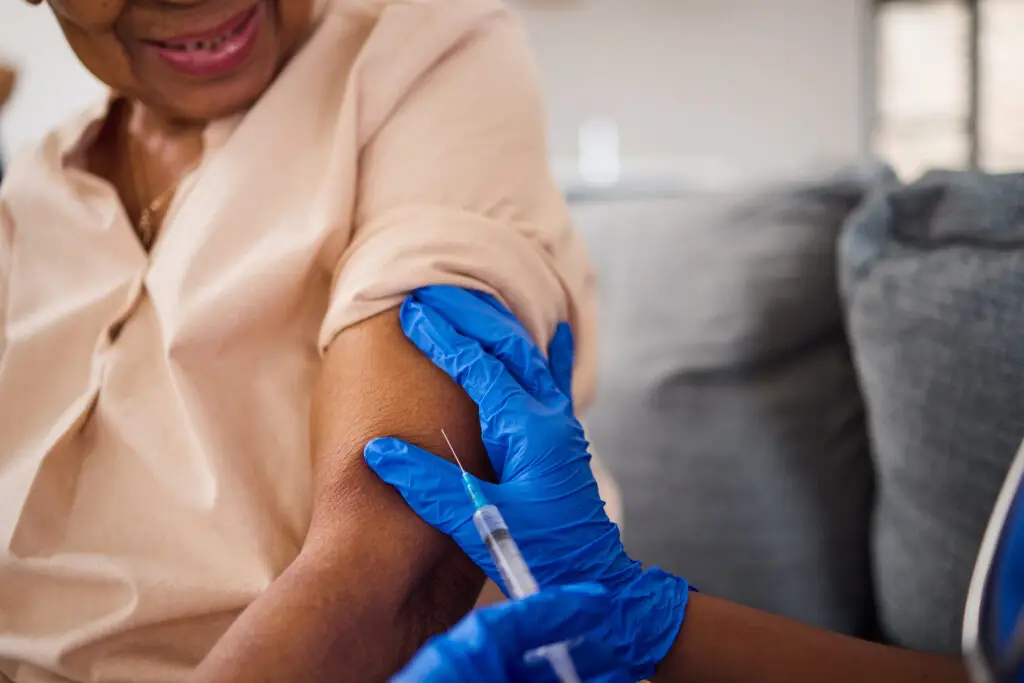
Modern hormone therapy replaces a small fraction of what your ovaries once produced — enough to relieve symptoms and support long-term health. (Experts increasingly prefer the term hormone therapy over the older hormone replacement therapy, or HRT, precisely because it replaces only a portion of pre-menopausal levels.) A plan usually involves one or more of the following:
- Estrogen — the primary driver of hot flash, sleep, and vaginal symptom relief. Available as patches, gels, creams, pills, and low-dose vaginal formulations.
- Progesterone — paired with estrogen to protect the uterine lining in women who still have a uterus; it can also aid sleep.
- Testosterone — used selectively, most often for persistent low libido and energy that estrogen alone doesn’t resolve.
What “bioidentical” actually means
Bioidentical hormones are structurally identical to the hormones your body makes. Many FDA-approved products, including common estradiol patches and micronized progesterone, are bioidentical. That’s different from custom “compounded bioidentical” preparations, which aren’t FDA-reviewed for consistency.
During your consultation, Kelly will explain which formulations she recommends for your situation and why, so “bioidentical” becomes a clear clinical choice rather than a marketing buzzword.
Hormone therapy is one part of Optimal
At South Florida Face and Body, hormone optimization isn’t a standalone prescription — it’s one track inside Optimal, Kelly’s functional-medicine membership, where your whole pattern is read together and moved toward how you actually want to feel.
A “normal” lab result is only an average; it’s a floor built from everyone who got tested, including those who may just be tired and depleted. Optimal reads your labs against your symptoms and goals as one connected system, then dials them toward Optimal rather than nudging them just inside a reference range. Within that membership, hormone optimization sits alongside three other tools, used only if your labs and goals call for them:
- Hormone optimization — perimenopause and menopause support for women, testosterone (as needed), and thyroid and the full hormone pattern for everyone.
- Peptide therapy — pharmaceutical-grade, prescription peptides for recovery, sleep, and metabolic signaling.
- GLP-1 metabolic support — semaglutide or tirzepatide for weight loss, managed to protect muscle, bone, and hormones.
- Health & longevity — personalized supplements, nutrition, training, and lifestyle built around feeling good for decades.
That’s what makes it a program rather than a prescription: one plan, one provider, read as a whole. You can explore the full Optimal membership here.
The 2025 FDA change: Is hormone therapy safe?
For most healthy women who begin treatment within about 10 years of menopause or before age 60, the benefits of hormone therapy generally outweigh the risks — a position the FDA formally recognized when it moved to remove the boxed warning in 2025.
For over two decades, menopausal hormone therapy carried a prominent “black box” warning built largely on one early-2000s study of a single older formulation, tested mostly in women well past menopause. That warning discouraged a generation of women — and their clinicians — from a treatment that, for many, is appropriate.
In November 2025 the FDA and HHS announced they would remove that boxed warning from estrogen-containing menopausal hormone therapy products, and the agency has since approved updated labeling that presents benefits and risks in a more balanced, age-specific way.
A few points of nuance that a responsible plan still accounts for:
- Timing matters. The updated guidance emphasizes starting within 10 years of menopause onset or before age 60 for systemic therapy, when the risk-benefit balance is most favorable.
- Some cautions remain. The FDA did not remove the endometrial-cancer warning for estrogen-alone systemic products, which is why progesterone is used alongside estrogen when you still have a uterus.
- It’s still individualized. Personal and family history — including breast cancer, cardiovascular disease, and clotting risk — shape whether and how hormone therapy is used.
A note if you take a blood thinner: Because estrogen can modestly affect clotting, we must know about any anticoagulant medication (such as warfarin, Eliquis, or Xarelto) before starting therapy. Never stop or change an anticoagulant on your own — always consult your prescribing physician first and tell Kelly about it during your consultation so your plan is built safely around it.

Perimenopause, menopause, and weight gain
Hormone therapy is not a weight-loss drug — but by improving sleep, energy, and the hormonal shifts that push fat toward the midsection, it can make healthy weight management far more achievable.
Declining estrogen is associated with a shift in where the body stores fat, moving it toward the abdomen while poor sleep and fatigue quietly sabotage the habits that keep weight stable. Addressing the underlying hormonal picture removes obstacles that willpower alone can’t.
For women whose primary goal is weight loss, we look at the whole metabolic picture. Within the Optimal program, hormone support and a medical weight-loss plan can run together. GLP-1 medications like semaglutide or tirzepatide are managed so you keep your muscle, bone, and hormones instead of just chasing the scale.
If you’d like to understand how those two options differ, our guide on semaglutide vs. tirzepatide breaks it down.
Benefits beyond symptom relief
Relief from hot flashes and better sleep are the changes women feel first, but the value of well-timed hormone therapy extends further:
- Bone protection. Estrogen helps preserve bone density; hormone therapy is FDA-approved for the prevention of postmenopausal osteoporosis.
- Vaginal and urinary comfort. Local estrogen effectively treats dryness, discomfort, and recurrent urinary symptoms.
- Quality of life. Better sleep, steadier mood, and restored libido tend to lift daily functioning as a whole.
If hormone therapy isn’t right for you
Hormone therapy isn’t the only path, and it isn’t appropriate for everyone. Non-hormonal options can meaningfully reduce menopause symptoms — including certain prescription medications for hot flashes, targeted lifestyle and sleep strategies, and support for stress and metabolic health.
As a Certified Functional Medicine Practitioner, Kelly frequently blends approaches, and Optimal can layer in complementary tools such as peptide therapy or vitamin and nutrient therapy where they fit your goals — or simply confirm that nothing needs fixing when that’s the honest answer.
What to expect: from consult to plan
Every plan starts the same way — with the Root-Cause Consult, a $99 consultation where Kelly reads your existing bloodwork against your symptoms and goals, then orders an extensive, advanced lab panel that goes beyond a standard physical. You’ll get a straight answer about what’s actually driving how you feel, and an honest “this doesn’t need fixing” when that’s the truth.
If you move forward, hormone care is delivered through Optimal membership at $300/month, which covers Kelly’s ongoing oversight: your protocol, monthly check-ins, and every refill and adjustment. The $99 consult fee is credited in full toward your first month.
Here’s the path you can expect:
- Start with the Root-Cause Consult. $99, credited toward membership if you enroll.
- Targeted lab work. Kelly orders the advanced panel that standard bloodwork skips.
- A plan built for you. Specific formulations, doses, and delivery methods, chosen for your pattern.
- Monthly check-ins. We re-check and fine-tune over time, because bodies change and so should the plan.
Care is telehealth-first across Florida through our statewide telehealth program, with the Miami Beach office available when in-person testing, such as InBody body composition testing, helps.
You can read more about Kelly’s philosophy on our about page.
The bottom line: Feeling “off” in your 40s or 50s is common, but it isn’t something you simply have to endure. With today’s science and a plan built around your labs and history, hormone therapy can help you feel like yourself again. Book the $99 Root-Cause Consult to find out what’s actually going on.
Ready to feel like yourself again?
At South Florida Face and Body, hormone care runs through the Optimal membership: a $99 Root-Cause Consult that credits toward membership, then $300 per month for Kelly’s ongoing care. Some FDA-approved hormone medications may be partly covered by your insurance; membership care is paid directly.
Start with the $99 Root-Cause Consult — Kelly reads your labs against your symptoms and gives you a straight answer, and the fee credits toward Optimal membership if you move forward. Book your Root-Cause Consult.
Where to Find Us in Miami Beach
Our office sits on 5th Street at the northern edge of South of Fifth (SoFi), the southern tip of Miami Beach — about three blocks from Ocean Drive. Women travel to us from across Miami Beach, Brickell, Mid-Beach, and Bal Harbour, and from around the state through telehealth.
1000 5th Street, Suite 414
Miami Beach, FL 33139
Kelly Wolfe
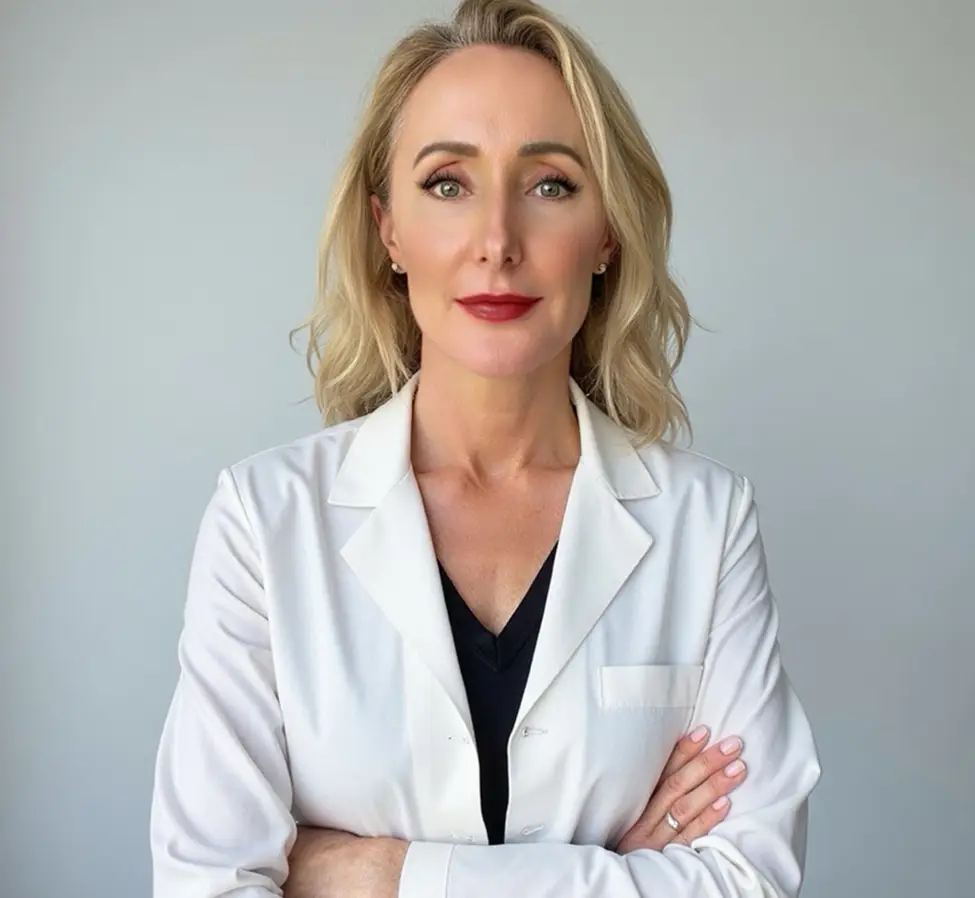
Kelly Wolfe, MSN, APRN, FNP-BC, CFMP, is a Florida-licensed nurse practitioner and Certified Functional Medicine Practitioner who founded South Florida Face and Body. She builds every hormone plan around your own lab work and reviews and adjusts it herself over time — never a template, never handed off to a portal.
Her hormone philosophy is simple: treat the person, read the labs, and dial toward how you actually want to feel.
Meet Kelly →Frequently Asked Questions
What’s the difference between perimenopause and menopause?
Perimenopause is the transition leading up to menopause — often four to ten years of fluctuating estrogen and progesterone, usually beginning in the 40s.
Menopause is a single point in time: 12 consecutive months with no menstrual period, which occurs at around age 52 on average. Symptoms can appear throughout perimenopause, which is often the best window to start treatment.
What are the signs I might need hormone therapy?
The most common signs are hot flashes, night sweats, and disrupted sleep, but the list is longer: brain fog, mood changes, midsection weight gain, low libido, vaginal dryness, joint aches, and fatigue. If several of these interfere with daily life, they’re worth evaluating — even if you never get a single hot flash.
Is hormone therapy a standalone treatment or part of a program?
At South Florida Face and Body, hormone therapy is delivered as part of the Optimal program, Kelly’s functional-medicine membership — not as a one-off prescription. Hormone optimization is read alongside your thyroid, metabolic markers, and goals, with the option to add peptide therapy, GLP-1 weight loss, or longevity support only if your labs call for it. It begins with a $99 Root-Cause Consult that credits toward the $300/month membership.
Is hormone therapy safe? What did the FDA change in 2025?
For most healthy women who start within about 10 years of menopause or before age 60, the benefits generally outweigh the risks. In November 2025 the FDA moved to remove the decades-old “boxed warning” from estrogen-containing menopausal hormone therapy, and has since approved more balanced, age-specific labeling. Safety is still individualized based on your personal and family history, so a proper evaluation matters.
Does hormone therapy help with perimenopause weight gain?
Hormone therapy is not a weight-loss drug, but it can make weight management easier by improving sleep and energy and addressing the hormonal shift that pushes fat toward the midsection. For weight loss specifically, we look at the whole metabolic picture and may combine hormone support with a dedicated medical weight-loss plan.
What is bioidentical hormone therapy?
Bioidentical hormones are structurally identical to the ones your body makes. Many FDA-approved products, such as estradiol patches and micronized progesterone, are bioidentical, which is different from custom “compounded bioidentical” preparations that aren’t FDA-reviewed for consistency. Kelly will recommend the specific formulation that fits your situation and explain why.
Does insurance cover hormone therapy?
Some FDA-approved hormone medications may be partly covered by insurance. You’ll know exactly what your plan involves and if it’s covered before you start.
When should I start hormone therapy?
Current guidance favors starting systemic hormone therapy within 10 years of menopause onset or before age 60, when the risk-benefit balance is most favorable. Many women are in perimenopause — the transition years — when symptoms first become disruptive, and that’s often an ideal time to be evaluated rather than waiting.
Can I do hormone therapy through telehealth in Florida?
Yes. Kelly offers hormone care through a Florida telehealth program, so women across the state, including Fort Lauderdale, Boca Raton, Orlando, Tampa, Jacksonville, and everywhere in between, can be evaluated, start treatment, and be monitored remotely. It runs through the Optimal membership, which is telehealth-first, with the Miami Beach office available when in-person testing helps.
This article is educational and isn’t a substitute for individualized medical advice. Whether hormone therapy is right for you is a decision to make with a qualified provider who has reviewed your history and labs.