What BPC-157 is, in plain terms.
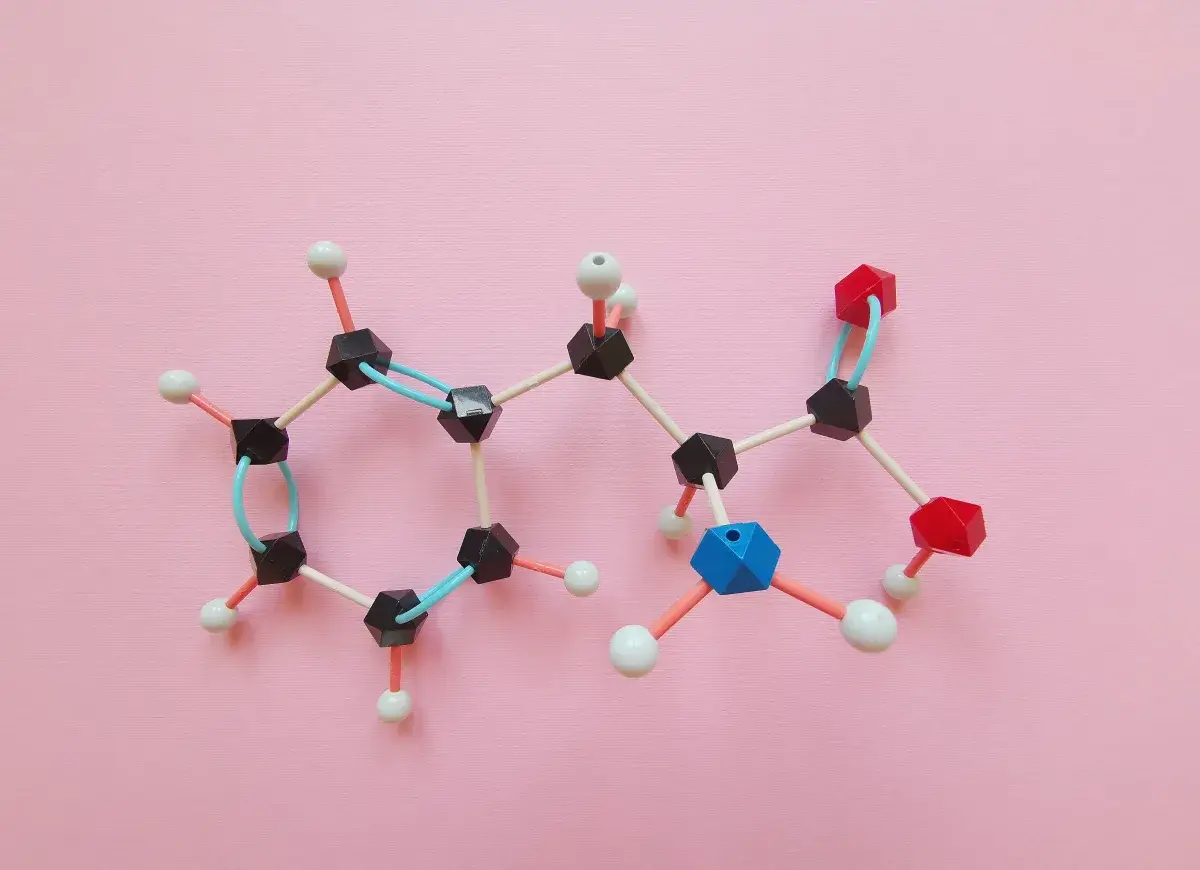
BPC-157 is a synthetic peptide made of 15 amino acids, with a sequence based on a protective protein found in human gastric juice, and it is studied mainly for tissue repair and recovery.
The name stands for "body protection compound 157." It is a lab-made chain of amino acids, not something extracted from the body, and its sequence is modeled on a fragment of a larger protein that occurs naturally in the stomach. That gastric origin is part of why researchers became interested in it for healing: the gut lining repairs itself constantly, and the peptide appeared to play a role in that process in laboratory models.
In everyday conversation, people lump BPC-157 in with "peptides for recovery" alongside names like TB-500, CJC-1295 and ipamorelin. What sets a real protocol apart from a vial off a website is the same thing that sets it apart medically: testing, a prescriber, and a dose matched to you.
What the research says BPC-157 may do.
Most BPC-157 evidence comes from animal and laboratory studies suggesting it may support tendon, ligament, muscle, bone and gut-lining repair; robust human clinical trials remain limited.
The promising part is real. In preclinical research, BPC-157 has been associated with faster healing of tendons and ligaments, support for muscle and bone recovery after injury, protection of the stomach and intestinal lining, and wound healing. For an active population dealing with overuse injuries and slow-healing tendons, that is an appealing list, which is exactly why interest has climbed so sharply.
The caveat is just as real, and it is the reason a protocol here starts with testing rather than a sales counter. Almost all of that evidence comes from cells and animals; well-designed human trials are still limited, so the long-term safety and the real benefit in people are not yet fully established. Kelly treats BPC-157 as an area of active research, prescribed carefully and monitored, not a settled cure.
Is BPC-157 legal in 2026? The FDA status, explained.
As of 2026, BPC-157 is not FDA-approved and is not on the FDA's Category 1 compounding list; it was removed from Category 2 in April 2026, and a July 2026 advisory vote recommended broader access that is not yet final. Access varies by state and pharmacy.
Here is what happened, in order:
- Before 2026. BPC-157 sat in Category 2 of the FDA's 503A bulk drug substances list, the group flagged with safety questions, which restricted compounding.
- April 15, 2026. The FDA removed BPC-157 from Category 2 and scheduled a formal advisory review. Removal from Category 2 is not approval, and it does not place a substance in Category 1.
- July 23 to 24, 2026. The Pharmacy Compounding Advisory Committee voted 8 to 6 to recommend adding BPC-157 to Category 1, tied to a specific indication. That vote is advisory only.
- Today. The FDA has not finalized any change, so the picture is still evolving, and access varies by state and by pharmacy.
That is the honest status, and it is why the responsible path matters. At South Florida Face and Body, BPC-157 is not sold off a shelf. It is prescribed by a licensed nurse practitioner as an individualized protocol, only after lab work supports it, and monitored over time. Florida patients often ask specifically whether peptides are legal in the state, and our guide to whether peptides are legal in Florida goes deeper on that question.
BPC-157 is not FDA-approved, and its compounding status is under active FDA review. At South Florida Face and Body it is provided only as an individualized protocol, prescribed by a licensed nurse practitioner and guided by your lab results.
How Kelly prescribes BPC-157, guided by your labs.
At South Florida Face and Body, BPC-157 is not sold off a shelf; it is prescribed by nurse practitioner Kelly Wolfe based on your lab work, dosed to your goals, and monitored over time within the Optimal Functional Wellness program.

It starts with comprehensive lab testing. Kelly reviews your results, your history and your goals, and decides whether BPC-157 is appropriate at all. If it is, she prescribes an individualized protocol and adjusts it as your labs and your response change. That is the difference between a monitored medical protocol and a vial bought from a website with no questions asked.
It matters because human safety data for BPC-157 is still limited. Its purity and dosing are not standardized across the open market, its long-term effects are not fully characterized, and it has not been studied in pregnancy. A prescribing provider and real lab work are how those unknowns are managed rather than ignored.
At South Florida Face and Body, BPC-157 is prescribed by a nurse practitioner and guided by your lab results, not sold as an off-the-shelf vial.
What BPC-157 costs in Miami, and where it fits.
You will see BPC-157 quoted around $120 to $700 a month elsewhere as a standalone vial; at South Florida Face and Body it is prescribed within Kelly's Optimal Functional Wellness program at $300 a month, which includes the lab work that guides your protocol and ongoing monitoring.
Standalone BPC-157 is easy to find and easy to buy. What is harder to find is a clear answer on what you are actually getting, from whom, dosed on what basis, and with what follow-up. The table below is the honest comparison.
The program is Kelly's Optimal Functional Wellness membership: a provider-led plan built around your testing, where BPC-157 is one of the protocols she can prescribe when your labs and goals support it.
What the Optimal program covers alongside BPC-157.
BPC-157 is one of several protocols Kelly can prescribe within the Optimal Functional Wellness program, alongside hormone optimization, medical weight loss, vitamin therapy, and body-composition testing with InBody, all guided by your labs.
Most people asking about BPC-157 are really asking a bigger question: how do I recover better, feel stronger, and hold onto that as I age? A lab-guided program answers that with more than one lever. Depending on your goals and results, your plan might also draw on any of these:
- Overall recovery and optimization. The Optimal Functional Wellness program, a $300-a-month provider-led plan built around your testing.
- Energy, sleep, strength, libido. Hormone therapy and optimization, guided by labs.
- Body composition and metabolic health. Medical weight loss, including tirzepatide and semaglutide programs.
- Nutrient repletion and immune support. Vitamin and IV therapy.
- Measuring where you actually stand. An InBody assessment for muscle, fat and hydration baselines.
Why active Miami Beach patients ask about BPC-157.
Interest in BPC-157 in Miami Beach comes largely from an active, year-round training crowd: runners, gym-goers, and tennis and padel players looking to recover from overuse and get back to training faster.

South of Fifth and the wider South Beach area train hard, all year. There is no off-season here: people run the path out to South Pointe Park, lift before work, play tennis and padel in the heat, and spend weekends on the water. That volume of activity comes with the ordinary toll of tendinitis, nagging shoulders and knees, and the desire to bounce back quickly.
That local reality is a good reason to want a recovery plan, and a good reason to want it done properly. A protocol built on your labs and monitored by a provider is durable support for an active life, not a shortcut of unknown provenance.
Where to find us in Miami Beach.
South Florida Face and Body is on 5th Street at the northern edge of South of Fifth (SoFi), the southern tip of Miami Beach, about three blocks from Ocean Drive.
Getting here & parking
The office is on 5th Street at the northern edge of South of Fifth (SoFi), a short drive from Brickell across the MacArthur Causeway and an easy trip down Collins from Mid-Beach, Surfside and Bal Harbour.
The attached garage is $4 per hour. Street parking around the building is free during business hours, except for one nearby pay-to-park zone.
1000 5th Street, Suite 414 · Miami Beach, FL 33139