
By Kelly Wolfe, MSN, APRN, FNP-BC, CFMP · Updated July 20, 2026
Hormone optimization means reading your full hormone pattern and moving it toward how you actually want to feel — not just confirming that each number scrapes inside a lab’s “normal” range. It’s the same story for a woman in perimenopause whose estrogen and progesterone are swinging, and for a man in his 30s, 40s, or 50s whose testosterone has quietly slipped year after year: The labs may read “normal,” but you feel tired, foggy, and unmotivated, with a lower sex drive and a thicker middle.
At South Florida Face and Body in Miami Beach, nurse practitioner Kelly Wolfe (MSN, APRN, FNP-BC, CFMP) treats that gap through Optimal, her functional-medicine membership — available across Florida by telehealth.
If you’ve been told your bloodwork is “fine,” but you don’t feel fine, this is for you.
Hormone optimization is the practice of reading your hormones against your symptoms and goals — then adjusting them toward the levels where you feel and function best, rather than simply toward the middle of a reference range.
A standard physical checks whether you’re inside a “normal” range and sends you home if you are. The problem is that “normal” is just an average built from everyone who got tested, including people who are exhausted and depleted.
Sitting at the bottom of normal is not the same as thriving. Hormone optimization looks at the whole pattern — estrogen, progesterone, testosterone, thyroid, and the metabolic markers around them — and asks a better question: not “are you in range,” but “are you where you feel good?” That’s the entire idea behind Optimal.
The most common signs of a hormone imbalance are the same across sexes: fatigue, brain fog, low libido, stubborn weight gain, poor sleep, low mood, and a loss of drive or strength that wasn’t there a few years ago.
Whether it’s a woman moving through perimenopause or a man with slowly declining testosterone, the lived experience is remarkably similar. Any cluster of these is worth evaluating:
These are easy to write off as “just getting older” or “stress.” Sometimes that’s true. Often, it’s a measurable hormone shift that’s very treatable once it’s actually looked at.
In women, shifting estrogen and progesterone during perimenopause and menopause drive most hormone symptoms — but a drop in testosterone can also quietly sap libido, energy, and strength.
The transition years bring hot flashes, night sweats, disrupted sleep, mood changes, and brain fog as estrogen and progesterone fluctuate and decline. Testosterone matters for women too, and its decline can flatten libido and drive even when estrogen is addressed.
If you’re a woman navigating these changes, our dedicated guide to hormone therapy for perimenopause and menopause covers the treatment side in depth — and hormone optimization through Optimal reads all of it together rather than one hormone at a time.
The only way to know the difference is to read the data. That’s what the Root-Cause Consult is — and it’s the one door into everything Optimal covers.
The Root-Cause Consult is $99 — credited in full toward Optimal if you enroll.
Membership is $300/month for Kelly’s care and oversight. You pay the pharmacy, lab, and supplement companies directly — she never marks up your medicine. Telehealth, statewide in Florida.
In men, testosterone begins a slow decline of roughly 1% per year after around age 30 — so by your 40s or 50s, levels can be meaningfully lower while a standard lab still calls them “normal.” That gap is exactly what hormone optimization is built to catch.
Men rarely get a dramatic signal. Instead, testosterone erodes gradually, and the changes are easy to blame on age or a busy life: less energy, softer workouts and lost muscle, a thicker waistline, lower libido, poorer sleep, and a flatter mood or motivation. Because the decline is slow and the “normal” range is wide, a routine physical often misses it — a man can lose a third of his testosterone and still be told he’s fine.
Hormone optimization evaluates testosterone in the context of how you actually feel and function, and, when appropriate, restores it under proper medical supervision. There’s no separate men’s clinic to visit — it’s simply part of Optimal.
A “normal” lab range is an average and a floor — not a target. Two people can both be “in range” and feel completely different, which is why optimization aims for where you thrive, not merely where you’re not flagged.
This is the heart of it. Reference ranges are wide on purpose, built to catch disease rather than to describe thriving. Optimization treats “normal” as the starting line, then uses your symptoms, goals, and follow-up labs to dial your hormones toward the levels where your energy, sleep, libido, body composition, and mood are actually good. It’s a fundamentally different question than “is anything wrong,” and it’s the difference between being told you’re fine and finally feeling that way.
At South Florida Face and Body, hormone optimization runs through Optimal: a $99 Root-Cause Consult that credits toward membership, then $300 per month for Kelly’s ongoing care — labs read in full, a personalized protocol, and monthly monitoring.
Optimal is built so your hormones are never read in isolation. Here’s how it works:
Because Kelly owns the practice and reads every panel herself, the person who interprets your labs is the one who builds and adjusts your plan. Care is telehealth-first across Florida, with the Miami Beach office available for in-person visits.

Hormone optimization is safe when it’s medically supervised — evaluated with proper labs, prescribed appropriately, and monitored over time. It’s for healthy adults, women and men, who don’t feel like themselves and want the full picture measured rather than guessed.
Done properly, with real labs and ongoing follow-up, hormone therapy for both women and men has a strong safety record, and monitoring is exactly what keeps it that way. It isn’t right for everyone — personal and family history, including hormone-sensitive cancers and cardiovascular or clotting risk, all factor in, which is why the evaluation matters.
A note if you take a blood thinner: some hormone therapies can affect clotting or red-blood-cell levels, so tell Kelly about any anticoagulant medication (such as warfarin, Eliquis, or Xarelto) before starting. Never stop or change a blood thinner on your own — always consult your prescribing physician first.
Our office sits on 5th Street at the northern edge of South of Fifth (SoFi), the southern tip of Miami Beach — about three blocks from Ocean Drive. Patients come to us from across Miami Beach, Brickell, Mid-Beach, and Bal Harbour.
What is hormone optimization?
Hormone optimization is the practice of reading your full hormone pattern against your symptoms and goals, then adjusting your hormones toward the levels where you feel and function best — rather than simply toward the middle of a lab’s reference range. It applies to both women and men and looks at estrogen, progesterone, testosterone, thyroid, and related metabolic markers together.
What are the signs of a hormone imbalance?
The most common signs are similar for men and women: persistent fatigue, brain fog, low libido, stubborn weight gain around the middle, poor sleep, low mood or irritability, and a loss of drive or strength. Any cluster of these that has crept in over time is worth having evaluated with proper labs.
What are the symptoms of low testosterone in men?
In men, low testosterone often shows up as low energy, lost muscle and softer workout results, a thicker waistline, reduced libido, poorer sleep, and flat mood or motivation. Because testosterone declines slowly with age and the “normal” range is wide, a routine physical can miss it even when levels have dropped significantly.
Can women have low testosterone too?
Yes. Testosterone is important for women as well, and a decline can reduce libido, energy, and strength even when estrogen and progesterone are being addressed. That’s why hormone optimization evaluates the whole pattern rather than a single hormone.
Is hormone optimization the same as hormone replacement therapy?
They overlap but aren’t identical. Hormone replacement therapy typically refers to replacing specific hormones — most often estrogen and progesterone in menopause. Hormone optimization is broader: it reads the entire hormone pattern for women and men and dials each toward the level where you feel and function best, with ongoing monitoring, as part of the Optimal membership.
Why do my labs say “normal” if I feel terrible?
Because “normal” reference ranges are wide averages designed to catch disease, not to describe thriving. Two people can both be “in range” and feel completely different. Optimization treats normal as a floor and uses your symptoms and follow-up labs to move your hormones toward where you actually feel well.
How does hormone optimization work, and what does it cost?
At South Florida Face and Body it runs through the Optimal membership: a $99 Root-Cause Consult that credits in full toward membership, then $300 per month for Kelly’s ongoing care, your personalized protocol, and monthly monitoring. Any medications and labs your plan calls for are a separate, transparent cost.
Can I do hormone optimization by telehealth in Florida?
Yes. Optimal is telehealth-first, so women and men across Florida — including Fort Lauderdale, Boca Raton, Orlando, Tampa, and Jacksonville — can be evaluated, start a protocol, and be monitored remotely, with the Miami Beach office available for in-person visits.
The only way to know the difference is to read the data. That’s what the Root-Cause Consult is — and it’s the one door into everything Optimal covers.
The Root-Cause Consult is $99 — credited in full toward Optimal if you enroll.
Membership is $300/month for Kelly’s care and oversight. You pay the pharmacy, lab, and supplement companies directly — she never marks up your medicine. Telehealth, statewide in Florida.
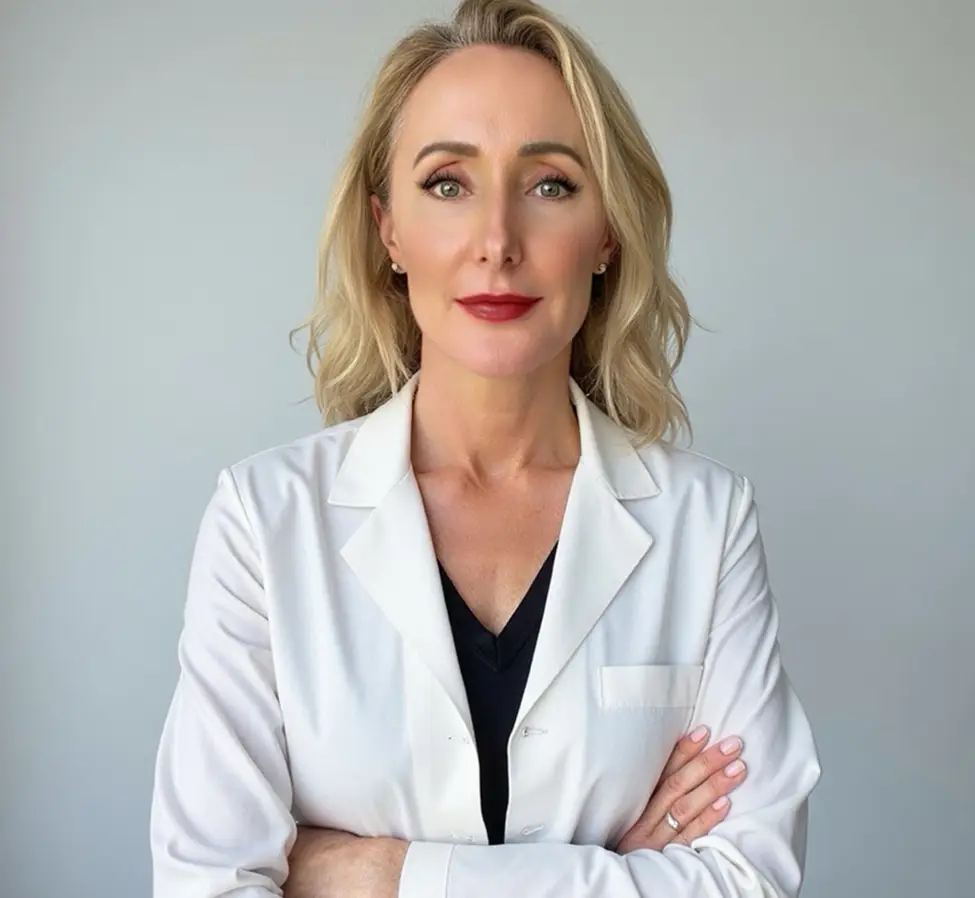
Kelly Wolfe, MSN, APRN, FNP-BC, CFMP, is a Florida-licensed nurse practitioner…
‘Normal’ is a floor, not a target.