
Lip enhancement by a University of Miami-trained nurse practitioner who would rather under-fill and add later than chase a trend shape your anatomy won't hold.
Lip filler is the most commoditized injectable in Miami — everyone offers it, and the city is full of overfilled, migrated, "duck lip" results from injectors chasing volume over proportion. Kelly Wolfe, MSN, FNP-BC built her lip practice on the opposite philosophy: start conservative, respect your natural anatomy, choose the right product and technique for your specific goal, and be honest about what filler can and can't do. The lips she's proudest of are the ones nobody can tell are done.
4.9 60 Google Reviews
OWNER · UNIVERSITY OF MIAMI-TRAINED · FL APRN #11005134
Thin or deflated lips, loss of definition, asymmetry, age-related or GLP-1-related lip thinning, undefined cupid's bow, smoker's lines, and correction of migrated filler from a previous injector.
30–45 minutes including 15–20 minutes of topical numbing. Most patients return to errands the same hour (with visible swelling).
Immediate volume (with swelling) that settles over 2 weeks. Swelling peaks at 24–48 hours; final result assessed at 2 weeks. Lasts 6–12 months.
$400–$550 per half syringe; $650–$950 per full syringe (1 mL). Most first-timers start with a half syringe. Per-syringe pricing, in writing, before treatment.
Kelly Wolfe, MSN, APRN, FNP-BC — Florida APRN #11005134, University of Miami-trained. Hyaluronidase kept on hand. Every injection, every appointment.
1000 5th Street, Suite 414 — South of Fifth, Miami Beach 33139. $4/hr attached garage; free street parking nearby during business hours. 8 minutes from Brickell.
Lip filler is the single most common injectable procedure, offered at nearly every medspa, salon, and pop-up in Miami. That ubiquity is precisely the problem: when everyone offers the same product, the variable that actually determines your result is the injector's technique, judgment, and willingness to say no to overfilling. The difference between a beautiful natural lip and a migrated, overfilled "duck lip" is not the product in the syringe — it's the hands holding it.

Miami in particular is saturated with overfilled lips. The aesthetic culture here trends toward “more,” and a lot of injectors will give patients exactly as much volume as they ask for without the honest conversation about proportion, anatomy, and what will still look good in five years. The result is a city full of lips that announce themselves — and a growing population of patients seeking out injectors specifically to dissolve and start over.
Kelly’s lip practice is built on the opposite philosophy. The goal is enhancement that reads as you, refreshed — fuller, more defined, more symmetric — without crossing into the territory where people can tell. That means starting conservative (often half a syringe for first-timers), choosing the technique and product suited to your specific lip anatomy and goal, respecting your natural proportions, and being honest when what you’re asking for won’t actually look good on your face. It also means being one of the injectors who will dissolve migrated or overfilled filler from elsewhere and rebuild it correctly. New to lip filler? Read our complete lip injection guide covering technique, healing, and what to expect.
There is no single "lip filler" — there are several distinct techniques that produce different shapes and results, and the right one depends on your natural lip anatomy and your goal. The technique matters more than the brand of product. Below are the main approaches, what each does, and who each suits. Most patients are best served by a conservative, natural approach; the trend-driven shapes suit specific anatomies and goals.
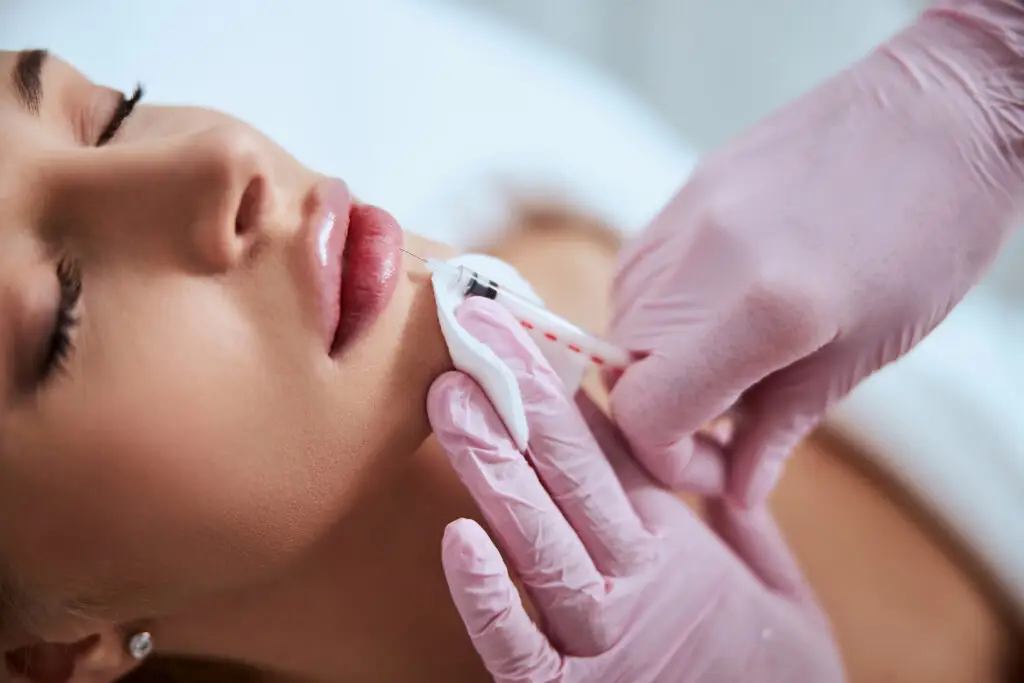
The most commonly appropriate approach for most patients. A modest amount of filler placed to restore hydration, gentle volume, and definition while respecting your natural lip proportions. The goal is that you look refreshed, not "done." Typically a half syringe to start, with the option to add at a follow-up. This is the default recommendation for first-timers and for anyone whose goal is "better, not bigger."
Filler injected vertically from the body of the lip up toward the border, lifting and heightening the lip for a flatter, taller, more heart-shaped look with emphasis on the cupid's bow. Produces a doll-like or "fairy tale" shape. Requires precise injection points and usually more product across multiple sessions. Best for patients specifically seeking that heightened, lifted shape — it is not inherently more natural or safer than other techniques, and it suits certain lip anatomies better than others.
Filler placed specifically to define the cupid's bow and the vermillion border (the edge of the lip), sharpening the lip's outline without necessarily adding much overall volume. Suits patients whose lips have lost definition with age, or who have adequate volume but a blurred or undefined lip edge. Often combined with a small amount of body volume for a complete result.
Specialized approaches for specific situations: keyhole technique preserves the natural central pout while adding volume around it; asymmetry correction balances naturally uneven lips; and correction work dissolves and rebuilds migrated or overfilled filler from a previous injector. These require the most precise assessment and are where injector experience matters most. Correction often begins with dissolving before any new filler is placed.
Most lip filler uses hyaluronic acid (HA), a substance naturally found in the body, formulated by different manufacturers into products with different textures, longevity, and movement characteristics. The right product depends on your lips and goal — softer, more flexible products move naturally with the lips, while firmer products provide more structure. The brand matters less than matching the product's properties to your anatomy.
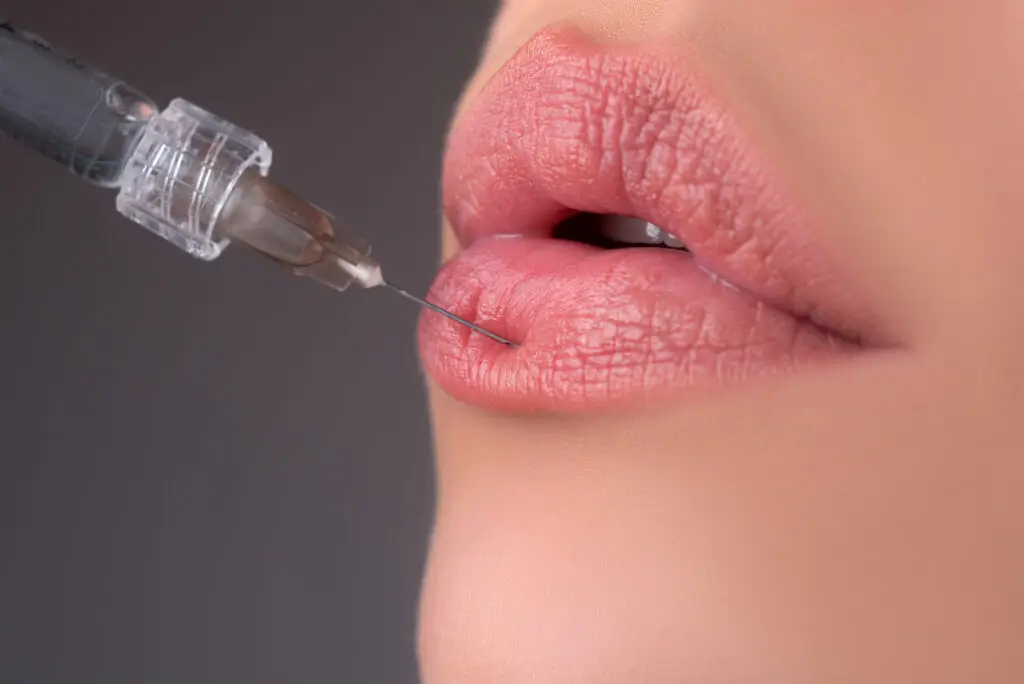
Restylane Kysse was formulated specifically for the lips using cross-linking technology designed to move naturally with lip movement. It produces soft, flexible volume that looks natural when you talk and smile, with good color and texture results. Lasts up to 9–12 months. A frequent first choice for patients prioritizing a natural, mobile result over maximum structure. Explore all fillers →
Natural-movement priority, soft flexible volume, patients who want their lips to look unfilled in motion.
Juvederm Ultra XC provides robust, noticeable volume and structure for patients wanting a fuller result, lasting up to 12 months. Juvederm Volbella is a much lighter formulation ideal for subtle enhancement, fine perioral lines, and very natural hydration, lasting 6–9 months. The two ends of the Juvederm range cover very different goals — Ultra for volume, Volbella for subtlety. Kelly selects based on whether your goal is fullness or refinement.
Ultra: fuller volume goals. Volbella: subtle hydration, fine lines, very natural results.
Patients often arrive asking for a specific brand they saw online. The truth is that in skilled hands, several products can produce an excellent result for the same patient — and in unskilled hands, the best product on the market will still migrate or look overfilled. Product selection matters, but it is downstream of technique, dosing judgment, correct placement, and the honest conversation about your goals. Kelly chooses the product to fit your anatomy and goal rather than starting from a brand name.
Choose your injector first; the right product follows from their assessment of your lips.
| Amount | What it does | Cost |
|---|---|---|
| 0.5 mL (half) | Subtle, natural enhancement. The recommended starting point for most first-timers. Adds gentle volume, hydration, and definition. Easy to add more later. | $400–$550 |
| 1 mL (full) | Noticeable volume and reshaping. Right for patients wanting a clear difference, naturally thin lips seeking fullness, or returning patients who know how their lips respond. | $650–$950 |
| 2 mL+ (staged) | Significant volume or shape change, built up across multiple sessions — never all at once. Staging protects against overfilling and lets the lips settle between sessions. | Per syringe, staged |
Patients frequently use these terms interchangeably, but they are completely different procedures using different products to achieve different results. Understanding the distinction is the difference between getting what you actually want and being disappointed.
Hyaluronic acid injected into the lip to add actual volume, reshape, and define. This is what most people mean by “getting their lips done.”
Lip filler migration is one of the most searched and most worried-about topics in lip filler, and most providers won’t address it directly because it’s uncomfortable. We’re going to address it directly, because understanding it is how you avoid it.
Migration is when filler moves beyond the intended area of the lip — most commonly creeping above the upper lip border, creating a puffy “shelf,” a blurred line between the lip and the skin above it, or what’s sometimes called a “filler mustache.” It’s the classic sign of lips that have been overfilled or filled incorrectly over time, and it’s the look most patients are actually trying to avoid when they say they want “natural” lips.
Migration is prevented by conservative dosing, correct injection depth and placement, choosing the right product, and not over-layering year after year. When it has already happened, it’s corrected by dissolving the migrated filler with hyaluronidase — an enzyme that breaks down hyaluronic acid within 24–48 hours — and then, if desired, rebuilding correctly once the area has settled. Many patients who arrive wanting to “fix” their lips are best served by dissolving first and restarting, rather than adding more filler on top of a migrated result.
The most serious risk of any lip filler is vascular occlusion — when filler is inadvertently injected into or compresses a blood vessel, blocking blood flow. It is rare, but it is a genuine medical emergency that requires immediate recognition and treatment with hyaluronidase to dissolve the filler and restore circulation. This is one of the most important reasons to choose an experienced medical injector who recognizes the signs early and keeps hyaluronidase on hand to treat it immediately. Kelly is a medical provider trained to recognize and manage vascular complications, and hyaluronidase is always on site. An injector who does not keep hyaluronidase available, or who cannot explain how they’d manage a vascular event, should not be injecting your lips.
Miami’s aesthetic culture trends toward more — more volume, more definition, more everything. That’s a legitimate aesthetic for the patients who genuinely want it. But it has produced a market where the default is overfilling, where injectors give patients as much as they ask for without the honest proportion conversation, and where a patient seeking subtle, natural enhancement has to actively search for an injector who will hold back.
The natural approach isn’t a single technique — it’s a set of disciplines:
The lips Kelly is proudest of are the ones nobody can tell are done. If your goal is a dramatic, obvious change, that’s a conversation worth having honestly at consultation — but if your goal is to look like a refreshed version of yourself, the conservative, proportionate approach is how you get there, and it’s the approach this practice is built around.
Immediate swelling. Lips look larger and feel firm right after injection. This is swelling and trauma, not your final result. Some patients have minor pinpoint bleeding or the start of a bruise. Lips may feel tight and tender.
Peak swelling. Swelling usually peaks around 24–48 hours. Lips may look noticeably bigger than your goal, uneven, or lumpy to the touch. This is normal and is not the final result. Do not panic about asymmetry at this stage — early swelling is rarely symmetric.
Swelling subsides. The majority of swelling resolves. Lips begin to look much closer to the intended result. Any bruising is usually fading and easily covered with lipstick.
Near-final. Lips look close to the final result. Most residual swelling is gone. Small lumps, if present, can often be gently massaged per Kelly’s instructions.
Final result. The filler has fully settled and integrated. This is when the result should be assessed and any touch-up considered. Do not judge your lips, request changes, or worry about asymmetry before the 2-week mark.
Good aftercare reduces swelling and bruising and protects your result. The lips are a high-movement, high-blood-supply area, so the first 24–48 hours matter.
GLP-1 medications cause fat loss throughout the body, and the face — including the lips and the perioral area around the mouth — is one of the first places it shows. Patients on GLP-1 therapy often notice their lips looking thinner, flatter, and less defined, with deepening lines around the mouth, as part of the overall facial volume loss commonly called “Ozempic face.”
Lip filler restores what GLP-1 deflation takes from the lips — and for most GLP-1 patients, the lips are one piece of a broader facial restoration that may also address the cheeks, temples, and perioral lines together.
Timing matters. Patients still actively losing weight may find their result changes as the surrounding face continues to deflate. Kelly will discuss whether to treat now or coordinate lip filler with a broader facial plan as your weight stabilizes.
Kelly’s background is genuinely relevant here. Her biochemistry master’s research focused on metabolism and appetite-suppressing hormones — the same pathway GLP-1 medications act on. The consultation about restoring lip and facial volume on an ongoing GLP-1 regimen is clinically informed rather than templated. Disclose your GLP-1 medication at consultation.
Months of GLP-1 therapy before facial volume loss appears
Lip filler is appropriate for most healthy adults seeking lip enhancement, but there are situations where the honest answer is no, not yet, or a different approach. Naming them directly:
How we approach this differently. An honest “no” or “not yet” protects you. If your goal isn’t achievable safely or naturally, if you’d be better served by dissolving first, or if the timing is wrong, Kelly will tell you directly — because the patients who trust her with their lips long-term are the ones she was honest with from the first visit.
Lip filler in Miami Beach runs $400–$550 per half syringe and $650–$950 per full syringe (1 mL), depending on the product. Most first-time patients start with a half syringe. Premium lip-specific products like Restylane Kysse may price at the higher end. Every quote is per syringe, in writing, before any treatment — and Kelly will tell you honestly how much you actually need rather than upselling volume.

Why per-syringe pricing matters. Lip filler is sold by the syringe (1 mL each), and per-syringe pricing is the only honest way to understand what you’re paying for. A practice quoting a flat “lip filler” price without telling you how much product that includes is hiding the variable that actually determines both your cost and your result.
Be cautious of prices that seem too good. Lip filler advertised under roughly $350 per syringe in Miami is a signal to ask hard questions. Genuine FDA-approved HA filler has a real product cost to the practice; suspiciously cheap lip filler can mean an inexperienced injector building a client base, diluted or overdiluted product, non-FDA-approved product sourced from overseas, or a loss-leader designed to upsell you once you’re in the chair. The cost of dissolving and redoing migrated filler from a bargain injector almost always exceeds what you’d have paid for it done correctly the first time.
What’s included. Per-syringe pricing at South Florida Face and Body covers the product, the injection, topical numbing, and your two-week follow-up assessment. No separate “injection fee,” no upcharge for cannula versus needle, no retroactive consultation fee. If a touch-up is needed at the two-week mark, you pay only for the additional product used.
South Florida Face and Body sits in Suite 414 at 1000 5th Street, at the southern tip of Miami Beach. From SoFi, Kelly treats lip filter patients across the barrier islands, across the causeway to mainland Miami, and from as far as Key Biscayne and Sunny Isles. Lip filler is a relationship — most patients return every 9–12 months for maintenance — making consistent provider continuity and a stable, discreet office location genuinely valuable.
SoFi is one of the most accessible aesthetic locations in the city — close to the MacArthur Causeway for Brickell, Downtown, and Key Biscayne patients, and a clear straight shot up Collins or Indian Creek for Mid-Beach, Surfside, and Bal Harbour. Lip filler patients often pair their visit with other treatments — Botox, cheek or jawline filler — in the same appointment, and value the privacy of a discreet office over a high-traffic medspa.
1000 5th Street, Suite 414 · Miami Beach, FL 33139
Geography matters in lip filler planning more than patients realize because of the swelling timeline. A Brickell professional with on-camera meetings needs to time treatment around the 2–3 days of visible swelling. A Bal Harbour patient with a weekend event has different scheduling considerations than a Mid-Beach patient with a flexible calendar. Kelly factors your real-life schedule — events, travel, on-camera obligations — into when to treat, not just the lips themselves.
A lip filler appointment at South Florida Face and Body runs 30–45 minutes, including 15–20 minutes of topical numbing. The injection itself takes 10–15 minutes. The rest is the consultation about your goal, your anatomy, and how much product actually serves you.
Lip filler at South Florida Face and Body is built on a philosophy that runs against Miami’s default: conservative dosing, respect for natural proportion, the right technique for your specific anatomy, and the honesty to say no to a shape that won’t suit you. The patients who switch to Kelly often arrive having been overfilled elsewhere, or with filler that has migrated above the lip border, or simply frustrated that previous injectors gave them volume without ever discussing proportion. The conversation here starts from your actual lips and your face as a whole — and from what will still look good years from now, not just the day you walk out.
Kelly Wolfe is a Florida-licensed Advanced Practice Registered Nurse (APRN #11005134) and board-certified Family Nurse Practitioner (FNP-BC), credentialed by the American Nurses Credentialing Center. She holds a Master of Science in Nursing from the University of Miami, plus a Master’s in Biochemistry from Missouri State University and a background in functional medicine. The medical training matters specifically for lips. The lips have a rich, complex blood supply, which is what makes vascular occlusion — the rare but serious complication of any filler — a genuine risk that requires a medical injector who can recognize it early and treat it immediately. Kelly keeps hyaluronidase on hand at all times, both for planned corrections and for emergency management of a vascular event. That medical-grade safety standard is not universal among lip filler providers, and it’s one of the most important questions to ask any injector before they treat your lips.
The continuity matters for lip filler because it’s a long-term relationship — most patients return every 9–12 months. The injector who treated you last time is the one who knows how your lips responded, how much product they took, how they settled, and what to adjust. Kelly is the injector from your first consultation through every maintenance visit. She’s also the one who answers your text message when you’re worried about day-two swelling.
Same-week consultations available. South of Fifth, Miami Beach.
Kelly is the owner of South Florida Face and Body. A board-certified Family Nurse Practitioner trained at the University of Miami, she holds advanced degrees in nursing, biochemistry, and biology, with graduate research focused on metabolism and the role of leptin and appetite-suppressing hormones. She practices at the intersection of functional medicine and aesthetic injection — meaning the conversations in her treatment room often go beyond the syringe to consider sleep, hormones, metabolism, and inflammation as part of how your skin and face actually present.
Licensed as an Advanced Practice Registered Nurse in the State of Florida (APRN #11005134), Kelly brings more than three decades of experience in health, fitness, and clinical practice. She has performed aesthetic injections in South Florida for over a decade and has trained alongside the dermatology and plastic surgery community that built Miami’s aesthetic reputation.
She is the one who answers your text message. She is the one who calls the day after your injection.
From your first consultation through every follow-up, you’ll work directly with Kelly — one injector, one set of hands, one consistent plan.
Advanced practice registered nursing with a focus on family health and primary care.
Research focused on metabolism and the role of leptin and appetite-suppressing hormones.
Research with a strong foundation in human physiology, cellular biology, and biochemistry.
National certification in family practice and primary care.
Authorized to diagnose, treat, and prescribe medications in the State of Florida.
Advanced training in root-cause diagnostics, hormone optimization, metabolic health, and integrative wellness.
Over 30 years helping clients achieve sustainable health and wellness transformations.
Common questions from Miami Beach patients considering lip filler. If yours isn't covered here, Kelly is happy to answer directly — text or call.
Lip filler in Miami Beach runs $400–$550 per half syringe and $650–$950 per full syringe (1 mL), depending on the product.
Most first-time patients start with a half syringe for subtle, natural enhancement. Premium lip-specific products like Restylane Kysse may price at the higher end. Every quote is per syringe, in writing, before treatment.
Be cautious of lip filler priced under roughly $350 per syringe — it usually signals an inexperienced injector, diluted or non-FDA-approved product, or a loss-leader promotion. Full pricing breakdown above.
Lip filler typically lasts 6 to 12 months depending on the product and your metabolism.
Restylane Kysse and Juvederm Ultra tend to last 9–12 months in the lips; lighter products like Volbella last 6–9 months. The lips are a high-movement area with rich blood supply, which metabolizes filler faster than less mobile areas of the face.
Most patients schedule a touch-up around the 9–12 month mark. Faster metabolizers, frequent exercisers, and patients on GLP-1 medications may find it dissipates somewhat faster.
Russian lip technique injects filler vertically from the body of the lip up toward the border, rather than horizontally along the lip. The goal is to lift and heighten the lip for a flatter, taller, more heart-shaped appearance with emphasis on the cupid’s bow — a doll-like or “fairy tale” shape.
It requires more precise injection points and typically more product across multiple sessions. It’s best for patients specifically seeking that heightened, lifted shape — it’s not inherently more natural or safer than other techniques, and it suits certain lip anatomies better than others. Full technique breakdown above.
Migration is when filler moves beyond the intended area — most commonly above the upper lip border, creating a puffy “shelf” or blurred line (sometimes called a “filler mustache”).
It’s usually caused by overfilling, injecting too superficially or too close to the border, over-layering filler across years without dissolving, or using the wrong product. It’s prevented by conservative dosing, correct depth and placement, the right product, and not over-layering.
If it’s already happened, it’s corrected by dissolving the migrated filler with hyaluronidase and, if desired, rebuilding correctly after the area settles. Full migration section above.
They’re completely different procedures. Lip filler uses hyaluronic acid to add real volume and reshape the lips, lasting 6–12 months. A lip flip uses a few units of Botox to relax the muscle around the upper lip so it rolls slightly outward and shows more — adding no volume, lasting 2–3 months.
A lip flip is ideal for a gummy smile or a thin-appearing upper lip when you want a subtle change without filler. They can be combined. Filler is the answer for actual volume; a lip flip shows more of the lip you already have. Full comparison above.
Most first-timers should start with a half syringe (0.5 mL), not a full one. A half syringe provides subtle, natural enhancement, lets you see how your lips respond, and is far easier to build on than to dissolve.
Many patients are surprised how much difference even a half syringe makes once swelling settles. A full syringe is appropriate for patients wanting more noticeable volume or returning patients who know how their lips respond.
The conservative approach — half a syringe, assess at two weeks, add if desired — is the single best protection against the overfilled look. Full syringe guide above.
Yes — one of the biggest advantages of hyaluronic acid lip filler is that it’s reversible. An enzyme called hyaluronidase, injected into the lip, breaks down HA filler within 24–48 hours.
Dissolving corrects migration, overfilling, lumps, asymmetry, an undesired result, or — rarely — an urgent vascular complication. This reversibility is a major safety advantage over permanent lip implants and fillers.
Kelly keeps hyaluronidase on hand for both planned corrections and emergencies. If you have migrated or unwanted filler from another injector, dissolving and restarting correctly is often the right path.
Most patients describe it as uncomfortable rather than painful. Kelly applies strong topical numbing for 15–20 minutes before injection, and nearly all lip products contain lidocaine, which numbs further as injection begins.
The first injection is the most noticeable; the area numbs quickly after. Patients usually describe pinching or pressure rather than sharp pain. A dental block is available for particularly anxious or sensitive patients.
Swelling follows a predictable timeline. Day 0: lips look larger and feel firm (swelling, not the result). Day 1–2: swelling peaks — lips may look bigger, uneven, or tight, which is normal. Day 3–4: most swelling subsides. Day 7: close to final. 2 weeks: fully settled — assess the final result and consider any touch-up here.
Don’t judge your result or worry about asymmetry before the 2-week mark — early swelling is rarely symmetric and isn’t the final outcome. Full timeline above.
No. Lip filler is not performed during pregnancy or breastfeeding. While there’s no strong evidence HA filler is harmful in these situations, there are no studies establishing it’s safe, and the standard of care is to wait.
The conservative, ethical position — and the one followed at South Florida Face and Body — is to decline and revisit once you’re no longer pregnant or nursing. An injector willing to treat you while pregnant or breastfeeding isn’t following the standard of care, which tells you something about their judgment overall.
Natural results come more from technique and conservative dosing than from any single product. The principles: start small (half a syringe for most first-timers), respect your natural proportions rather than forcing a trend shape, choose a product that moves naturally with the lips (like Restylane Kysse), and place filler at the correct depth within the border to avoid the migrated look.
The goal is that people notice you look refreshed, not that you’ve “had your lips done.” In Miami’s overfilled market, the proportionate, defined-rather-than-inflated approach is what most patients are actually seeking. More on the natural approach above.
Yes — GLP-1 medications (Ozempic, Wegovy, Mounjaro, Zepbound) cause fat loss throughout the body, and the lips and perioral area are among the areas where it shows. Patients often notice thinner, flatter, less-defined lips and deepening lines around the mouth — part of what’s called “Ozempic face.”
Lip filler restores lip volume lost to GLP-1 weight loss, often as part of a broader facial plan addressing the cheeks and temples too. Disclose your medication at consultation, as ongoing weight loss affects how long the result lasts. Full GLP-1 section above.
Yes — patients often pair lip filler with a lip flip (Botox to show more upper lip), with cheek filler, chin filler, or Botox in the same visit.
For GLP-1 patients with diffuse facial volume loss, lips are often one part of a broader plan that addresses the cheeks, temples, and perioral lines together. Kelly will plan the sequencing at consultation based on your goals and your schedule around swelling.
1000 5th Street, Suite 414, Miami Beach, FL 33139 — in the South of Fifth (SoFi) district at the southern tip of Miami Beach. We’re 8 minutes from Brickell, 10 from Mid-Beach, 19 from Bal Harbour. $4/hr in the attached garage; free street parking is available around the building during business hours (one nearby zone is metered). Phone: (786) 529-1860. Hours: Monday–Friday 10am–6pm, Saturday 10am–2pm.