
Non-surgical chin augmentation using Radiesse, Juvéderm Voluma, and Restylane Lyft — placed against the bony chin by a University of Miami-trained nurse practitioner who personally performs every injection.
Kelly Wolfe, MSN, FNP-BC built her chin practice around the discipline most Miami injectors skip: respecting that the chin sits on bone, and that the right filler placement creates projection rather than a swollen, undefined pad. The chin is also the area where honest counsel matters most — sometimes the right answer is a chin implant, and Kelly will tell you so. The wrong answer is talking a patient into more syringes than their anatomy can use.
4.9 60 Google Reviews
OWNER · UNIVERSITY OF MIAMI-TRAINED · FL APRN #11005134
Weak or recessed chin, profile imbalance, undefined chin contour, chin-to-neck transition, mentolabial sulcus, chin shadow definition, chin-jaw integration.
30–60 minute appointment for 1–2 syringes. Most patients return to errands the same hour, full activity the next day.
HA filler (Voluma, Lyft): immediate result, fully settled by 2 weeks. Radiesse: immediate definition plus continued collagen build over 3 months.
$800–$1,200 per syringe. Most patients use 1–2 syringes. Per-syringe pricing, in writing, before any injection.
Kelly Wolfe, MSN, APRN, FNP-BC — Florida APRN #11005134, University of Miami-trained. Every injection, every appointment.
1000 5th Street, Suite 414 — South of Fifth, Miami Beach 33139. $4/hr attached garage; free street parking nearby during business hours. 8 minutes from Brickell.
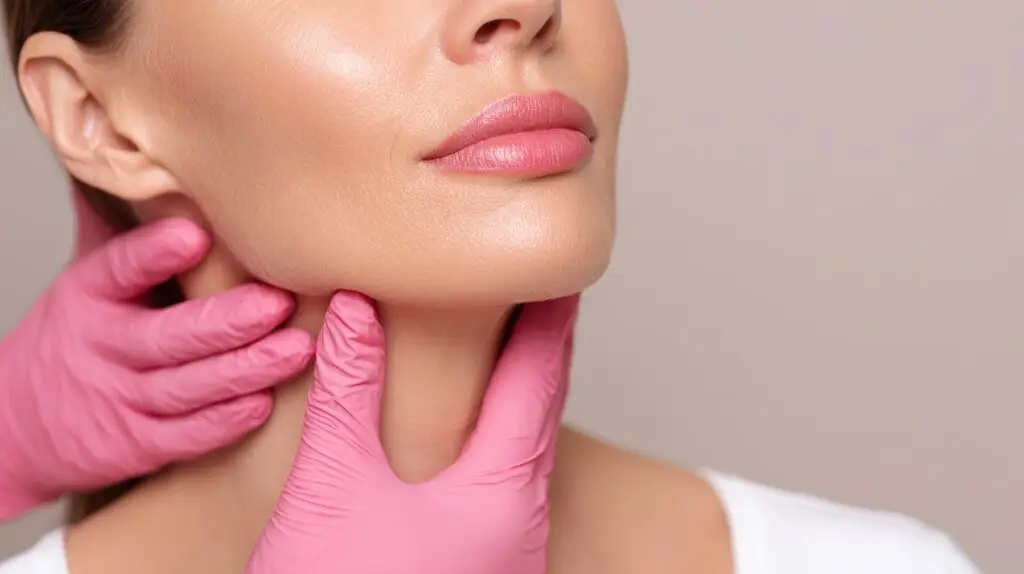
The chin is the single most influential structure in a balanced profile. A properly projected chin creates the visual line that anchors the lower face — when the chin is recessed or undefined, the nose appears larger, the neck appears less defined, and the entire face reads less harmonious. Chin filler works by adding volume to the bony chin pad to restore that balance, with the result depending almost entirely on placement against the mental protuberance, not on how much was injected.
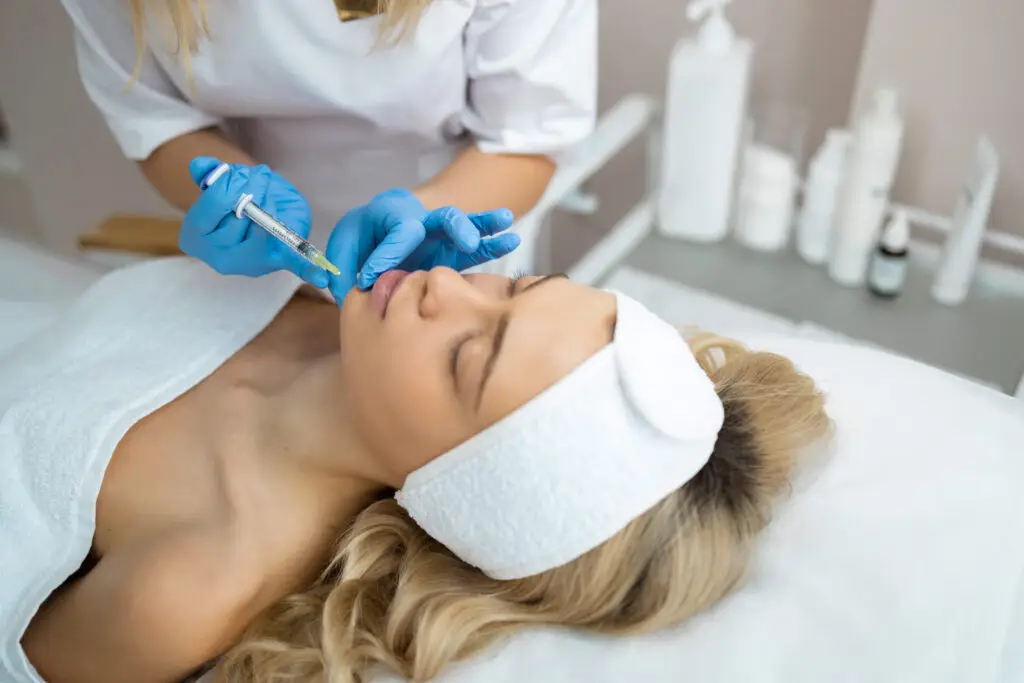
The chin sits on a small, dense bony platform called the mental protuberance — the forward-most point of the lower mandible. Unlike soft, mobile facial areas, the chin has very limited soft-tissue movement, which makes it one of the most predictable and migration-resistant filler zones when placed correctly. It also makes it one of the most punishing zones when placed incorrectly: a poorly executed chin treatment shows up immediately as a bulky, indistinct pad rather than a defined projection.
The chin’s outsized role in profile aesthetics is also why it gets undertreated in Miami. Most patients arrive asking about lips, cheeks, or jawline — and most injectors are happy to oblige. The chin, despite being the structural anchor of the lower face, often gets skipped entirely. A surprising number of patients spending five figures a year on filler still have a recessed chin doing the visual work of an unsupported nose and an undefined jaw. Treating the chin first — or alongside the rest — is often what makes the difference between a face that reads “filled” and a face that reads “balanced.”
A chin filler treatment plan begins with mapping which of the four chin sub-zones need volume and how they relate to the rest of the lower face. The same patient might need substantial anterior projection but almost nothing at the mentolabial sulcus — or the opposite. The chin is also where over-treatment is most visible in profile photographs, so the discipline of dosing conservatively per zone matters as much as which product you pick. Every treatment plan here is built on a proportion-based approach — read about the Golden Method behind it.
DISTINCT CHIN SUB-ZONES
PRIMARY FILLER PRODUCTS WE OFFER
SYRINGES FOR MOST PATIENTS
The chin is four zones, not one — anterior chin pad, mentolabial sulcus, chin-to-jaw transition, and inferior chin (the chin shadow region). Each ages differently. Each wants a different placement and product. Kelly maps which of yours need volume and treats the ones that do, in the proportion they need.

The forward-most point of the chin — where filler creates the most visible projection in profile. This is where most chin work happens. Restoring volume here forward-projects the chin, lengthens the lower face, improves nose-to-chin balance, and is what patients usually mean when they say "I want chin filler." Conservative dosing matters: a small amount of well-placed volume produces dramatic improvement; overdosing produces a bulky, undefined pad.
The crease between the lower lip and the chin — the small indentation that defines where the lip ends and the chin begins. When this sulcus is overly deep, it can read as aged or as a "puppet line." Softer HA filler here smooths the transition without over-projecting. Often a 0.25–0.5 mL refinement layered onto anterior chin work rather than a standalone treatment. Patients treating this zone often ask about the lips above it — here's the complete guide to lip injections.
The continuous line where the chin meets the body of the mandible. A break in this transition — a sharp drop-off between chin and jaw, or a hollow at the corner — fragments the lower-face contour. Filler here smooths the line, creating one continuous mandibular curve from chin to ear. Often the difference between chin filler that reads as "you got chin work" and chin filler that reads as "your face looks balanced."
The underside of the chin, where the chin transitions to the neck. Modern aesthetic preferences — driven partly by photography and selfie angles — favor a clearly defined shadow line at the inferior chin. Subtle filler here can refine that shadow without artificially creating an "edge." Done well, layered onto anterior projection. Done poorly, it looks fake. The most refined application of all the chin sub-zones.
Radiesse is the structural workhorse for anterior chin projection — its firm calcium hydroxylapatite scaffolding holds shape against the bony chin platform and stimulates collagen. Juvéderm Voluma is the reversible HA alternative for patients who want hyaluronidase as a safety net. Restylane Lyft suits softer applications like the mentolabial sulcus where smooth integration matters more than firm projection. Soft, motion-tolerant HA fillers belong elsewhere on the face.
Calcium hydroxylapatite microspheres in a carrier gel. Provides immediate forward projection and stimulates collagen formation over 3–6 months. The most structural product for chin work, with the firmness needed to hold projection against gravity. More migration-resistant than HA. Not reversible — a consideration. Often Kelly's first product choice for patients seeking distinct chin projection. Read more about Radiesse →
Patients seeking maximum chin projection and structural definition. The default choice for male chin protocols.
Cross-linked HA designed for structural facial work, including the chin. Provides immediate, defined projection with the meaningful safety advantage of being dissolvable with hyaluronidase if a result needs adjustment. Lasts 12–18 months at the chin. The right choice for first-time chin filler patients who want to keep the option to dissolve and reset, or for patients testing whether more chin projection suits their face before considering a permanent implant.
First-time chin patients, patients considering implant later, patients who want HA's reversibility.
A well-priced HA with structural support but softer integration than Voluma. Best at the mentolabial sulcus, the chin-to-jaw transition, and for patients who want a more subtle, naturally-integrated chin refinement rather than dramatic projection. Reversible with hyaluronidase. Lasts 12–18 months. Often layered with Radiesse or Voluma in combination plans rather than used alone for the anterior chin.
Softer chin refinement, mentolabial sulcus smoothing, combination protocols with a firmer primary product.
Many patients benefit from two products in the same plan: Radiesse at the anterior chin pad for structural projection plus Restylane Lyft at the mentolabial sulcus for soft refinement, or Voluma at the anterior chin combined with jawline filler for full lower-face balance. Kelly designs these combinations so each product is used where it performs best.
Patients whose chin work has multi-zone needs not solvable with a single product.
A double chin and a weak chin are two different anatomical problems with two different solutions. A double chin is submental fat below the jawline — the soft tissue under the chin and above the neck. The treatment for submental fat is Kybella (deoxycholic acid injections that permanently destroy fat cells) or surgical liposuction. A weak chin is insufficient bony projection at the chin itself — the chin pad doesn’t come forward enough to balance the rest of the face. The treatment for that is chin filler, the topic of this page.
The confusion happens because both conditions present in the same area and patients often experience them together. Sometimes the right answer is both: Kybella to remove the submental fat and reveal a more defined jawline, plus chin filler to better project the chin that’s now visible. But injecting more filler into a chin that’s structurally well-projected won’t reduce submental fat — and injecting Kybella into a weak chin won’t create projection. The right consultation starts with figuring out which problem you actually have.
At consultation, Kelly will tell you honestly which treatment fits your anatomy. If Kybella is the better answer, she’ll say so. If both are needed, she’ll sequence them appropriately. The wrong answer is treating one problem with the other’s tool.
Choose chin filler if you want reversibility, a non-surgical experience, moderate enhancement, or are testing whether more chin projection suits your face. Choose a chin implant if you want a permanent result, have a severely deficient chin that filler cannot fully address, or have done filler several times and want to stop the recurring cost. Both are valid choices for different patients — they are genuine alternatives, not a "real" and "lesser" version of the same procedure.
| Chin Filler | Chin Implant (Surgical) | |
|---|---|---|
| Permanence | 2–24 months, then redose Reversible (HA) | Permanent |
| Procedure | 30–60 minute injection appointment | Surgical procedure under anesthesia |
| Recovery | Same-day return to errands No downtime | 1–2 weeks visible recovery, full healing 6+ weeks |
| Maximum projection achievable | Moderate — limited by what soft tissue can hold | Dramatic — implant directly augments the boneLarger range |
| Reversibility | HA fillers dissolve with hyaluronidase; Radiesse is not reversible HA is the safety net | Removable but requires surgery |
| Initial cost in Miami | $800–$2,400 typical (1–2 syringes) | $4,000–$8,000+ (one-time surgical fee) |
| Long-term cost (10 years) | ~$8,000–$24,000 (annual maintenance) | ~$4,000–$8,000 (one-time) Lower over time |
| Best for | Moderate enhancement, reversibility, testing the look, no-surgery preference | Severe chin deficiency, permanent result preferred, long-term cost-conscious |
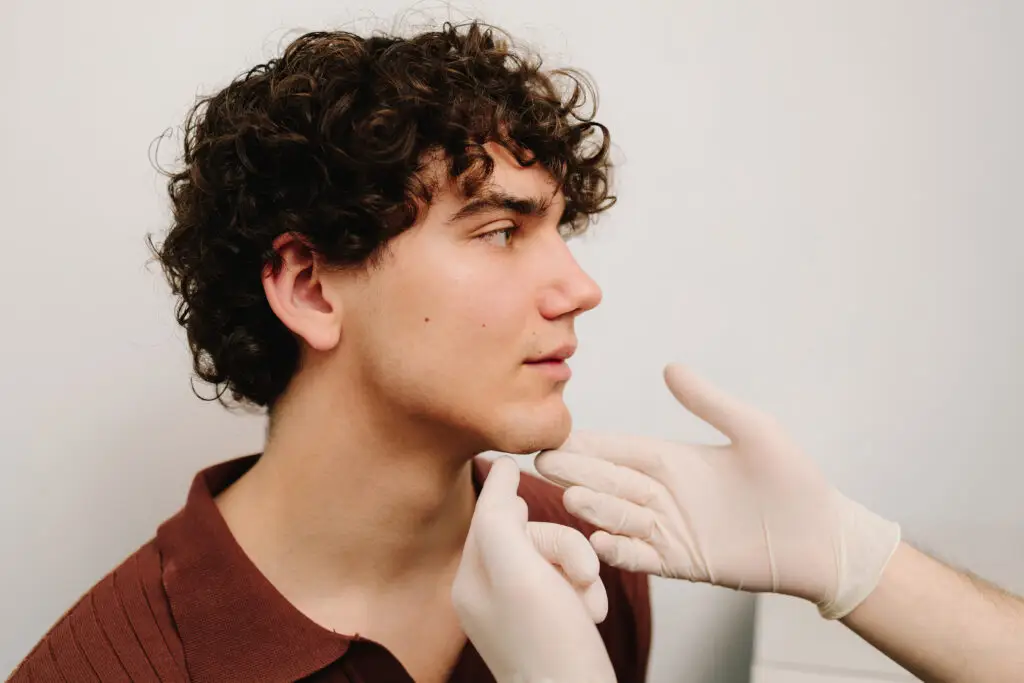
Male chin filler is one of the fastest-growing non-surgical procedures for men in Miami. The aesthetic target is fundamentally different from female chin work — and so is the protocol. Most practices apply the same approach they use for women and produce results that read soft or tapered rather than strong.
Kelly’s male chin approach addresses three anatomical realities:
The result a male patient should expect: a stronger, more defined chin that reads as masculine strength — not a face that looks “done.” Confidentiality is built into the practice; many male patients prefer scheduling around their work day.
Syringes · typical male protocol
The chin and the jawline are not separate structures. They are one continuous mandibular contour, and treating one without the other often produces an unnatural transition where chin meets jaw. The pre-jowl sulcus (the small depression just in front of the jowl) connects directly into the chin-to-jaw transition zone, so chin work that ignores the jaw often creates a defined chin sitting in front of an undefined jaw.
For patients with moderate volume needs at both areas, a single combined plan is usually more effective than two separate treatments. Kelly maps the full mandibular contour at consultation and writes one plan that addresses chin projection, jawline definition, and the transitions between them. The result reads as a balanced lower face, not as “I got chin filler.”
For patients whose primary concern is chin projection alone and whose jawline is naturally well-defined, isolated chin work is fine. For patients whose primary concern is jawline definition, the dedicated jawline filler page covers the full mandibular protocol. Want the full picture on what actually causes jowls in the first place? See our guide on how to treat the lower face.
Most chin patients need 1 to 2 syringes. One syringe is the most common starting point and produces a visible, photographable change. Two syringes is appropriate for more substantial projection or a recessed chin. Three or more is reserved for full chin restructuring, usually paired with jawline filler rather than concentrated in the chin alone.
Kelly is one of the few injectors in Miami who will actively talk patients out of chin filler when it’s not the right answer. The “don’t get chin filler” search exists for a reason: there are real scenarios where the procedure produces poor outcomes, recurring expense, or psychological disappointment. Naming them honestly:
How we approach this differently. Honesty saves the patient’s money and the practice’s reputation. If chin filler is the wrong call for you, Kelly will say so plainly and refer you to the right next step — whether that’s a Miami plastic surgeon for an implant consultation, a Kybella treatment for submental fat, or simply waiting until your aesthetic preferences feel more settled. Restraint is the most important discipline a chin injector can bring.
Most Miami Beach practices won’t publish a chin filler price. We do, because patients deserve to know what they’re walking into before they sit down. The ranges below reflect what Kelly actually charges as of 2026. Your written quote at consultation reflects your specific plan.
Per 1.5 mL syringe. The structural workhorse for chin projection.
Juvéderm Voluma or Restylane Lyft. Reversible with hyaluronidase.
1–2 syringes for most patients. Male protocols often higher (2–3 syringes).
What you pay for. Per-syringe pricing means your invoice reflects exactly what was opened and placed. No per-zone surcharge, no opaque “treatment package,” no upcharge for cannula versus needle. If one syringe accomplishes what we planned with two, you pay for one.
How Miami Beach compares to the national average. Miami Beach chin filler pricing runs roughly 10–20% above the national average, reflecting overhead realities. Quotes meaningfully above the ranges published here usually reflect Brickell or Bal Harbour rent — not better outcomes.
South Florida Face and Body sits in Suite 414 at 1000 5th Street, at the southern tip of Miami Beach. From SoFi, Kelly draws chin filler patients across the barrier islands, across the causeway to mainland Miami, and from as far south as Key Biscayne. The chin is one of the higher-discretion procedures — many patients prefer the same office for sequential maintenance appointments, and the SoFi location is reachable from anywhere in Miami-Dade.
SoFi is one of the most accessible aesthetic locations in the city — close to the MacArthur Causeway for Brickell, Downtown, and Key Biscayne patients, and a clear straight shot up Collins or Indian Creek for Mid-Beach, Surfside, and Bal Harbour. Chin patients in particular appreciate the discreet office location: the practice doesn’t have a street-level med-spa presence, which matters for the executive and male patients who prefer privacy around aesthetic appointments.
1000 5th Street, Suite 414 · Miami Beach, FL 33139
Geography matters in chin filler planning more than patients realize. A Brickell finance executive who presents in glass-walled conference rooms has a different aesthetic target than a Wynwood creative-industry patient. A Bal Harbour patient who travels for work and needs a flawless profile across time zones has different recovery-window constraints than a flexible-schedule Sunset Harbour patient. Kelly factors lifestyle into product choice, syringe staging, and appointment timing — not just the chin at rest.
A chin filler appointment runs 30–60 minutes depending on syringe count. The actual injection is 10–20 minutes. The rest is reading your profile from multiple angles, mapping the four sub-zones, photographs, and the careful conversation about what's reasonable.
Patients arrive at South Florida Face and Body from across Miami-Dade for a particular kind of injection experience — one where chin filler is treated as an anatomical decision rooted in your specific profile, not a syringe count tied to a promotional package. In a city where many injectors will sell you more chin filler than your face can use, the difference is direct, personal, and honest care from the same provider every visit.
Kelly Wolfe is a Florida-licensed Advanced Practice Registered Nurse (APRN #11005134) and board-certified Family Nurse Practitioner (FNP-BC), credentialed by the American Nurses Credentialing Center. She holds a Master of Science in Nursing from the University of Miami, plus a Master’s in Biochemistry from Missouri State University. That biochemistry background matters for chin work in ways patients don’t always realize — the structural mechanics of calcium hydroxylapatite scaffolding against bone, the physiology of fibroblast response that makes Radiesse’s collagen build durable, the chemistry of HA cross-linking that explains why Voluma is firmer than other HA products. These are the conversations she actually has at consultation, not pamphlet-level summaries. She is also a Certified Functional Medicine Practitioner.
And she owns the practice. The person you book with is the person who treats you — every visit, start to finish. For chin patients in particular, that continuity matters: the protocol that worked at session one is executed by the same hands at session two and beyond, without the variability that comes from being passed between providers in larger med-spa operations.
Same-week consultations available. South of Fifth, Miami Beach.
Kelly is the owner of South Florida Face and Body. A board-certified Family Nurse Practitioner trained at the University of Miami, she holds advanced degrees in nursing, biochemistry, and biology, with graduate research focused on metabolism and the role of leptin and appetite-suppressing hormones. She practices at the intersection of functional medicine and aesthetic injection — meaning the conversations in her treatment room often go beyond the syringe to consider sleep, hormones, metabolism, and inflammation as part of how your skin and face actually present.
Licensed as an Advanced Practice Registered Nurse in the State of Florida (APRN #11005134), Kelly brings more than three decades of experience in health, fitness, and clinical practice. She has performed aesthetic injections in South Florida for over a decade and has trained alongside the dermatology and plastic surgery community that built Miami’s aesthetic reputation.
She is the one who answers your text message. She is the one who calls the day after your injection.
From your first consultation through every follow-up, you’ll work directly with Kelly — one injector, one set of hands, one consistent plan.
Advanced practice registered nursing with a focus on family health and primary care.
Research focused on metabolism and the role of leptin and appetite-suppressing hormones.
Research with a strong foundation in human physiology, cellular biology, and biochemistry.
National certification in family practice and primary care.
Authorized to diagnose, treat, and prescribe medications in the State of Florida.
Advanced training in root-cause diagnostics, hormone optimization, metabolic health, and integrative wellness.
Over 30 years helping clients achieve sustainable health and wellness transformations.
Common questions from Miami Beach patients considering chin filler. If yours isn't covered here, Kelly is happy to answer directly — text or call.
Chin filler in Miami Beach runs $800 to $1,200 per syringe depending on the product. Radiesse for structural chin work runs $800–$1,100 per 1.5 mL syringe. Juvéderm Voluma sits at the higher end ($950–$1,200). Restylane Lyft sits in the mid-range ($800–$1,000). Most patients use 1–2 syringes, putting a session between $800 and $2,400. Male protocols often use 2–3 syringes ($1,600–$3,600).
At South Florida Face and Body, every quote is in writing per syringe before any injection.
Chin filler typically lasts 12 to 24 months — often longer than filler in other areas because the chin has limited soft-tissue movement to break down the product. Radiesse lasts 12–18 months with continued collagen benefit beyond the gel’s resorption. HA fillers like Voluma and Lyft last 12–18 months.
Most patients schedule a maintenance touch-up every 12–18 months. The chin is one of the more cost-efficient filler zones over time because of how long the result holds.
Most chin patients need 1 to 2 syringes for a visible, meaningful result:
1 syringe: Most common female starting point. Clear, photographable improvement.
2 syringes: More substantial projection for a meaningfully recessed chin. Common male starting point.
3 syringes: Full chin restructuring. Often paired with jawline work.
4+ syringes: Usually a sign chin implant would be a better answer.
Kelly writes the exact syringe plan at consultation. Full breakdown above.
For maximum structural chin projection, Radiesse is the workhorse — its calcium hydroxylapatite scaffolding holds shape against the bony chin and stimulates collagen.
For patients who prefer the reversibility of HA, Juvéderm Voluma offers strong structural projection with the option to dissolve with hyaluronidase. Best for first-time patients or those considering an implant later.
Restylane Lyft suits softer chin refinement and the mentolabial sulcus where smooth integration matters more than firm projection.
Kelly chooses based on your anatomy, your reversibility preference, and your goal. Full product breakdown above.
Choose chin filler if you want: reversibility, a non-surgical experience, moderate enhancement, or to test whether more chin projection suits your face.
Choose a chin implant if you want: a permanent result, have severe chin deficiency that filler cannot fully address, or have done filler several times and want to stop the recurring cost.
Both are valid. Kelly will give you an honest assessment at consultation — including referral to a Miami plastic surgeon if implant is the better answer for your face. Full comparison table above.
No. A double chin and a weak chin are two different anatomical problems with different solutions.
A double chin is submental fat below the jawline — treated with Kybella (deoxycholic acid injections) or surgical liposuction.
A weak chin is insufficient bony projection at the chin itself — treated with chin filler.
Sometimes the right answer is both, sequenced. Kelly will tell you which problem you actually have at consultation. Full explanation above.
Chin filler can migrate when too much product is placed too superficially, or when product is placed in the wrong tissue plane. Properly placed chin filler in the deep supra-periosteal plane against the mental protuberance is structurally supported by the bone and does not migrate meaningfully.
The chin is actually one of the more migration-resistant filler zones because of the bony stop directly underneath. If you have prior filler that has migrated, hyaluronidase can dissolve HA filler and reset the area before new placement.
Chin shadow filler is filler placed at the inferior aspect of the chin — the underside, where the chin transitions to the neck — to create a more defined chin-to-neck shadow line in profile and front-facing photographs.
It’s a newer trend term referring to the modern aesthetic of a clearly defined chin contour that reads sharp in selfies and good lighting. Done well, it’s a subtle technical refinement layered onto a foundational chin projection treatment, not a separate procedure. Done poorly, it produces an artificial-looking “edge” along the bottom of the chin.
Yes — chin filler is one of the most-requested non-surgical procedures for men in Miami. Male chin filler differs from female chin filler in three important ways:
Men typically benefit from broader anterior projection (squarer, fuller pad rather than tapered point), more substantial overall volume (often 2–3 syringes vs 1–2 for women), and integration with jawline work for full lower-face balance.
Kelly has a dedicated male chin approach. Read the full section above.
Chin filler swelling typically peaks at 24–48 hours and resolves over 3 to 7 days. The chin often swells slightly more than other facial areas in the first 24 hours because of how the lymphatic system drains the lower face.
Most patients are comfortable in public by day 3 with most visible swelling resolved by day 7. The final settled result is visible at 2 weeks. Cold compresses, head elevation, and avoiding salt and alcohol the first 48 hours reduce peak swelling.
Most chin fillers are formulated with lidocaine, and Kelly applies topical anesthetic before the procedure. The injection itself is most often described as pressure rather than sharp pain. Kelly typically uses a blunt-tip microcannula for chin work, which dramatically reduces bruising risk and discomfort.
The chin tends to be one of the better-tolerated filler areas because the bony platform underneath limits soft-tissue displacement during injection. Most patients tolerate chin filler very comfortably.
Most healthy adults with a weak, recessed, or undefined chin who want a non-surgical enhancement are good candidates. Chin filler works particularly well for patients with mild-to-moderate chin deficiency. Patients with severe chin deficiency may be better served by a surgical chin implant — Kelly will tell you honestly at consultation if that’s the case.
You are not a candidate if you are pregnant or breastfeeding, have an active skin infection at the planned injection site, have a known hypersensitivity to filler components or lidocaine, or have a history of severe allergic reactions. Disclose your full medical history at consultation, including any planned dental or oral surgical procedures.
Yes — and often should be. Chin filler combines naturally with jawline filler for full lower-face balance, with cheek filler to lift the mid-face and complete the facial proportions, and with Kybella for patients who have both a weak chin AND submental fat. Sequencing matters — Kelly will plan the order at consultation based on what you want to settle when.
1000 5th Street, Suite 414, Miami Beach, FL 33139 — in the South of Fifth (SoFi) district at the southern tip of Miami Beach. We’re 8 minutes from Brickell, 10 from Mid-Beach, 19 from Bal Harbour. $4/hr in the attached garage; free street parking is available around the building during business hours (one nearby zone is metered). Phone: (786) 529-1860. Hours: Monday–Friday 10am–6pm, Saturday 10am–2pm.